Condensation water, commonly known as "condensation"
The dew point temperature of wet air is an important basis for judging whether dew is formed. If the temperature drops below the dew point temperature, condensation will occur.
At the same temperature, the higher the relative humidity and the greater the water vapor pressure, the higher the dew point temperature and the easier it is for condensation. Similarly, with the same relative humidity, the higher the temperature, the higher the dew point temperature. It's also prone to condensation. (The dew point temperature refers to the temperature at which the air is cooled to saturation under the condition that the water vapor content and the air pressure are not changed. Figuratively speaking, the temperature at which water vapor in the air turns into dew is called the dew point temperature. A mirror is cooled in the sampled wet air until dew drops (or ice crystals) appear on the mirror, and the average temperature of the mirror is measured, that is, the dew point temperature)
DIN EN ISO 6270-2 Test procedures
1. Place the test piece
2. Close the test cabinet door
3. Turn on the heating device used to heat the water in the tank or the box, and heat the studio to the air temperature required in the first stage
It must be reached within 1.5 hours and condensate must form on the test piece.
- Condensate constant test (CH)
Test at specified time and temperature
- Condensate alternating temperature and humidity test (AHT)
There are two stages, the first of which terminates the condensation process after 8 hours of heating
The second stage, 16 hours of cooling: Open the equipment door for ventilation
Check the amount of water in the tank during the 16-hour test, and add water if necessary, then close the door and turn on the heating device to start a new cycle.
- Condensate alternating temperature test (AT)
There are two stages, the first of which terminates the condensation process after 8 hours of heating
In the second stage, check the amount of water in the tank for 16 hours, and add water when necessary, and then turn on the heating device again to start a new cycle
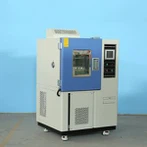
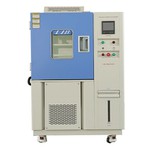
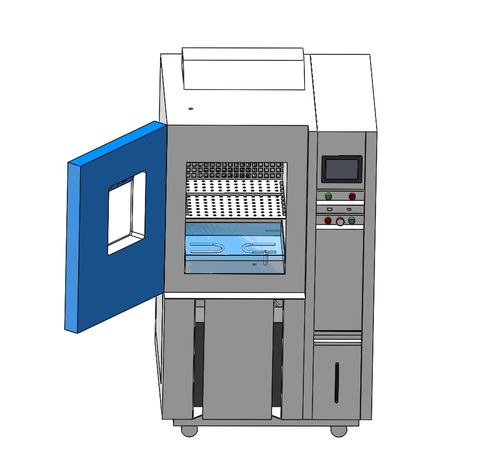
LIB condensation chamber
 |
 |
|
Model |
ATH-100A |
|
Internal Size (mm) |
400*500*500 D*W*H |
|
Overall Size (mm) |
900*1050*1620 D*W*H |
|
Interior Volume |
100L |
|
Temperature Range |
10℃ ~ +60 ℃ |
|
Temperature Deviation |
± 2.0 ℃ |
|
Humidity Range |
95%RH ~ 100% |
|
Humidity Deviation |
± 2.5% RH |
|
Cooling Rate |
1°C / min |
|
Heating Rate |
3°C/ min |
|
Testing room roof |
Slope shape designed, to avoid condensate drop on samples |
|
Sample shelf |
1pc sample shelf + 1pc round bar (place the sample with horizontal 60°angle) |
|
Water trough |
Build-in water trough in testing room |
|
Water condensate |
Heating the water inside the trough to create condensation |
We are a China-based climate chamber manufacturers that specialize in UV chamber and other environmental testing solutions. If you are looking for a cost-effective condensation chamber, then we will be your best choice, please contact us(info@libtestchamber.com)for more information about this device or other environmental test equipment.