Definition
Intergranular corrosion, also known as intergranular attack (IGA) is a local corrosion failure pattern that occurs and develops along or close to the grain boundary of a metal in a suitable corrosion environment. Intergranular corrosion starts from the surface of the metal material, develops along the grain boundary to the interior, so that the adhesion between the grains is lost, and the strength of the material is almost completely disappeared. The evaluation methods of intergranular corrosion of materials and components mainly include immersion test and electrochemical measurement.

Characteristics
The characteristic of intergranular corrosion is that when the metal surface is not damaged, the grains have lost their bonding strength and the crisp sound of the metal has been lost. In severe cases, it will break into powder with just a slight tap.
Conditions for intergranular corrosion
1. Impurities in the metal or alloy, or second phases precipitate along the grain boundaries.
2. The difference in chemical composition between the grain boundary and the grain forms a corrosion cell in a suitable medium, with the grain boundary as the anode and the grain as the cathode, and selective dissolution of the grain boundary.
3. The presence of a specific corrosive medium.
In some alloy-medium systems, severe intergranular corrosion often occurs. For example, austenitic stainless steel (304 stainless steel is the most common austenitic stainless steel and is widely used in items such as cookware, cutlery, and kitchen equipment. 316 stainless steel is the second most common austenitic stainless steel)may produce severe intergranular corrosion in specific corrosive media such as weak oxidizing media (such as aerated seawater, MgCl2 solution, etc.) or strong oxidizing media (such as concentrated nitric acid).


Immersion test for intergranular corrosion
The immersion tests of intergranular corrosion mainly include: boiling nitric acid test, acid ferric sulfate test, acid copper sulfate test and nitric acid-hydrofluoric acid test.
- Boiling nitric acid test requires five cycles (48h/ cycle) of testing in 65% of boiling HNO3, and the test solution should be updated after each cycle test. Finally, the test results are evaluated according to the mass loss of the sample. In some cases, the grain shedding is observed by naked eye or microscope.
- Acid ferric sulfate test is a double reagent test method with Fe2 (SO4) 3 as passivating agent and H2SO4 as depassivating agent. It can be used to test the grain boundary corrosion caused by chromium carbide precipitation in unstable austenitic stainless steel and the intergranular corrosion caused by chromium carbide and σ phase in stabilized stainless steel. The method can also be used to test the intergranular corrosion tendency of acid-resistant steels and corrosion-resistant alloys caused by grain boundary chromium and molybdenum deficiency or σ precipitation.
- Acid copper sulfate solution test is the earliest application of intergranular corrosion test method, also known as Hatfield method, Krupp method or Strauss method. CuSO4 is the passivating agent in the test solution, and H2SO4 accelerates the corrosion. In 1958, Warren first proposed the use of 10%HNO3+3%HF solution as a quantitative test method for evaluating the intergranular corrosion sensitivity of molybdenum-containing austenitic stainless steel. The method is suitable for testing the intergranular corrosion tendency of molybdenum-containing austenitic stainless steel due to grain boundary chromium deficiency. The temperature requirement during the test is 70℃±0.5℃, 2h as a cycle, a total of two cycles, the test results are assessed according to the quality loss.
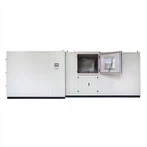
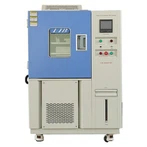
Test device
As for the conclusion of the study of corrosion mechanism, whether it is the dilution theory, the intergranular σ precipitation theory or the grain boundary adsorption theory, the most important factor must be the heat treatment temperature.

LIB Industry Oven
|
Temperature Range |
A: Ambient ~+250 ℃ B: Ambient ~+400 ℃ C: Ambient ~+900 ℃ |
||||
|
Temperature Fluctuation |
± 0.5 ℃ |
||||
|
Temperature Deviation |
± 2.0 ℃ |
||||
|
Heating Rate |
6 ℃ / min |
||||
|
Heating Element |
Nichrome heater |
||||