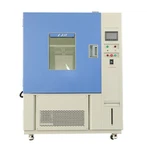
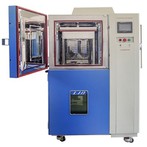
Paints and coatings are the first line of defense against corrosion-but how can you be sure they will perform reliably under years of exposure to salt, humidity, and harsh environments? Accelerated corrosion testing provides the answer by recreating real-world conditions in a controlled, repeatable laboratory environment.
A customer from Mexico using the LIB S-150 Salt Spray Chamber shared positive feedback: the chamber has been working "wonderfully" in daily testing, delivering stable and reliable performance. Even a minor saline solution leakage issue was quickly resolved, and with the provided maintenance manual, the user gained a clearer understanding of preventive maintenance procedures. This real-world experience highlights both the reliability of the equipment and LIB's responsive technical support.
LIB Salt Fog Tester for Paint and Coating Testing is designed to deliver precise, standards-compliant salt spray environments, helping manufacturers evaluate coating durability, adhesion, and corrosion resistance with accurate and repeatable results.
Why Salt Fog Testing Matters for Paint and Coating
Coatings must resist corrosion under aggressive environments, and salt fog testing replicates years of exposure within days, making it a critical tool for durability validation.
In real-world applications such as automotive, marine, and infrastructure, coatings are constantly exposed to salt, moisture, and temperature fluctuations, which accelerate corrosion if protection is insufficient.
Poor coating performance can lead to visible and structural failures such as rust, blistering, cracking, and adhesion loss, directly reducing product lifespan and increasing maintenance costs.
International standards such as ISO 9227 and ASTM B117 define strict parameters-including 5% NaCl solution, 35 ± 2 °C temperature, and controlled spray deposition rates-ensuring test results are reliable, repeatable, and globally recognized.
Salt spray testing also delivers quantitative data, including corrosion rate, time to failure, and coating degradation behavior, enabling manufacturers to compare materials, optimize formulations, and ensure long-term protective performance.
Salt Fog Testing Method for Paint and Coating
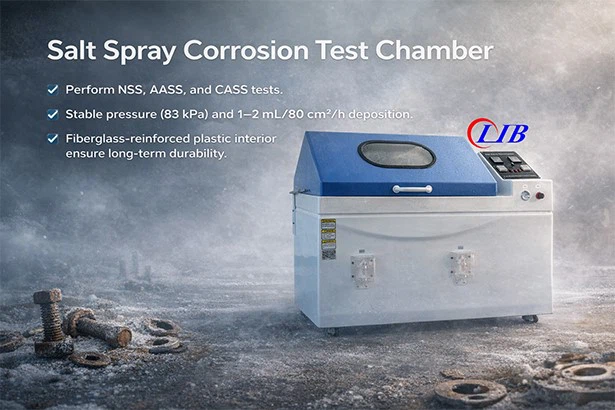
The most widely used method for evaluating coating performance is ISO 9227 Neutral Salt Spray (NSS), which provides a standardized and repeatable way to assess general corrosion resistance under controlled saline conditions. It is also commonly aligned with ASTM B117, ensuring global comparability of test results across laboratories and industries.
In a typical NSS test, a 5% sodium chloride (NaCl) solution is continuously atomized into a fine, uniform salt fog inside the chamber. The environment is strictly controlled at a temperature of 35 ± 2 °C, with a pH range of 6.5–7.2, simulating a neutral corrosive atmosphere similar to coastal or humid outdoor environments.
The system maintains a stable spray pressure of 83 kPa, ensuring consistent fog distribution throughout the chamber. At the same time, the deposition rate is controlled at 1–2 mL per 80 cm² per hour, which is a critical parameter defined by ISO 9227 to guarantee uniform exposure across all test samples.
During the test cycle, coated samples are placed at a specific angle (typically 15–30° from vertical) to ensure even salt deposition and realistic drainage conditions. The test runs continuously for a defined period, with no drying phase in NSS, allowing constant exposure to corrosive mist and accelerating coating degradation mechanisms.
To simulate more severe environments and evaluate high-performance coatings, advanced methods are applied based on ASTM B117:
1. AASS (Acetic Acid Salt Spray) introduces acetic acid to lower the pH to 3.1–3.3, increasing corrosion aggressiveness and making it suitable for decorative coatings, electroplated parts, and anodized surfaces.
2. CASS (Copper-Accelerated Acetic Acid Salt Spray) further adds 0.26 g/L CuCl₂, significantly accelerating corrosion reactions, and is widely used for automotive decorative coatings and premium protective finishes.
3. NSS (Neutral Salt Spray) Test Cycle
| Parameter | Test Condition |
|---|---|
| Standard | ISO 9227 NSS / ASTM B117 |
| Salt Solution | 5% NaCl |
| Temperature | 35 ± 2 °C |
| pH Range | 6.5 – 7.2 |
| Spray Pressure | 83 kPa |
| Deposition Rate | 1–2 mL / 80 cm² / h |
| Spray Mode | Continuous salt fog |
| Sample Position | 15–30° inclined |
| Test Duration | 24 h – 1000+ h (depending on coating) |
| Humidity Condition | Saturated (>95% RH inside chamber) |
In practical applications, test duration varies depending on coating type and performance requirements. Basic coatings may be tested for 24–96 hours, while industrial or high-durability coatings often require 240, 480, or even 1000+ hours of continuous exposure to verify long-term resistance.
Throughout the process, key parameters such as temperature stability (±0.5 °C), pH value, spray pressure, and salt collection rate must be continuously monitored and recorded to ensure compliance with ISO 9227 and ASTM B117. These controlled and repeatable conditions allow engineers to accurately compare coating systems, predict service life, and validate product quality before market release.
Advantages of LIB Salt Fog Tester for Coating Testing
LIB Salt Fog Tester ensures precise, repeatable testing conditions for coatings across industries.
|
Model |
S-150 |
|||
|
Internal dimensions (mm) |
470*590*400 |
|||
|
Overall dimensions (mm) |
620*1400*1050 |
|||
|
Temp. Range |
Ambient ~ +60 degree |
 |
||
|
Temp. Fluctuation |
± 0.5 ℃ |
|||
|
Temp. Deviation |
± 2.0℃ |
|||
|
Humidity Range |
95 % ~ 98 % RH |
|||
|
Salt Fog Deposition |
1~2ml / 80cm2 · h |
|||
|
Spray Type |
Continuous / Periodic |
|||
|
Heating Element |
Nichrome heater |
|||
|
Salt Fog Collected |
Fog collector and fog measure cylinder |
|||
|
Controller |
PID controller |
|||
|
Material |
Glass fiber reinforced plastics |
|||
|
Standard Configuration |
8 round bars and 7 V-shaped grooves |
|||
|
salt spray tower |
cylinder |
spray collector |


1. High Precision Control
PID control combined with PT-100 Class A sensors maintains temperature stability within ±0.5 °C and deviation within ±2 °C, ensuring consistent results.
2. Stable Salt Fog Generation
Quartz nozzles and optimized spray towers deliver uniform fog at 83 kPa, meeting ISO 9227 and ASTM B117 deposition requirements.
3. Multi-Standard Testing Capability
Supports NSS, AASS, and CASS in one chamber, allowing flexible testing for different coating types and performance levels.
4. Smart Program Management
Up to 120 programs with 100 steps each enable complex test sequences such as NSS followed by CASS without manual intervention.
5. Real-Time Data Logging
Records temperature, humidity, pH, and spray duration with export via USB or Ethernet, ensuring full traceability and audit-ready reports.
6. Durable Construction
SUS304 stainless steel interior and coated A3 steel exterior provide long-term resistance to corrosion, salt, and chemicals.
FAQs on the Salt Fog Tester
Q1: How long should a coating be tested in a salt fog chamber?
A: It depends on the standard and application. Common durations range from 24 hours (basic coatings) to 500–1000+ hours (high-performance coatings) under ISO 9227 or ASTM B117.
Q2: What is the difference between NSS, AASS, and CASS?
A: NSS tests general corrosion resistance, AASS increases acidity for decorative coatings, and CASS adds copper ions to simulate extremely aggressive environments.
Q3: How does LIB ensure repeatable results?
A: Through precise PID control, stable spray pressure (83 kPa), controlled deposition rate (1–2 mL/80 cm²/h), and uniform chamber conditions.
Q4: Can the tester handle different coating samples?
A: Yes. Adjustable sample holders support various shapes and sizes, ensuring accurate exposure for different coating applications.
Time to Validate Your Coating Performance with Confidence?
Contact LIB Industry to explore how our Salt Fog Tester can improve your coating durability testing and ensure compliance with global standards.