Materials used in biodegradable packaging are designed to decompose naturally, but exposure to sunlight, heat, and moisture can accelerate degradation, affecting mechanical strength, color, and protective properties. Testing how these materials respond to UV radiation helps manufacturers ensure product quality, durability, and shelf life.
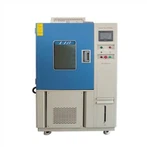
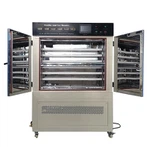
LIB's UVA313 and UVB340 UV Weatherometers simulate real-world sunlight conditions with precise UV control, stable temperature, and programmable spray cycles. They allow accelerated aging of biodegradable packaging, compressing years of outdoor exposure into hours or days while ensuring compliance with standards such as ASTM G154, G151, G155, ISO 4892-3, and ISO 11341.
Overview and Applications of UVA313 and UVB340 UV Weatherometers
Accelerated UV testing is necessary because natural sunlight exposure occurs over months or years, making it difficult to quickly evaluate the durability and shelf life of biodegradable packaging materials. By compressing these environmental effects into controlled laboratory cycles, manufacturers can predict performance, identify weaknesses, and optimize materials without waiting for long-term outdoor testing.
UV weatherometers replicate sunlight indoors using high-stability UVA and UVB lamps. UVA313 focuses on the 340 nm band, while UVB340 focuses on the 313 nm band, which are most critical for polymer and coating degradation. These wavelengths cause chemical breakdown, discoloration, and loss of strength in plastics, coated papers, and films used in packaging.
The chambers also monitor black panel temperature (BPT) to maintain consistent heat exposure. Multi-point sensors combined with a PID controller keep BPT fluctuations within ±2 °C, accurately simulating thermal effects of sunlight. Spray and condensation cycles replicate rainfall or high-humidity conditions to evaluate moisture-induced degradation.
Applications include:
- Plastics and Films: Detect brittleness, cracking, and color changes.
- Coated Papers and Trays: Assess adhesion, gloss retention, and hydrolytic stability.
- Composites and Laminates: Test layered biodegradable materials for UV and moisture resistance.
By providing high-precision UV exposure and environmental control, LIB's UVA313 and UVB340 ensure repeatable, standardized testing for biodegradable packaging materials.
| UVA313 and UVB340 UV Weatherometers for Accelerated Testing | ||
|
|
High-Precision QUV Accelerated Weathering Tester ASTM G154 UV Accelerated Aging Chamber UV Exposure Chamber For PV Modules Advanced Xenon Arc Test Chambers Accelerated Xenon Weathering Test Chamber
|
|

Biodegradable Packaging Material Testing with LIB's UVA313 and UVB340 UV Weatherometer for Shelf Life and Durability Evaluation
|
|
|


 |
|
|
Model |
UV-SI-260 |
|
Internal Dimension (mm) |
450*1170*500 |
|
Overall Dimension (mm) |
680*1300*1500 |
|
Irradiation Source |
Fluorescent UV lamps (8) - 40 W |
|
Temperature Range |
Ambient ~ 90 ℃ ±2℃ |
|
Black Panel Temperature (BPT) |
35 ~ 80 ℃ |
|
Humidity Range |
≥95% RH |
|
Bandwidth |
290 ~ 400nm |
|
Irradiance Control |
0.3~20 W/㎡ |
|
Distance of Specimen and lamp |
50mm |
|
Heating Element |
Nichrome heater |
|
Controller |
Programmable color LCD touch screen controller |
|
Ethernet connection, PC Link, USB |
|
|
Water Supply System |
Automatic water supply, Water purification system |
|
Interior Material |
SUS304 stainless steel |
Testing biodegradable packaging is systematic and reproducible with LIB's chambers. Steps include:
Step 1 Sample Preparation: Cut packaging samples into standard sizes (e.g., 75 × 150 mm) and mount on aluminum holders or custom 3D racks for irregular shapes.
Step 2 Program Setup: Use the color touchscreen to define test parameters, including UV irradiance (0.3–20 W/m²), BPT temperature (35–80 °C), and spray cycles (1 min–9999 h 59 min). Up to 120 programs with 100 segments each can be stored for repeated testing.
Step 3 UV Exposure: Activate UVA313 or UVB340 lamps. Built-in radiometers monitor irradiance in real time, maintaining ±3 % fluctuation. BPT sensors ensure uniform surface temperature across samples.
Step 4 Spray/Wet Simulation: Configure water spray up to 0.35 ml/cm²·min to replicate condensation or rainfall. The condensate recovery system saves up to 30 % of water while maintaining test fidelity.
Step 5 Data Logging and Monitoring: Export real-time temperature, UV irradiance, and humidity data via USB or Ethernet for traceability and compliance audits.
Step 6 Result Evaluation: Inspect samples for cracking, discoloration, loss of tensile strength, or brittleness. Compare results against baseline material properties to predict shelf life and durability.
LIB's UVA313 and UVB340 weatherometers combine precise UV spectral control, automated temperature regulation, and programmable spray cycles to deliver reliable accelerated testing results for biodegradable packaging materials.

Common Questions About UVA313 and UVB340 UV Weatherometers
Q1: What are the differences between UV and xenon lamps? What are the key distinctions?
A1: UV lamps and xenon lamps differ mainly in light source type and spectral range. UV lamps use UVA/B light with spectra concentrated in 290–400 nm, simulating only the ultraviolet portion of sunlight and complying with ASTM G154. Xenon lamps are gas discharge sources with full-spectrum coverage of UV and visible light, better reproducing all-day sunlight, usually following ASTM G155 standards.
Q2: What are the advantages of LIB UV equipment?
A2: LIB UV equipment has three main advantages. First, it is designed and manufactured strictly according to international standard ASTM G154, ensuring reliable and standard-compliant results. Second, it uses US QUVA/B lamps for accurate UV simulation and easy replacement. Third, LIB provides a three-year warranty, guaranteeing long-term stable operation.
Q3: Why are the UV chamber's casters different from TH's? Are they specially designed?
A3: The UV chamber uses standard casters, while the TH chamber uses FUMA casters. This difference is based on the equipment weight and mobility requirements, not a special design.
Q4: Can water be added automatically to the bottom of the chamber? How to check water level during testing?
A4: The bottom water can be supplied via an automatic water system without manual addition. During testing, the system automatically maintains the water level, ensuring high-humidity conditions and reliable test results.
Q5: What is the maximum irradiance when all 8 lamps are on? What if 4 UVA and 4 UVB are installed?
A5: Whether all 8 UVA/B lamps are on or a 4 + 4 UVA/UVB configuration is used, the maximum UV irradiance reaches 20 W/m². Irradiance can be precisely controlled from 0.3–20 W/m² to meet standard requirements.
LIB provides a 3-year warranty and lifetime service, with 24/7 English-speaking support and fast shipping within 7–15 days. Contact LIB Industry today to develop a professional and efficient solution tailored to your biodegradable packaging material testing needs.