Corrosion is one of the biggest threats to metal components, coatings, and electronic assemblies. Products used in automotive, marine, construction, and electronics industries are constantly exposed to humidity, salt, and aggressive chemicals. Without proper testing, corrosion can lead to coating failure, electrical faults, and structural damage, which may affect product reliability and safety.
A recent customer from Mexico who purchased the LIB S-150 Salt Fog Test Machine shared positive feedback after installation: "The chamber has been working fine since we received it. We'll do the corresponding maintenance. If there is any doubt, we'll let you know." This kind of real-world feedback reflects how reliable salt spray testing equipment helps laboratories and manufacturers maintain consistent corrosion testing performance.
This article explains what a Salt Fog Test Machine is, how it works, and how industries use it to verify corrosion resistance according to international standards.
Definition of a Salt Fog Test Machine Products Description
1. What is a Salt Fog Test Machine?
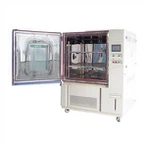
A Salt Fog Test Machine, also known as a Salt Spray Chamber, is an environmental testing system designed to simulate highly corrosive saline environments. The chamber atomizes salt solutions into a fine mist that continuously settles on test samples.
This accelerated corrosion test helps manufacturers evaluate how materials and coatings behave in harsh environments. Instead of waiting months or years for natural corrosion, a salt spray chamber can reproduce similar degradation effects within 24 to 1000+ hours depending on the test standard.
Salt fog testing is widely used to verify protective coatings such as electroplating, paint layers, powder coatings, and anodized surfaces.
2. How the LIB Salt Fog Test Machine Simulates Corrosion
The LIB Salt Fog Test Machine reproduces corrosive conditions through a controlled process involving salt atomization, temperature regulation, and deposition monitoring.
First, a 5% sodium chloride (NaCl) solution is stored in a corrosion-resistant reservoir. Compressed air then passes through a saturated air barrel, where it is heated and humidified before reaching the spray nozzle.
Inside the chamber, quartz spray nozzles convert the solution into a fine salt fog. The mist is distributed evenly and settles on test samples at a controlled deposition rate of 1–2 mL per 80 cm² per hour, exactly matching the requirements of ISO 9227 and ASTM B117.
The chamber maintains stable environmental conditions including:
-
Spray pressure: 83 kPa
-
Chamber temperature: 35 ± 2 °C
-
Temperature fluctuation: ±0.5 °C
-
Solution pH range: 6.5–7.2 (NSS test)
A PID temperature controller with PT100 sensors continuously adjusts heating and airflow to keep the environment stable and repeatable.
3. Application Fields and Testing Standards
Salt fog testing is used across many industries where corrosion resistance is critical.
1.1 Automotive Industry
Automotive components such as connectors, fasteners, brake components, and chassis parts must survive exposure to road salt and moisture. Testing commonly follows:
- ISO 9227 NSS (Neutral Salt Spray)
- ISO 9227 CASS (Copper-Accelerated Acetic Acid Salt Spray)
- ASTM B117 Standard Practice for Salt Spray Testing
1.2 Coating and Surface Treatment
Protective coatings such as electroplating, zinc coatings, and powder coatings are evaluated for durability using:
- ISO 9227 NSS
- ISO 10289 corrosion evaluation standard
- ASTM B368 CASS test for decorative coatings
1.3 Electronics and Electrical Components
Electronic enclosures and connectors require corrosion resistance to prevent electrical failure. Relevant standards include:
- IEC 60068-2-11 Salt Mist Test
- ASTM B117 Salt Spray Test
These tests help manufacturers verify coating adhesion, corrosion resistance, and long-term durability before products reach the market.
Popular Salt Fog Test Machine and other environmental tester


Salt Fog Coating Testing with the LIB Salt Fog Test Machine
One of the most common corrosion tests is the ISO 9227 Neutral Salt Spray (NSS) test, widely used for coating evaluation.
ISO 9227 NSS Standard Test Cycle
The NSS test exposes coated samples to continuous salt fog under controlled conditions.
Key parameters include:
| Parameter | ISO 9227 NSS Requirement |
|---|---|
| Salt Solution | 5 % NaCl |
| pH Range | 6.5–7.2 |
| Chamber Temperature | 35 ± 2 °C |
| Spray Pressure | 83 kPa |
| Deposition Rate | 1–2 mL / 80 cm² / h |
| Test Duration | 24–1000+ hours |
During the test, samples are mounted on racks at 15–30° inclination to ensure uniform fog exposure.
The LIB Salt Fog Test Machine (e.g., S-800 model) performs this cycle automatically. Its precision spray tower and quartz nozzles maintain the exact deposition rate required by ISO 9227/ASTMB 117. The PID controller ensures stable temperature conditions while the built-in collectors verify deposition accuracy.
LIB Equipment Advantages
|
|
|
||||
| Name | |||||
|
Model |
SC-010 |
SC-016 |
SC-020 |
||
|
Internal dimensions (mm) |
800*1450*680 |
1000*1600*800 |
1000*2000*900 |
||
|
Overall dimensions (mm) |
1400*2500*1720 |
1600*2650*1840 |
1600*3050*1940 |
||
|
780 |
1280 |
1800 |
|||
|
Interior Volume (L) |
780 |
||||
|
Temperature Range |
+10 ℃ ~ +90 ℃ |
||||
|
Temperature Fluctuation |
± 0.5 ℃ |
||||
|
Temperature Deviation |
± 2.0 ℃ |
||||
|
Humidity Range |
30% ~ 98% RH |
||||
|
Humidity Deviation |
+ 2%, - 3% |
||||
|
Salt Fog Deposition |
1~2ml / 80cm2 · h |
||||
|
Air Preheating |
Saturated air barrel (31Liter) |
||||
|
Spraying System |
Atomizer tower and Spray nozzles |
||||
|
Salt Fog Collected |
Fog collector and fog measure cylinder |
||||
|
Sealing |
Pneumatic seal |
||||
|
Controller |
Programmable color LCD touch screen controller, Ethernet connection, PC Link, USB |
||||
|
View Window Size(mm) |
800*300 |
||||
|
Material |
Glass fiber reinforced plastics |
||||
|
Standard Configuration |
8 round bars |
||||
|
Standard |
IEC60068-2-52, IEC61701-2,ASTM G85,ISO 7253, ASTM B117, ISO9227 |
||||
|
Environmental Conditional |
5℃~+35 ℃ ≤85% RH |
||||


|
salt spray tower |
cylinder |
spray collector |


1. High-Precision Salt Spray Control
Quartz nozzles and spray towers produce uniform fog that meets ISO 9227 and ASTM B117 deposition standards.
2. Stable Temperature Regulation
PT100 Class A sensors and PID control maintain ±0.5 °C stability, ensuring consistent test results.
3. Programmable Test Profiles
The touchscreen controller stores 120 programs with 100 steps each, enabling automated multi-stage corrosion testing.
4. Real-Time Data Logging
Temperature, humidity, spray time, and pH data can be exported through USB or Ethernet for traceable reports.
Types and After-Sales Service of LIB Salt Fog Test Machines
1. Different Chamber Sizes for Various Testing Needs
LIB provides multiple chamber sizes to match different laboratory capacities, including models such as S-250, S-750, and S-1000.
These chambers support testing of:
- Small coated panels
- Automotive components
- Large metal assemblies
Custom chamber sizes are also available to accommodate special sample dimensions or production testing requirements.
2. Durable Construction for Long-Term Operation
The LIB Salt Fog Test Machine is designed for long service life in corrosive environments.
Key structural features include:
- SUS304 stainless steel interior resistant to corrosion and salt deposits
- A3 powder-coated steel exterior for industrial durability
- Transparent impact-resistant lid with inverted-V design to prevent condensation dripping onto samples
These design features ensure stable testing performance even during long test cycles.
3. Global Service and Technical Support
LIB provides full support for international customers.
Each chamber includes:
- 3-year warranty
- Lifetime technical support
- 24/7 English-speaking service team
- Spare-part delivery within 7–15 days
If remote troubleshooting cannot resolve a problem, LIB can arrange replacement equipment to ensure minimal downtime for laboratories.
FAQs on the LIB Salt Fog Test Machine Products Description
Q1: How long does a salt spray corrosion test usually take?
Test duration depends on the coating type and standard requirements. Basic NSS tests often run 24, 48, 96, or 240 hours, while high-performance coatings may require 500–1000 hours.
Q2: Can the chamber perform multiple corrosion test methods?
Yes. The LIB Salt Fog Test Machine supports:
NSS – Neutral Salt Spray
AASS – Acetic Acid Salt Spray
CASS – Copper-Accelerated Acetic Acid Salt Spray
All methods comply with ISO 9227 and ASTM B117 standards.
Q3: How is the chamber shipped internationally?
LIB chambers are packaged in reinforced export wooden crates with internal shock protection. Delivery time for most models is 7–15 days after production, and installation guidance is provided remotely.
Q4: What maintenance is required?
Routine maintenance mainly includes:
- Cleaning the spray nozzle
- Refilling the salt solution tank
- Checking collectors and filters
These procedures typically take only a few minutes and ensure accurate testing results.
Corrosion testing is essential for validating product durability and ensuring compliance with international standards. With precise salt fog generation, intelligent environmental control, and robust construction, the LIB Salt Fog Test Machine provides reliable corrosion testing for laboratories and manufacturers worldwide.
Contact LIB Industry today to learn how our Salt Fog Test Machines can help verify coating durability and improve product reliability.