
Environmental testing is essential in industries such as electronics, aerospace, and automotive manufacturing. Engineers must verify that products can withstand temperature changes, humidity exposure, and harsh environmental conditions before they reach the market. Choosing the right testing equipment is critical because different devices serve different purposes in reliability validation.
A customer from a Thai aerospace and aircraft company recently shared positive feedback after installing a LIB small temperature controlled chamber:"Good day Karen, thanks again for the advice. Now I am confident and understand how to use the climate chamber, especially the FIX mode, which is quite easy to use."Their team quickly mastered the chamber operation and began running stability tests efficiently, demonstrating how user-friendly environmental chambers can simplify complex testing workflows.
This article explains the key differences between a small temperature controlled chamber and a temperature oven, and shows how LIB equipment supports international standards such as IEC 60068, JEDEC JESD22-A104, ASTM D4332, and MIL-STD-810 for reliable environmental testing.
Difference Between a Small Temperature Controlled Chamber and a Temperature Oven
A small temperature controlled chamber simulates real environmental conditions such as temperature cycling and humidity exposure. It is widely used in electronics reliability tests, environmental stress screening, and component validation.
A temperature oven, on the other hand, is designed mainly for high-temperature processing such as drying, curing, aging, or sterilization. It normally does not include humidity control or rapid temperature cycling.
Below is a simple comparison.
| Feature | Small Temperature Controlled Chamber | Temperature Oven |
|---|---|---|
| Temperature Range | Typically –70 °C to +150 °C | Ambient to 1200 °C |
| Humidity Control | 20 %–98 % RH | Usually none |
| Temperature Cycling | Yes, programmable cycles | Limited or not designed for cycling |
| Ramp Rate | 1–5 °C/min typical | Up to 6 °C/min heating |
| Main Application | Electronics environmental testing | Drying, curing, sterilizing |
| Common Standards | IEC 60068-2-14, JESD22-A104 | ASTM E145, ISO 17025 |
| Industries | Electronics, automotive, aerospace | Materials, chemical, metallurgy |
In simple terms:
Temperature controlled chambers simulate environments.
Temperature ovens perform high-temperature processes.
If you need humidity, temperature cycles, and environmental simulation, a small temperature controlled chamber is the correct choice.
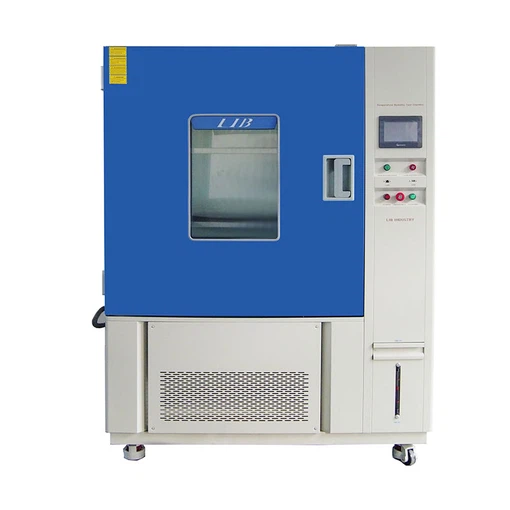
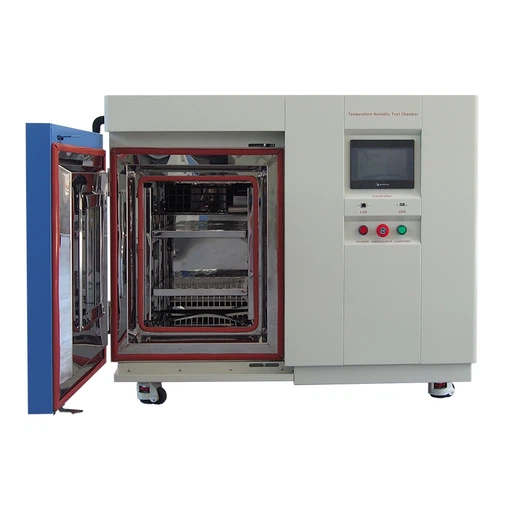
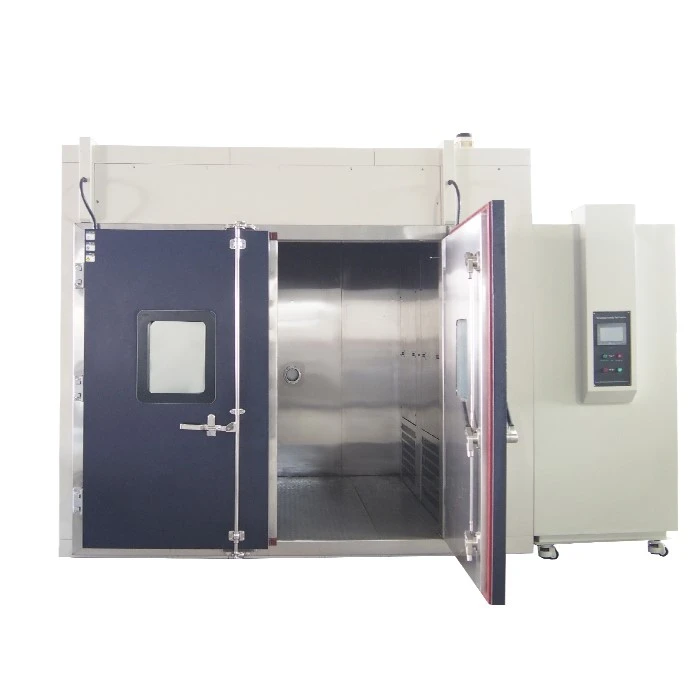
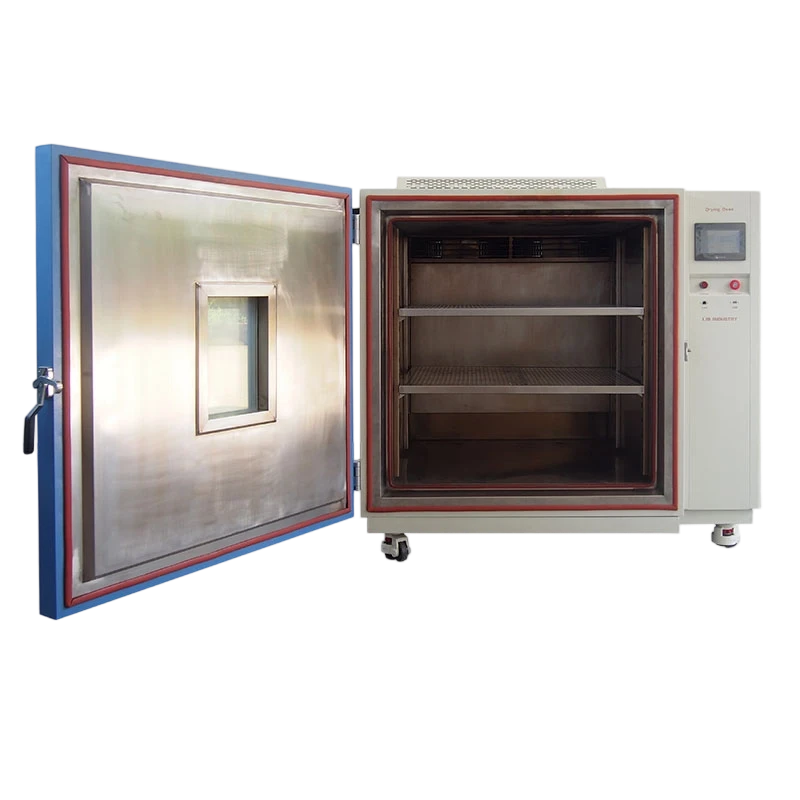


LIB Small Temperature Controlled Chamber for Electronic Temperature Cycling Tests
Electronic products must survive repeated temperature changes during transportation, storage, and operation. One of the most commonly used standards for this is JEDEC JESD22-A104 Temperature Cycling Test.
Typical Temperature Cycling Requirements (JESD22-A104)
1. Example cycle used for electronic components:
2. Low temperature: –40 °C
3. High temperature: +125 °C
4. Ramp rate: about 5 °C/min
5. Dwell time: 10–15 minutes at each extreme
6. Number of cycles: 100–1000 cycles
These tests simulate conditions encountered in automotive electronics, PCB assemblies, sensors, and connectors.
LIB's small temperature controlled chamber models such as T-50 and T-80 are designed to run these tests directly on a laboratory bench.
Typical performance:
|
|
|
||||||
| Model | TH-50 | TH-80 | |||||
| Internal dimension (mm) |
320x350x450 |
400x400x500 | |||||
| Overall dimension (mm) | 800x1050x950 | 900×1100×1000 | |||||
| Temperature range | -86 ℃ ~+150 ℃ | ||||||
| Temperature fluctuations | ± 0.5 ℃ | ||||||
| Humidity Range | 10%/20%~95 % | ||||||
| Temperature deviation | ± 2.0 ℃ | ||||||
| Temperature Sensor | PTR Platinum Resistance PT100Ω/MV A-class | ||||||
| Temperature Resolution | ± 0.001 ℃ | ||||||
| Exterior Material | Steel Plate with A protective coating | ||||||
| Interior Material | SUS 304 stainless steel | ||||||


LIB Advantages
1. High Precision Sensors
PT100 Class-A sensors with 0.001 °C resolution ensure accurate and repeatable environmental conditions.
2. Uniform Airflow Design
Centrifugal fans and optimized air channels reduce temperature gradients and keep chamber uniformity within ±2 °C.
3. Advanced Programmable Controller
A 7-inch touchscreen supports 120 programs with 100 steps, making it easy to run long temperature cycling tests automatically.
4. Compact Laboratory Design
The 50 L and 80 L benchtop models fit directly on laboratory worktables, saving valuable floor space.
5. Reliable Long-Term Operation
SUS304 stainless steel interiors resist corrosion and maintain stable performance during extended reliability tests.
These features make LIB chambers suitable for electronics testing under IEC 60068-2-14, JESD22-A104, and other environmental standards.
Customization and After-Sales Support for LIB Small Temperature Controlled Chambers
1. Custom Chamber Design
Every laboratory has different testing requirements. LIB offers customized configurations including:
- Special temperature ranges
- Additional cable ports for sensors
- Custom racks and fixtures
- Modified chamber sizes
This flexibility allows laboratories to integrate the chamber directly into their existing test setups or automation systems.
2. Compliance and Certification Support
LIB equipment can be configured to support international testing requirements such as:
- IEC 60068 environmental testing
- ASTM D4332 environmental conditioning
- JEDEC electronics reliability standards
- MIL-STD-810 environmental stress testing
These configurations help laboratories prepare test data suitable for certification, qualification, and product validation.
3. Global Service and Technical Support
LIB provides long-term service support for customers worldwide.
- 3-year warranty
- Lifetime technical assistance
- Global spare-parts network
- Parts delivery within 7–15 days
Our engineers also assist with installation, calibration, and preventive maintenance to ensure reliable operation.
FAQs on the LIB Small Temperature Controlled Chamber
Q1: What industries typically use small temperature controlled chambers?
They are widely used in electronics, automotive, aerospace, telecommunications, and medical device testing, especially for environmental reliability verification under standards such as IEC 60068 and JESD22.
Q2: How long does installation take?
Most LIB benchtop chambers are plug-and-play systems. Installation usually takes 1–2 hours, including leveling, power connection, and initial calibration.
Q3: What are the shipping arrangements?
LIB equipment is shipped in reinforced export wooden crates to prevent vibration damage. International delivery typically takes 7–15 days, depending on destination and customs clearance.
Q4: What service support does LIB provide?
Customers receive 24/7 English-language technical support, remote troubleshooting, spare-parts supply, and guidance for annual calibration according to ISO 17025 laboratories.
Selecting the right environmental testing equipment directly affects the accuracy, reliability, and efficiency of your laboratory. A small temperature controlled chamber is ideal for environmental simulation and electronic reliability testing, while a temperature oven excels at high-temperature processing tasks.
Contact LIB Industry today to learn how our small temperature controlled chambers can improve your environmental testing workflows with precision, flexibility, and dependable performance.


