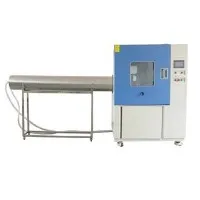
Materials used outdoors-such as plastics, coatings, cables, and automotive components-are constantly exposed to sunlight, moisture, and temperature fluctuations. Over time, these environmental stresses can cause fading, cracking, embrittlement, and loss of mechanical strength. Traditional outdoor exposure testing may take 1–3 years and results can vary depending on seasonal weather conditions.
LIB sunshine weatherometer simulate years of outdoor weathering in weeks by reproducing sunlight, heat, humidity, and rain cycles under precisely controlled laboratory conditions. As one experienced testing service team from India noted after working with the LIB XL-S-750 weatherometer, "We found your instrument quality as good as ATLAS, and the prices were competitive." With more than 15 years of experience installing and servicing weatherometers, their feedback highlights how reliable accelerated weathering equipment can support laboratories and manufacturers in achieving faster and more dependable material durability testing.

In this article, we will explore what a sunshine weatherometer is, how it simulates real sunlight conditions, and how it helps laboratories perform reliable accelerated weathering tests.
》》》If you would like to learn more about LIB sunshine weatherometers or need a customized environmental testing solution, please contact us at info@libtestchamber.com. Our engineering team will help you select the most suitable configuration for your testing requirements.
Understanding the Sunshine Weatherometer
1. Xenon Arc Light Source
A. What it is:
A sunshine weatherometer uses a xenon arc lamp to reproduce natural sunlight. According to ASTM G155, the xenon lamp must simulate the full solar spectrum, typically 280–800 nm, including UV, visible, and infrared radiation.
B. Why it matters:
UV radiation is the main factor causing polymer degradation and color fading. If the light spectrum does not match natural sunlight, the aging results will not represent real outdoor performance.
C. How it works:
The xenon lamp generates high-intensity light through an electrical arc in pressurized xenon gas. Optical filters adjust the spectrum to simulate different exposure conditions, such as:
- Daylight filter (general outdoor exposure)
- Window glass filter (indoor sunlight through glass)
- Automotive windshield filter
These filters ensure the spectral distribution complies with ASTM G155-21 exposure requirements.
2. Temperature and Irradiance Control
A. What it is:
A sunshine weatherometer integrates sensors to measure irradiance and specimen temperature. Typical monitoring parameters include:
- Irradiance: e.g., 0.35–1.10 W/m² at 340 nm
- Black Panel Temperature (BPT): typically 63 °C ±3 °C
- Chamber air temperature: controlled according to test cycle
B. Why it matters:
ASTM G155 emphasizes that both light intensity and specimen temperature must remain stable to ensure repeatable results across laboratories.
C. How it works:
Advanced PID controllers regulate lamp output and heating systems. Sensors continuously measure irradiance and BPT, maintaining stability within ±5 % irradiance and ±1 °C temperature during long-term exposure tests.
3. Moisture Simulation System
A. What it is:
Real outdoor weather includes rain, dew, and condensation. A sunshine weatherometer therefore includes humidity control and water spray functions.
B. Why it matters:
Moisture accelerates many degradation mechanisms such as hydrolysis, coating blistering, and stress cracking.
C. How it works:
The system introduces cycles of light, humidity, and water spray. Deionized water is sprayed over samples to simulate rainfall, while condensation cycles reproduce nighttime moisture accumulation.

LIB Reliable Sunshine Weatherometers for Aging Test
》》》For more technical information and details about our Sunshine Weatherometer, please feel free to email us at info@libtestchamber.com.
Application Fields and Testing Methods
1. Automotive and Coating Testing
Sunshine weatherometers are widely used in automotive materials and protective coatings.
A. Typical standards include:
ASTM G155-21 – Xenon arc exposure for non-metallic materials
ISO 4892-2 – Plastics exposure to xenon arc lamps
SAE J2527 – Automotive exterior materials durability
B. Typical tests:
1. Paint fading resistance
2. Coating cracking and blistering evaluation
3. Automotive interior trim aging
For example, Cycle 1 in ASTM G155 typically includes:
102 min light exposure
18 min light + water spray
This cycle simulates long-term sunlight combined with rain exposure.
2. Plastics and Polymer Materials
Polymer materials such as PVC, PP, PE, and ABS require weathering validation before outdoor use.
A. Common standards include:
ISO 4892-2 – Plastics weathering using xenon arc
ASTM D2565 – Xenon arc exposure for plastics
ASTM D4459 – Accelerated weathering of geotextiles
B. Typical tests include:
1. Color stability evaluation
2. Tensile strength retention
3. Surface chalking and embrittlement
These tests help determine expected outdoor lifespan of polymer materials.
3. Electrical Cables and Insulation Materials
Cables installed outdoors must resist UV exposure and temperature extremes.
A. Relevant standards include:
EN 50483-6 – Test requirements for overhead line accessories
IEC 60068-2-5 – Solar radiation test
UL 1581 – Cable weathering resistance
B. Typical test parameters:
1. Continuous xenon light exposure
2. High humidity cycles
3. Low-temperature conditioning
These tests ensure insulation materials maintain electrical safety after long-term sunlight exposure.
》》》 Feel free to email us at info@libtestchamber.com for detailed technical information, standard-compliant testing solutions, customized chamber configurations, or professional support from our experienced engineering team!
Real Case Study: Cable Testing According to EN 50483-6
A cable manufacturer needed to validate outdoor durability for insulation materials used in overhead line accessories.
The standard EN 50483-6 requires the following environmental sequence:
Step 1 – Low Temperature Conditioning
Temperature: −40 °C
Duration: 16 hours
Step 2 – Xenon Light Exposure
Simulated solar radiation according to ASTM G155 spectral requirements
Irradiance controlled at 340 nm reference wavelength
Step 3 – Moisture Cycle
Water spray or humidity exposure
Repeated weathering cycles to simulate outdoor climate changes.
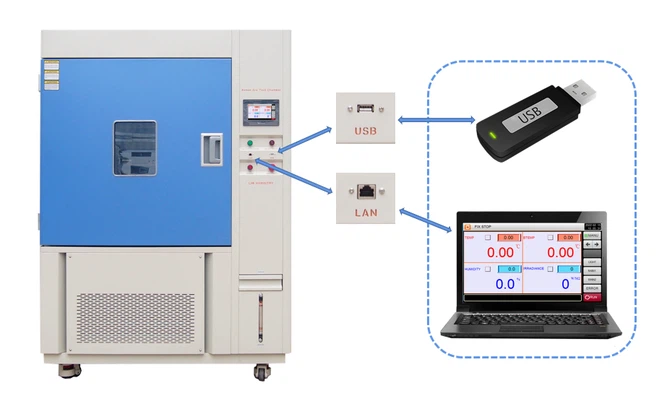
LIB configured the XL-S-750C Low-Temperature Sunshine Weatherometer to perform this sequence automatically.
Key features included:
|
Model |
XL-S-750 |
|
|
Internal Dimension (mm) |
950*950*850 mm |
|
|
Overall Dimension (mm) |
1300*1420*1800 mm |
|
|
Sample holder |
Adjustable speed, 1r /min |
|
|
Chamber Type |
Rotating Holder |
|
|
Irradiation Source |
1 piece of 4500w water-cooled xenon arc lamp with inner quartz and outer borosilicate filter |
|
|
Irradiance Range |
150 W/㎡ |
|
|
Bandwidth Measurement |
300~400 nm |
|
|
Chamber Temperature Range |
-40~ 100 ℃ ±2 ℃ |
|
|
Black Panel Temperature |
BPT 35 ~ 85 ℃ ±2 ℃ |
|
|
Humidity Range |
30 % ~ 98 % RH |
|
|
Water Spray Cycle |
1~9999 H 59 M (Adjustable) |
|
|
Controller |
Programmable color LCD touch screen controller |
|
|
Radiometer |
UV Radiometer, Tolerance: ±5 % |


|
|
|


xenon lamp and filters
The automated system ensured precise control of light intensity, temperature, and moisture, enabling reliable compliance with EN 50483-6 requirements.
》》》Interested in upgrading your weathering test capabilities? Contact info@libtestchamber.com today for product catalogs, technical documentation, and fast responses from our professional support team.
FAQs on the Sunshine Weatherometer
Q1: What is the lifespan of a xenon lamp?
A typical xenon lamp operates for around 1600 hours. After this period, irradiance gradually decreases. For accurate test results, it is recommended to replace the lamp when the rated lifetime is reached.
Q2: Can the lamp lifespan be extended?
Yes. Proper cooling and stable power supply can extend lamp life. Water-cooled xenon lamps often last longer than air-cooled versions because they maintain stable operating temperatures.
Q3: What is the maximum sample thickness on a rotating rack?
The standard rotating rack supports samples up to 3 cm thick. For customized configurations, sample thickness can reach 11 cm.
Q4: Will empty spaces affect humidity if the chamber is not fully loaded?
No. The chamber uses forced air circulation and uniform humidity control, ensuring stable environmental conditions even when the rack is not completely filled.
Download LIB's comprehensive technical whitepaper to discover:
1. Step-by-step procedures for configuring xenon arc weathering tests
2. Best practices for irradiance calibration and temperature control
3. Real case studies from automotive, cable, and polymer laboratories
4. Everything you need to plan, execute, and document reliable weathering tests-clearly presented in one concise guide.
Contact LIB Industry today to learn more about sunshine weatherometer solutions for your laboratory.