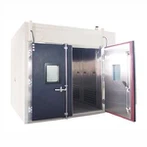
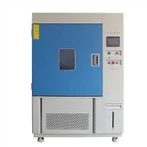
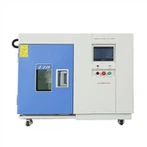
Rubber products look flexible and durable on the surface, but their real weakness often appears silently over time. In outdoor, automotive, and industrial environments, ozone in the air attacks rubber at a molecular level, leading to surface cracking, loss of elasticity, and eventual failure. These changes may take years in natural conditions-but in testing laboratories, they must be identified in days, not decades.
That is why ozone resistance testing has become a mandatory quality step for rubber seals, hoses, cable jackets, gaskets, and elastomeric components used in automotive, electrical, and industrial applications. A controlled ozone test chamber allows manufacturers to reproduce aggressive ozone exposure in a precise, repeatable, and standards-compliant way-before products reach the market.
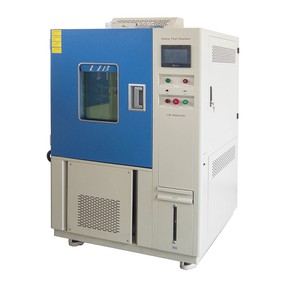
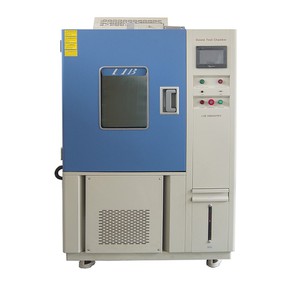
LIB Ozone Test Chamber is specifically engineered for rubber resistance testing under international standards such as ISO 1431-1, ASTM D1149, DIN 53509, and Volkswagen PV3305. By combining accurate ozone concentration control, reliable sealing, static and dynamic tensile loading, and intelligent safety design, the system delivers trustworthy aging data that engineers can rely on for material selection and product validation.
1. Working Principle of Ozone Test Chamber
An ozone test chamber works by generating, controlling, and uniformly distributing ozone in a sealed environment to accelerate rubber aging. Inside the chamber, an ozone generator produces ozone, which is mixed with conditioned air and circulated evenly across test specimens under controlled temperature and humidity.
Precise ozone concentration control is the core of reliable testing. LIB's ozone gas sensor continuously monitors ozone levels in real time, with a detection range of 1–1000 PPHM, meeting the requirements of ISO 1431-1 and PV3305. The PID controller dynamically adjusts ozone generation to maintain stability within tight tolerances, ensuring repeatable exposure throughout the test duration.
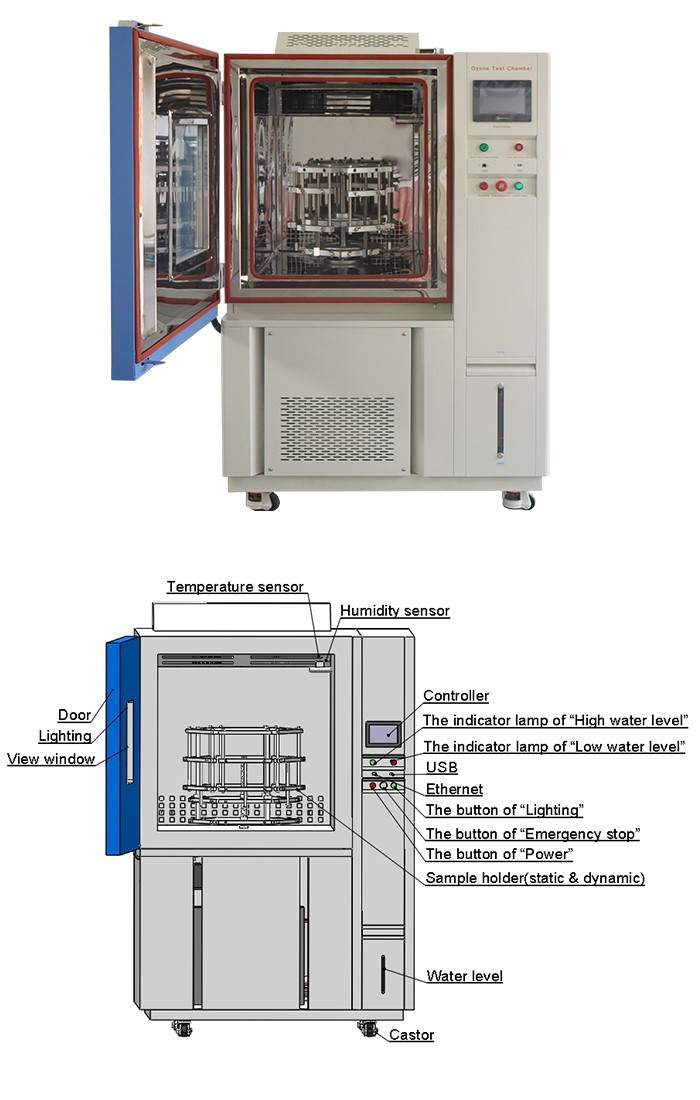
Uniform exposure is achieved through airflow design and sample movement. The chamber uses optimized air circulation combined with static and dynamic sample holders, allowing 360° rotation at 1–10 r/min. This prevents local ozone concentration differences and ensures every surface of the rubber specimen is evenly exposed.
Reliable sealing ensures both test accuracy and operator safety. The chamber door uses high-performance hard silicone rubber seals, which are resistant to ozone and suitable for long-term exposure. Compared with standard chambers, LIB applies stricter sealing verification methods. For gas safety chambers such as SO₂ corrosion systems, sealing is validated under 0.2 MPa pressure testing, and the same high sealing philosophy is applied to ozone chambers to prevent leakage during operation.
》》》For more technical information aninfo@libtestchamber.comd details about our Ozone Test Chamber, please feel free to email us at info@libtestchamber.com.
2. Testing Procedure of Ozone Test Chamber for Rubber Resistance
Rubber ozone testing focuses on controlled deformation, stable exposure conditions, and careful observation of surface cracking. Before testing, it is essential to follow standard preparation procedures to ensure meaningful and comparable results.
|
|
Model |
OC-250 |
|
|
Internal Dimension (mm) |
600*600*700 |
||
|
Overall Dimension (mm) |
960*1150*1860 |
||
|
Interior Volume (L) |
250 |
||
|
Temperature Range |
0℃ ~ +100 ℃ |
||
|
Temperature Fluctuation |
± 0.5 ℃ |
||
|
Temperature Deviation |
± 2.0 ℃ |
||
|
Humidity Range |
30% ~ 98% RH |
||
|
Humidity Deviation |
± 2.5% RH |
||
|
Cooling Rate |
Ambient ~ 0℃ within 20 min |
||
|
Ozone Concentration |
1~1000PPHM |
||
|
Sample Holder Rotate Speed |
0~10 r/min |
||
|
Airflow Rate |
0 ~ 60L/min |
||
|
Clamps Tensile Stretch |
5%~35% |
||
|
Controller |
Programmable color LCD touchscreen controller, Ethernet connection, PC Link |
||
|
Standard |
ISO1431;ASTM 1149;IEC 60903 |
||
Step 1: Sample Preparation
Rubber specimens are prepared according to the relevant standard. For example, under PV3305, samples are typically 125 mm long and 10 mm wide, stretched to 20% elongation. The sample surface must be clean, free of oil or dust, and free from pre-existing defects.
|
|
 |
| Workroom | |

Step 2: Mounting and Stretching
Samples are fixed onto the ozone sample holder using mechanical clamps or textile adhesive tape. LIB's sample rack supports adjustable tensile strain from 5% to 50%, with optional configurations up to 80%, suitable for both static and dynamic testing. Stretching speed is controlled between 1–10 cm/min, ensuring stable deformation without introducing mechanical damage.
Step 3: Setting Test Conditions
Test parameters are programmed via the color touchscreen controller. Typical conditions include:
|
Ozone Concentration |
2 ppm (±15%) |
|
Temperature |
40 °C (±3 °C) |
|
Humidity |
55% RH (±5%) |
|
Exposure Time |
48 hours |
These parameters strictly comply with PV3305, while other standards such as ISO 1431-1 may specify different ozone levels and durations.
Step 4: Exposure and Monitoring
During the test, ozone concentration, temperature, and humidity are continuously monitored and recorded. The observation window with

anti-frost conductive film and internal LED lighting allows operators to visually inspect samples without opening the chamber.
Step 5: Evaluation
After exposure, samples are removed and inspected for cracks, typically under magnification, and graded according to crack length, density, and severity as defined by the applicable standard.
》》》To receive customized solutions and pricing for the Ozone Test Chamber, please contact us at info@libtestchamber.com.
3. Maintenance Guide for Ozone Test Chamber
Regular maintenance ensures long-term accuracy, safety, and compliance. LIB ozone test chambers are designed for durability, but routine checks are essential for stable performance.
Heating System
Heating Strip: Inspect for damage; replace if broken. Verify wiring. (Every 6 months)
Circulation Fans: Check for noise, blade balance, and loose screws.
Temperature Sensor: Ensure correct reading; replace if malfunctioning.
Solid-State Relay & Contactor: Inspect wiring, clean dust, verify input 220 V / output 0–400 V.
Humidification System
Condenser & Compressor: Clean dust; check for leaks.
Pressure Gauge: Stop: 5–15 bar; Running: 15–25 bar. Refill refrigerant if low.
Water Filter & Pump: Replace filter yearly; ensure pipes are unclogged.
Humidifier Heater & Float: Check resistance 13–26 Ω; clean impurities; adjust/replace float.
Water Tank & Wet Wick: Clean monthly; replace wet wick if moldy or yellowed.
Cooling System
Clean condenser, compressor, evaporator.
Verify refrigerant pressure; repair leaks.
Ozone Circulation System
Ozone Generator & Sensor: Check function; replace every 3 years.
Activated Carbon: Replace every 3 months for frequent use.
Connection Pipes: Remove water; prevent cross-knots.
Electrical System
Inspect controller, relay, contactor, solenoid valve, and circuit board.
Clean dust, tighten screws, verify normal operation.
Other Components
Lock, Rubber Plug, Sealing Strip: Replace every 2 years or if leakage occurs.
Drain Valve & Grounding: Check regularly.
Turntable/Sample Holder: Ensure smooth rotation.
Summary: Perform monthly, semi-annual, and annual checks. Use pressurized air, multimeter, and cleaning tools. Maintain power-off state during service. Proper upkeep ensures safe, accurate, and long-term operation.
》》》To receive operation guidance for the Ozone Test Chamber, please contact us at info@libtestchamber.com.
4. Ozone Test Chamber FAQs
Q1: Is the sealing material of the Ozone Test Chamber the same as that of the SO₂ Noxious Gas Corrosion Test Chamber?
Yes. Both chambers typically use hard silicone rubber seals. However, SO₂ chambers require stricter safety validation due to higher toxicity, including 0.2 MPa pressure testing to verify sealing reliability.
Q2: What is the maximum stretching capacity of the sample rack in the Ozone Test Chamber?
The standard adjustable stretching range is 5%–50%, with customized designs available up to 80%, depending on testing requirements.
Q3: What is the stretching speed of the ozone sample holder?
The stretching speed is adjustable from 1 cm/min to 10 cm/min, allowing stable deformation in accordance with international testing standards.
Q4: Can the SUS304 stainless steel workroom resist long-term ozone corrosion? Why not use fiberglass?
Yes. Ozone does not corrode SUS304 stainless steel. Compared with fiberglass, stainless steel offers better durability, easier cleaning, superior appearance, and a longer service life.
Q5: How can complete ozone removal be ensured after exhaust treatment?
Ozone is neutralized using activated carbon adsorption. Proper carbon volume selection and regular annual replacement ensure effective ozone removal before discharge into the atmosphere.
Contact LIB Industry today to receive professional guidance, detailed technical documentation, and a customized ozone testing solution tailored to your standards and applications.