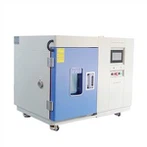
Food products do not fail overnight. Quality loss happens gradually-through moisture absorption, oxidation, microbial growth, texture change, and packaging degradation. These changes often occur silently during storage, transportation, and retail display, long before consumers notice them.
Food shelf life testing allows manufacturers to predict these failures in advance. By recreating real storage environments under controlled temperature and humidity conditions, food producers can shorten validation cycles, reduce recalls, and release products with confidence.
LIB Temperature and Humidity Test Chambers provide a stable, repeatable, and standards-compliant platform for food shelf life testing. With precise environmental control from –20 ℃ to +150 ℃ and humidity regulation from 20 % to 98 % RH, LIB chambers help food laboratories simulate months or years of storage behavior in weeks.
1. Why Shelf Life Testing Is Essential for Food Products
Shelf life determines food safety. Temperature and humidity directly affect microbial activity, especially for dairy, meat, baked goods, and ready-to-eat foods. Controlled testing helps verify compliance with HACCP principles and food safety regulations.
Shelf life protects nutritional value. Vitamins, fats, and proteins degrade faster at elevated temperatures and high humidity. Accelerated aging tests reveal nutrient loss before products reach consumers.
Shelf life ensures sensory consistency. Flavor, aroma, texture, and appearance can change during storage. Temperature-humidity cycling identifies risks such as staling, moisture migration, oil separation, and discoloration.
Shelf life validates packaging performance. Packaging materials must withstand humidity, condensation, and temperature fluctuations. Testing confirms seal integrity, barrier performance, and material compatibility.
Shelf life reduces commercial risk. Reliable shelf life data supports accurate expiration dates, minimizes waste, and strengthens regulatory documentation for global markets.

Temperature and Humidity Chambers for food Shelf Life Test
》》》For more technical information and details about our Temperature and Humidity Chamber, please feel free to email us at info@libtestchamber.com.
2. Advantages of Using LIB Temperature and Humidity Test Chambers for Food Shelf Life Testing
|
|
Name | Temperature and Humidity Chamber | ||||
|
Model |
TH-100 |
|||||
|
Internal dimension (mm) |
400*500*500 |
|||||
|
Overall dimension (mm) |
860*1050*1620 |
|||||
|
Capacity |
100L |
|||||
|
Temperature range |
-20℃ ~+150 ℃ |
|||||
|
Low type |
A: -40℃ B:-70℃ C -86℃ |
|||||
|
Humidity Range |
20%-98%RH |
|||||
|
Temperature deviation |
± 2.0 ℃ |
|||||
|
Heating rate |
3 ℃ / min |
|||||
|
Cooling rate |
1 ℃ / min |
|||||
|
Controller |
Programmable color LCD touch screen controller, Multi-language interface, Ethernet , USB |
|||||
|
Refrigerant |
R404A, R23 |
|||||
|
Exterior material |
Steel Plate with protective coating |
|||||
|
Interior material |
SUS304 stainless steel |
|||||
|
Standard configuration |
1 Cable hole (Φ 50) with plug; 2 shelves |
|||||
|
Timing Function |
0.1~999.9 (S,M,H) settable |
|||||

Wide and Accurate Environmental Control
LIB chambers operate from –20 ℃ to +150 ℃, with optional low-temperature versions reaching –40 ℃, –70 ℃, or –86 ℃, covering frozen, refrigerated, ambient, and accelerated storage conditions.
High Test Precision and Repeatability
Temperature fluctuation is controlled within ±0.5 ℃, with a maximum deviation of ±2.0 ℃. Humidity accuracy is maintained at ±2.5 % RH, ensuring consistent and reproducible results across batches.
Uniform Airflow for Real Storage Simulation
Centrifugal fans and optimized vertical airflow eliminate hot and humid spots. All food samples experience identical conditions, eliminating false failures caused by uneven exposure.
Fast Ramp Rates to Accelerate Testing
Heating reaches 3 ℃/min, and cooling reaches 1 ℃/min, allowing accelerated shelf life protocols that compress months of storage into weeks.
Food-Grade Chamber Construction
Interior: SUS304 stainless steel, corrosion-resistant and easy to clean
Exterior: Powder-coated A3 steel, industrial durability
Noise level: <65 dB(A), suitable for food laboratories and QC rooms
Smart Humidity and Water Management
Automatic water inlet and condensate recovery reduce manual refilling and support long-term continuous testing.
|
|
|
|
| Robust Workroom | Cable Hole | Temperature and Humidity Sensor |


》》》To receive customized solutions and pricing for the Temperature and Humidity Chamber, please contact us at info@libtestchamber.com.
3. Procedure for Conducting Food Shelf Life Tests Using LIB Temperature and Humidity Test Chambers
Food shelf life testing requires strict control and consistency, especially when tests are recorded for regulatory or certification purposes.
Before Testing: Key Considerations
Samples should be in final packaging, clearly labeled, and placed evenly on perforated stainless-steel shelves to ensure airflow. Avoid stacking that blocks air circulation.
Step 1: Sample Loading
Place food products on standard 50 kg load-rated shelves. Shelf height and quantity can be customized for different packaging sizes or bulk samples.
Step 2: Program Environmental Conditions
Using the PID touchscreen controller, set temperature, humidity, duration, and ramp rates. The controller supports 120 programs with 100 steps each, suitable for complex shelf life profiles.
Common food shelf life test conditions include:
Ambient storage: 25 ℃ / 60 % RH
Accelerated aging: 40 ℃ / 75 % RH
High humidity stress: 30–40 ℃ / 85–95 % RH
Cold storage simulation: –20 ℃ to 4 ℃
Step 3: Test Execution and Monitoring
Temperature deviation remains within ±2.0 ℃, ensuring compliance with ISO 16779, ASTM F1980, and IEC 60068-2-30 damp-heat testing principles. Ethernet connectivity allows remote monitoring and data logging.
Step 4: Intermediate Inspection
Through the heated, anti-fog viewing window with LED lighting, operators can inspect samples without opening the door, preventing condition disturbance.
Step 5: Data Analysis and Reporting
After testing, evaluate microbiological stability, sensory changes, packaging integrity, and moisture migration. Data supports shelf life claims, labeling decisions, and regulatory submissions.
》》》To receive operation guidance for the Temperature and Humidity Chamber, please contact us at info@libtestchamber.com.
4. FAQs on Temperature and Humidity Test Chambers for Food Shelf Life Testing
Q1: How often should the silicone door sealing ring be replaced?
It is recommended to replace the silicone sealing ring every 3 years to maintain airtightness and test accuracy. LIB chambers are designed for up to 20 years of operation.
Q2: How long does the refrigerant last in the compressor system?
The refrigerant operates in a fully sealed system and is non-consumable. Under normal conditions, it can function reliably for up to 20 years.
Q3: Will refrigerant leakage affect food testing safety?
LIB chambers undergo strict pressure and leak testing. Refrigerant leakage is extremely rare and does not contact the test chamber interior.
Q4: What standards can food shelf life testing comply with?
LIB chambers support testing aligned with ISO 16779, ASTM F1980, IEC 60068-2-30, HACCP, and food storage validation protocols.
Q5: Can shelves and cable holes be customized for food testing?
Yes. Shelf quantity, load capacity, and 50 mm cable holes (size, number, and position) can be customized to support sensors, data loggers, or special packaging tests.
Long-Term Value
LIB chambers feature a 7-inch color touchscreen, Ethernet and USB connectivity, multilingual interfaces, and closed-loop water recovery that reduces water consumption by up to 70 %. Routine maintenance is minimal, keeping downtime low.
LIB Temperature and Humidity Test Chambers help food manufacturers shorten development cycles, meet global standards, and deliver safer products to market.
Contact LIB Industry today to discuss your food shelf life testing requirements and discover how our chambers can elevate your quality assurance process.