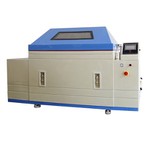
Medical devices are no longer confined to clean hospital rooms. Portable monitors travel in ambulances, diagnostic equipment operates in mobile clinics, and wearable medical electronics are used outdoors, in disaster zones, and even on military missions. These real-world conditions raise a critical question for manufacturers and regulators alike: can MIL-STD-810G environmental testing be applied to medical devices? When a life-supporting or diagnostic device fails due to water ingress or dust contamination, the consequences extend far beyond product damage-they affect patient safety and regulatory compliance. Environmental durability has become a competitive and ethical requirement.
LIB's MIL-STD-810G Test Chambers provide a proven framework to answer this challenge. Originally developed for military equipment, these test systems now offer valuable, data-driven insights for medical device validation, especially for products exposed to harsh, uncontrolled environments.
1. Application Areas of MIL-STD-810G Test Chambers
Rain, sand, dust, and wind are not military-only threats. Medical devices used in emergency response, home healthcare, rural medicine, and transport environments face similar exposure risks. Water droplets can penetrate enclosures, fine dust can compromise sensors, and airflow can accelerate wear on connectors and seals. Unlike basic IP testing, MIL-STD-810G evaluates performance under stress, not just protection levels. It answers a more practical question: will the device still work after exposure?
LIB's MIL-STD-810G Test Chambers are engineered to simulate blowing rain, blowing sand, blowing dust, and wind-driven environments with controlled, repeatable parameters. With programmable PID control, quantified airflow, and defined particle sizes, LIB systems support both military qualification and cross-industry validation-including advanced medical equipment testing.
|
|
|
| MIL-STD-810G Rain Test Chamber | MIL-STD-810G Dust and Sand Test Chamber |


MIL-STD-810G can be applied to medical devices, particularly those used outside traditional clinical settings.
Medical Device Applications Include:
- Portable diagnostic equipment (ultrasound, ECG, patient monitors)
- Wearable medical electronics
- Emergency and ambulance-mounted devices
- Military and field medical systems
- Telemedicine hardware for rural or disaster zones
Consumer Electronics
MIL-STD-810G testing ensures smartphones, tablets, laptops, smartwatches, wearables, and VR/AR devices remain reliable under rain, dust, sandstorms, drops, and vibration.
Outdoor and Sports Equipment
GPS devices, action cameras, waterproof speakers, drones, and exploration gear are tested for performance under rain, wind-blown dust, extreme temperatures, and humidity.
Military and Defense Equipment
Communication devices, tactical computers, radar sensors, weapons, night vision gear, and field survival equipment are tested for extreme temperatures, impacts, vibration, sand, dust, and rain.
Automotive and Transportation
Vehicle electronics, EV chargers, and transit or railway control systems are tested for reliability in rain, snow, dust, high temperatures, and vibration.

MIL-STD-810G Test Chamber for Medical devices test
MIL-STD-810G Methods such as Method 506.5 (Rain) and Method 510.5 (Sand and Dust) evaluate whether a device maintains functionality after exposure-not merely whether water or dust enters the enclosure. These conditions exceed many standard medical device test environments, providing additional safety margins and real-world confidence.
》》》For more technical information aninfo@libtestchamber.comd details about ourMIL-STD-810G Test Chamber, please feel free to email us at info@libtestchamber.com.
2. Classification of MIL-STD-810G Test Chambers
LIB offers two primary chamber categories aligned with MIL-STD-810G requirements.
MIL-STD-810G Rain Test Chamber
Designed according to Method 506.5, these chambers simulate:
- Dripping rain
- Blowing rain
- Wind-driven and pressurized rainfall
Key Technical Parameters:
| Name | MIL STD 810h Tester |
|
Model |
RIM-0120 |
|
Overall Dimension |
2580*6400*4900 mm D*W*H |
|
The load Turntable |
100kg |
|
The diameter of Turntable |
800mm |
|
Drip tray size |
1600*1000mm , height can be adjustable |
|
Air speed |
≥ 18m/s |
|
Rainfall rate |
≥ 1.7 mm/min |
|
Droplet size |
0.5 mm ~ 4.5 mm |
|
Turntable speed |
1-7 r/min, adjustable |
|
Volume of water |
≥280L/m2/h |
|
Nozzle pressure |
276kpa |
|
Rainfall rate |
20.8L/min |
|
Water supply system |
Storage water tank; Booster pump; |
|
Automatic water supply; Water purification system; |
|
|
Cooling system |
Mechanical compression refrigeration system |
|
Controller |
Programmable color LCD touch screen controller |
|
Build-in Water Tank(mm) |
710*1130*1400 mm |
|
Door Lock |
Electromagnetic lock |
|
Exterior Material |
A3 Steel Plate with protective coating |
|
Interior Material |
SUS304 stainless steel |
|
|
|
| Workroom | Observation window with wiper |
|
|
|
| Built-in light | Turntable |
|
|
|
| Built-in power supply | Centrifugal fan |


These chambers are ideal for evaluating enclosure sealing, connector protection, display reliability, and operational stability after water exposure.

MIL-STD-810G Dust and Sand Test Chamber
Compliant with Method 510.5, these chambers simulate desert and airborne particulate environments.
|
Model |
DIM-1000 |
|
Overall Dimension |
2800*3500*2000mm D*W*H |
|
Interior Volume |
1000L |
|
Blowing Dust |
|
|
Air velocity |
1.5 -8.9m/s |
|
Concentration of dust |
10.7±7g/ m³ |
|
Dust particles |
< 150μm |
|
Blowing sand |
|
|
Air velocity |
18.0 -29.0m/s |
|
Concentration of sand |
0.18+0.2g/m³; 1.1+0.3g/m³; 2.2+0.5g/m³ |
|
Sand particles |
149μm - 600μm, 600μm - 850μm |
|
Controller |
Programmable color LCD touch screen controller |
|
Door Lock |
Electromagnetic lock |
|
Testing Platform Diameter |
600mm |
|
Testing Platform Speed |
1-7 r.p.m |
|
Dust Detector |
Integrated dust detector |
|
Exterior Material |
A3 Steel Plate with protective coating |
|
Interior Material |
SUS304 stainless steel |
|
Maximum Noise |
65 dBA |
 |
 |
| Workroom | Large Centrifugal Fan |
For medical devices with cooling vents, sensors, or mechanical interfaces, these tests reveal failure modes that standard lab testing often misses.
》》》To receive customized solutions and pricing for the MIL-STD-810G Test Chamber, please contact us at info@libtestchamber.com.
3. Functions and Advantages of MIL-STD-810G Test Chambers
Quantified, Repeatable Environmental Stress
LIB chambers utilize PID-controlled systems with integrated sensors to maintain stable airflow, particle concentration, and water delivery. This precise control ensures that test cycles are fully repeatable, which is essential for regulatory documentation, design verification, and performance comparison.
High-Accuracy Control Systems
The chambers feature a programmable color touchscreen controller with Ethernet connectivity for remote monitoring. They can store up to 120 test programs and provide real-time parameter display and data logging, enabling accurate control and consistent testing.
Durable Industrial Construction
Built for long-term reliability, the interior is made of SUS304 stainless steel for corrosion and abrasion resistance, while the exterior is constructed from A3 steel with a protective coating. The chamber maintains stable performance even under high humidity and particulate exposure.
Safety and Reliability
Safety features include water-electricity separation systems, electromagnetic door locks, and integrated dust detectors. During sand and dust testing, noise levels are maintained at ≤65 dBA, ensuring a safe and controlled testing environment.
These features make LIB chambers suitable not only for military labs, but also for regulated medical and biomedical testing environments.
》》》To receive operation guidance for the MIL-STD-810G Test Chamber, please contact us at info@libtestchamber.com.
4. Frequently Asked Questions on MIL-STD-810G Test Chambers
Q1: Is MIL-STD-810G mandatory for medical devices?
No. However, it is increasingly used as a supplementary validation method to demonstrate environmental robustness beyond IEC or ISO requirements.
Q2: Can MIL-STD-810G replace IP testing?
No. IP testing verifies ingress protection levels, while MIL-STD-810G evaluates functional performance under stress. Many manufacturers use both.
Q3: Are MIL-STD-810G tests repeatable for certification purposes?
Yes. LIB chambers use controlled parameters and programmable profiles to ensure consistent, auditable results.
Q4: Can test parameters be customized for specific medical devices?
Yes. Airflow, rain intensity, particle size, and duration can all be adjusted to match realistic use scenarios.
Q5: Does LIB provide global technical support?
Yes. LIB offers a 3-year warranty, 24/7 English technical support, and global spare-parts availability within 7–15 days.
LIB combines military-grade engineering with practical usability. From pre-programmed test profiles to erosion-resistant interiors, every detail is designed to reduce downtime and improve test confidence. By applying MIL-STD-810G testing to medical devices, manufacturers gain: Higher product reliability, Improved risk management, Stronger validation data, and Increased trust from regulators and end users.
Contact LIB Industry today to explore how MIL-STD-810G Rain and Dust Test Chambers can strengthen the environmental validation of your medical devices and ensure performance where it matters most.