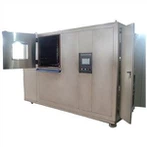
In today's rapidly advancing industries, the need for exacting environmental control is paramount. At the forefront of achieving this precision is the constant temperature and humidity system, commonly known as a temperature humidity chamber. This essential equipment plays a pivotal role in guaranteeing that precise conditions are not only established but also meticulously maintained to meet the stringent demands of diverse processes. In this blog, we delve into the fundamental principles of constant temperature and humidity systems, their operational mechanisms, and their wide-ranging applications across different sectors.
What is a Constant Temperature and Humidity System?
A constant temperature and humidity system are designed to control and maintain specific levels of temperature and humidity within a defined space. This is achieved through a temperature humidity chamber, which is a controlled environment used to simulate various climatic conditions. These systems are essential in industries where precise environmental conditions are critical for product testing, storage, and manufacturing processes.
Components of a Temperature Humidity Chamber
A typical temperature humidity chamber consists of several key components:
- Temperature Control Unit: This unit serves as the core mechanism for regulating the internal temperature of the chamber, enabling both heating and cooling operations to maintain a consistent temperature range.
- Humidity Control Unit: Crucial for adjusting moisture levels within the chamber, this unit ensures that humidity remains within specified parameters essential for the testing or storage requirements.
- Sensors and Controllers: These devices continuously monitor environmental conditions within the chamber, facilitating real-time adjustments to uphold the preset temperature and humidity settings.
- Insulation and Sealing: Effective insulation and sealing mechanisms are fundamental in safeguarding the internal chamber environment against external influences, thereby preserving the integrity of testing or storage conditions.
How Does It Work?
The operation of a temperature humidity chamber involves a combination of heating, cooling, humidifying, and dehumidifying processes. Here's a simplified overview of how it works:
- Setting Parameters: Initial setup involves configuring the desired temperature and humidity levels via the control panel interface.
- Monitoring Conditions: Integrated sensors actively monitor internal conditions such as temperature and humidity levels throughout the chamber.
- Adjusting Environment: Upon detection of deviations from preset parameters, the control units promptly initiate appropriate actions, activating heating or cooling mechanisms as well as adjusting humidity levels.
- Maintaining Stability: Continuous monitoring and responsive adjustments ensure that the chamber sustains a stable environment, consistently aligning with specified parameters to uphold the required testing or storage conditions.
Why is a Constant Temperature and Humidity System Important?
The ability to maintain precise environmental conditions is crucial in many fields. Here's why these systems are important:
Product Testing and Quality Control
Industries such as electronics, pharmaceuticals, and automotive rely heavily on the rigorous testing of products under varying environmental conditions. A temperature humidity chamber serves as a critical tool, enabling manufacturers to simulate extreme environments and assess how their products perform. This process ensures that products meet stringent quality standards and deliver reliable performance in real-world scenarios.
Storage of Sensitive Materials
Certain materials, including pharmaceuticals, chemicals, and biological samples, demand specific storage conditions to preserve their efficacy and integrity over time. A constant temperature and humidity system play a crucial role in maintaining these optimal storage conditions. By preventing fluctuations in temperature and humidity, the system safeguards sensitive materials from degradation, thereby extending their shelf life and ensuring their effectiveness.
Research and Development
In scientific research, maintaining consistent environmental conditions is essential to achieve reproducible and accurate results. Temperature humidity chambers provide researchers with controlled environments to conduct experiments free from external influences. This controlled setting enhances the reliability and validity of research outcomes, supporting advancements in fields ranging from biomedical studies to material science.
What Are the Applications of Temperature Humidity Chambers?
Temperature humidity chambers have a wide range of applications across various industries. Let's explore some of the key areas where these systems are used:
Electronics and Semiconductor Testing
The electronics and semiconductor industries rely heavily on temperature humidity chambers to test the durability and performance of components under different environmental conditions. This ensures that products can withstand varying temperatures and humidity levels during their lifecycle.
Pharmaceutical and Biomedical Research
In pharmaceutical and biomedical research, precise environmental conditions are crucial for the stability of samples and the accuracy of experiments. Temperature humidity chambers provide the controlled environment needed for drug testing, storage of biological samples, and other critical applications.
Automotive and Aerospace
The automotive and aerospace industries use temperature humidity chambers to test the reliability of components and materials under extreme conditions. This helps in ensuring that vehicles and aircraft can operate safely in diverse environments.
Food and Beverage Industry
In the food and beverage industry, maintaining specific temperature and humidity levels is essential for preserving the quality and safety of products. Temperature humidity chambers are used for storage, testing, and quality control processes to ensure that products meet regulatory standards.
Conclusion
A constant temperature and humidity system, or temperature humidity chamber, is an essential tool for various industries that require precise environmental control. From product testing and quality control to storage of sensitive materials and scientific research, these systems play a crucial role in ensuring optimal conditions and reliable results. By understanding the importance and applications of constant temperature and humidity systems, businesses can make informed decisions and ensure their processes and products meet the highest standards of quality and reliability.
If you're interested in learning more about Temperature Humidity Chambers or need a solution tailored to your specific requirements, feel free to contact us at info@libtestchamber.com.
References
1. Smith, J., & Johnson, A. (2020). "Applications of temperature humidity chambers in electronics testing." International Journal of Electronics Testing, 15(2), 123-135.
2. Brown, L., & Davis, P. (2018). "Temperature humidity chambers: Design principles and industrial applications." Journal of Industrial Engineering, 30(4), 345-357.
3. Pharmaceutical Technology. (2022). "Temperature humidity chambers for pharmaceutical stability testing."
4. Aerospace Manufacturing Magazine. (2023). "Environmental testing in aerospace: The role of temperature humidity chambers."
5. Food Quality and Safety Magazine. (2021). "Temperature humidity chambers in food industry: Ensuring product quality and safety."
6. National Institute of Standards and Technology (NIST). (2020). "Guidelines for environmental testing: Temperature humidity chambers."