When evaluating the long-term durability of paints, coatings, and polymer materials, accelerated weathering tests must closely reflect real outdoor conditions. Sunlight, temperature fluctuations, moisture, and condensation work together to drive material degradation, and even small deviations in test parameters can lead to unreliable results. That's why laboratories worldwide rely on xenon arc weathering technology to deliver realistic, repeatable, and standards-compliant exposure simulation.
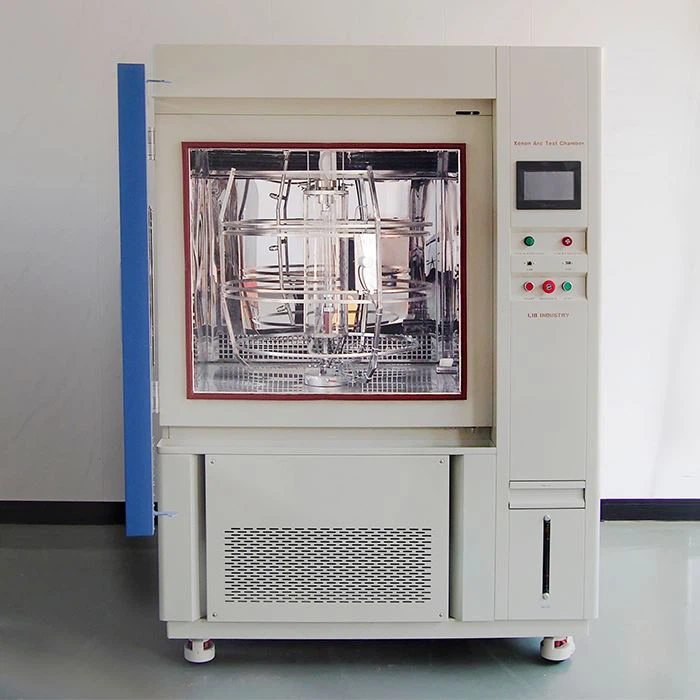
LIB's Xenon Arc Lamp Chamber has earned strong recognition from global customers for its stability, reliability, and ease of maintenance. Recently, a long-term user in Vietnam confirmed that their chamber continues to operate stably, supported by regular preventive maintenance and clear service documentation provided by LIB. Feedback such as "the chamber works stably" and appreciation for timely maintenance guidance reflects the confidence customers place in LIB equipment for continuous, high-precision weathering testing in real laboratory environments.
Method of ASTM G155
ASTM G155 defines the accelerated weathering of coatings using a xenon arc lamp. The method replicates sunlight exposure, alternating water spray, and darkness to simulate real-world conditions. Key parameters include black panel temperature (BPT), chamber air temperature, irradiance, and cycle timing. ASTM G155 includes several representative exposure cycles that illustrate how xenon arc weathering tests are commonly conducted.
Cycle 1 – Continuous Light with Periodic Water Spray
This cycle represents repeated dry–wet exposure under continuous illumination and is one of the most frequently referenced baseline cycles in ASTM G155. It originated from earlier xenon arc practices and serves as a general-purpose outdoor reference condition. |
Cycle 2 – Extended Light Followed by Dark with High Humidity
This cycle introduces pronounced transitions between illuminated and dark, humid conditions. In ASTM G155, Cycle 2 aligns with practices used in ASTM D6695 and ASTM D2565, with defined temperature and humidity control to improve repeatability. |
Cycle 3 – Light with High Humidity during Dark Periods
Cycle 3 has historically been used for exterior-grade textile materials. The absence of water spray emphasizes degradation driven by photo-oxidation combined with moisture condensation, rather than direct wetting. |
Cycle 4 – Continuous Light without Moisture
This cycle isolates the effects of radiation and heat and is typically applied to indoor plastic materials, where moisture exposure is minimal and photochemical degradation is the dominant aging mechanism. |
Cycle 5 and Cycle 6 – Window Glass Filter, Indoor Textile Exposure
Cycles 5 and 6 have commonly been used for indoor textile materials, where sunlight is transmitted through glass and ultraviolet radiation below approximately 300 nm is largely filtered out. |
Cycle 7 – Automotive Exterior Exposure
Cycle 7 has been widely used for automotive exterior materials and corresponds to the exposure cycles specified in SAE J2527. ASTM G155 notes that, during dark phases, back spray only should be used to generate condensation. |
Cycle 8 – Automotive Interior Exposure
Cycle 8 corresponds to SAE J2412 and has been used primarily for automotive interior components, such as dashboards and trim, where materials are exposed to sunlight through glass and elevated cabin temperatures. |
|
The procedure begins by stabilizing the black panel and chamber air temperature at the specified setpoints. Test specimens are then exposed to full-spectrum xenon radiation and moisture conditions according to the selected ASTM G155 exposure cycle. The programmed sequence is repeated continuously until the specified number of cycles or total exposure duration is reached.
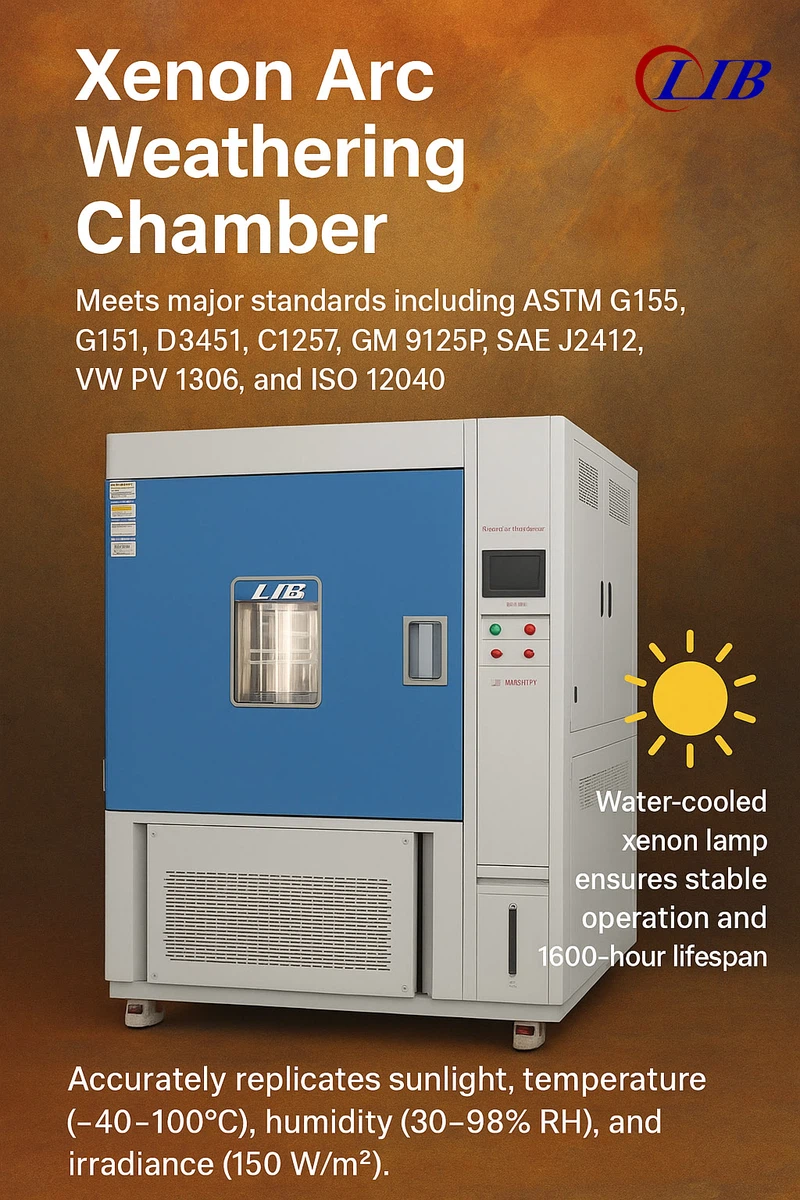
Accelerated Weathering Chambers for Aging Testing
》》》Only some of the exposure cycles are listed here. For more details, please contact info@libtestchamber.com.
Advantages of LIB Xenon Arc Lamp Chamber under ASTM G155
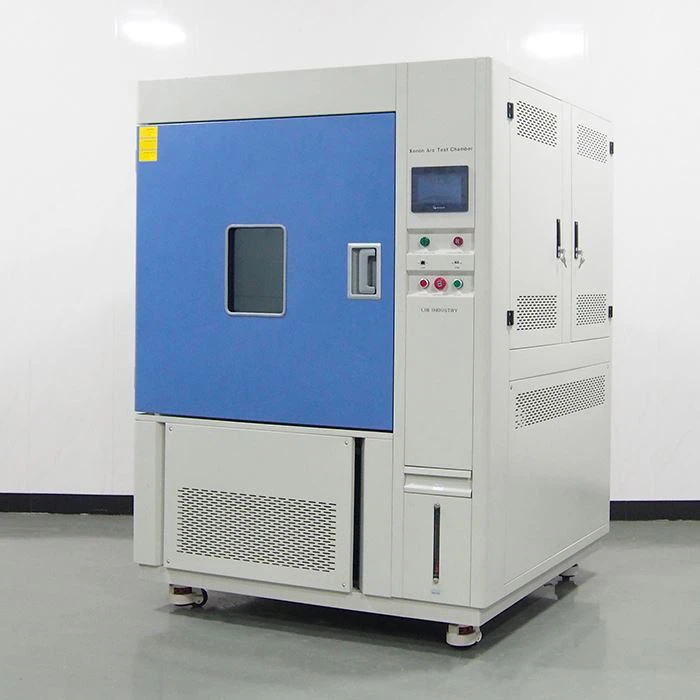
LIB's Xenon Arc Lamp Chamber offers precise, reliable, and reproducible weathering simulation under ASTM G155 conditions:
 |
 |
 |
|
|
Model |
XL-S-750 |
|
Internal Dimension (mm) |
950*950*850 mm |
|
Overall Dimension (mm) |
1300*1420*1800 mm |
|
Sample holder |
Adjustable speed, 1r /min |
|
Chamber Type |
Rotating Holder |
|
Irradiation Source |
1 piece of 4500w water-cooled xenon arc lamp with inner quartz and outer borosilicate filter |
|
Irradiance Range |
150 W/㎡ |
|
Bandwidth Measurement |
300~400 nm |
|
Chamber Temperature Range |
-40~ 100 ℃ ±2 ℃ |
|
Black Panel Temperature |
BPT 35 ~ 85 ℃ ±2 ℃ |
|
Humidity Range |
30 % ~ 98 % RH |
|
Water Spray Cycle |
1~9999 H 59 M (Adjustable) |
|
Controller |
Programmable color LCD touch screen controller |
|
Radiometer |
UV Radiometer, Tolerance: ±5 % |
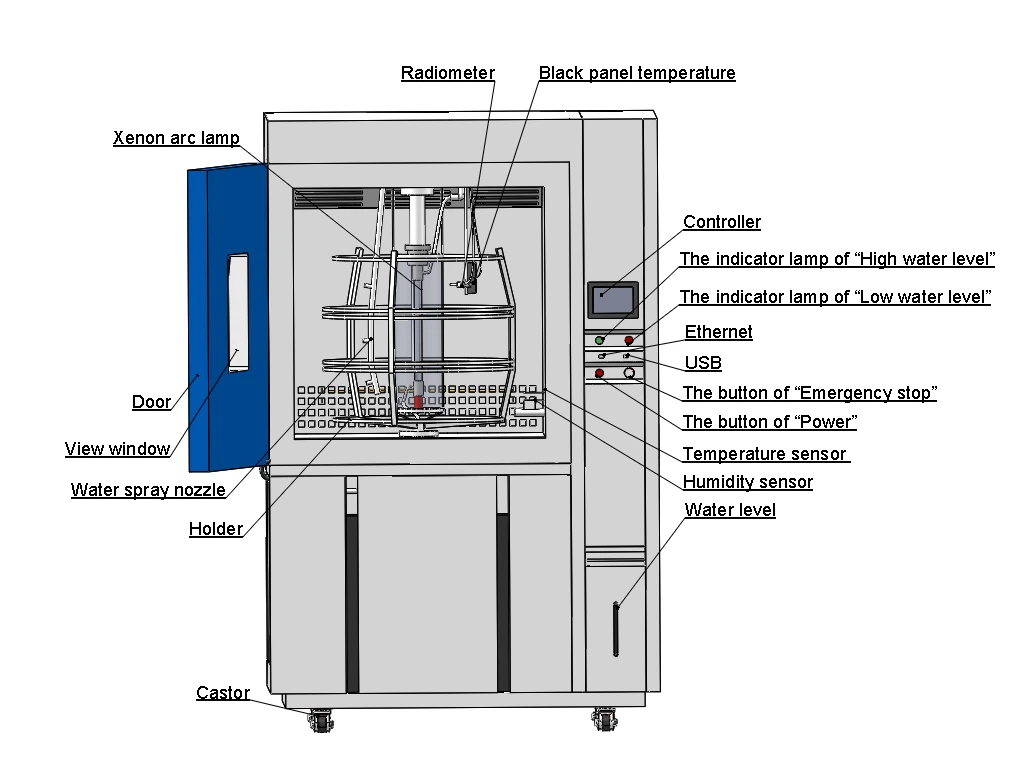
1. True Sunlight Simulation: Water-cooled xenon lamps with daylight, window glass, and extended UV filters reproduce natural solar spectra from 280–800 nm.
2. Precise Temperature Control: Blackboard temperature maintained at 35–85 °C (±2 °C), chamber air temperature adjustable to match the sample type. This eliminates temperature variations that can affect surface degradation.
3. Flexible Cycle Programming: 120 pre-set programs with up to 100 segments each allow users to simulate complex light/water/dark cycles exactly as defined in ASTM G155.
4. Uniform Sample Exposure: Rotating racks ensure every sample receives equal irradiation and water exposure, reducing variation in results.
5. Automated Logging and Traceability: PID controllers continuously record irradiance, BPT, and CAT, providing exportable data for ISO and ASTM-compliant reporting.
6. Water Efficiency: Closed-loop water filtration recycles up to 80% of spray water, ensuring consistent quality while lowering consumption.
》》》 Please feel free to email us at info@libtestchamber.com for detailed technical information, standard-compliant testing solutions, customized chamber configurations, or professional support from our experienced engineering team!
Testing Coatings with LIB Xenon Arc Lamp Chamber
Using LIB's chamber to test coatings or plastics according to ASTM G155 is straightforward and reproducible. A typical workflow involves:
Step 1: Prepare the Samples
Place painted or coated samples on the rotating rack. Ensure each sample is labeled and secured in its intended orientation to replicate real-world exposure.
|
|
|
| Workroom |
Hanging specimen |


Step 2: Preheat the Chamber
Set the black panel temperature (BPT) to 63 °C and chamber air temperature (CAT) according to sample color (e.g., 35 °C for dark samples, 50 °C for light samples). Verify water spray system is filled and operational.
|
|
|


xenon lamp and filters
Step 3: Run ASTM G155 Cycles
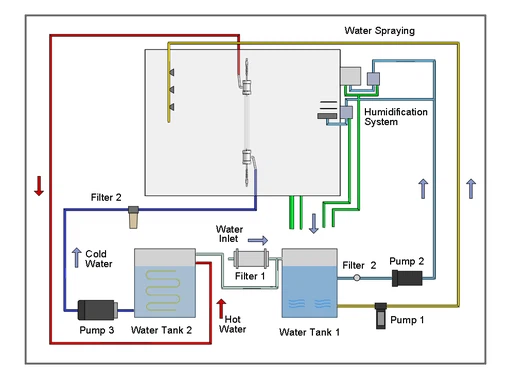
Execute programmed cycles with alternating light, water spray, and dark phases. For example, 102 minutes continuous light followed by 18 minutes of water spray. Repeat for the number of cycles required by the coating type.
|
|
 |
|
Spraying system provides uniform water over specimens. Automatic water supply, filtration, and drainage ensure uninterrupted long-term testing. |
|

Step 4: Monitor and Record Data
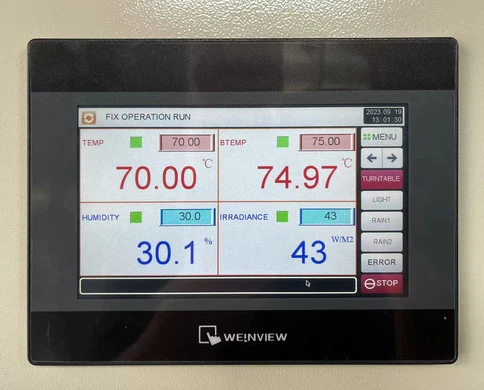
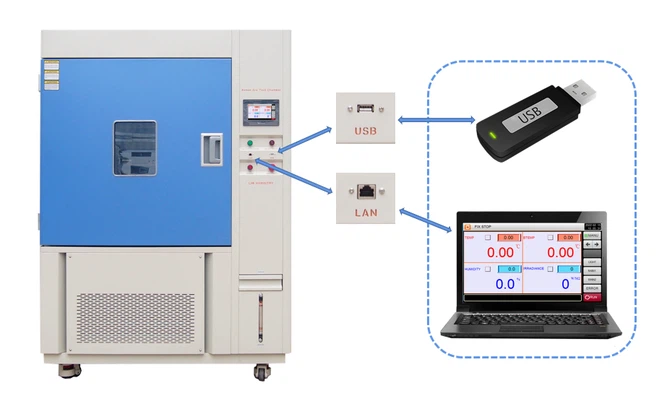
Check irradiance, BPT, and CAT during the test. Data is logged automatically via Ethernet and touch-screen PID controller, allowing comparison with historical tests.
 |
 |
| Control system | |
Step 5: Evaluate Degradation
After completing cycles, inspect coatings for color change, cracking, or adhesion loss. Record quantitative measurements such as gloss reduction, ΔE, or scribe width for standard reporting.
》》》 This workflow ensures repeatable and comparable results across different labs, making it ideal for R&D, QC, and certification purposes. For more technical guidance, contact info@libtestchamber.com
FAQs on LIB Xenon Arc Lamp Chamber
Q1: What is the lifespan of the xenon lamp tube, and can it be extended?
A: The standard lifespan of the xenon lamp tube is 1600 hours. After this period, the lamp can still operate, but the light intensity gradually decreases, which may affect test accuracy. To ensure reliable and precise results, we recommend replacing the lamp promptly once it reaches the end of its rated life.
Q2: What is the maximum sample thickness for the standard rotating xenon lamp rack? What about for customized racks?
A: The standard rotating xenon lamp rack accommodates samples up to 3 cm thick. For special requirements, customized racks can support sample thicknesses up to 11 cm. LIB can provide fully non-standard solutions tailored to customer needs, ensuring compatibility with unique test scenarios.
Q3: If the test chamber is not fully loaded and there are gaps, will it affect humidity inside?
A: Even if the chamber is not fully filled, gaps will not affect humidity uniformity. The xenon lamp system is equipped with uniform light distribution and air circulation, ensuring stable and reliable test conditions.
Q4: What is the diameter of the rotating xenon lamp rack?
A: According to ASTM G155, the standard rotating xenon lamp rack has a diameter of 650 mm. The distance from the sample to the lamp is 320–420 mm to ensure uniform irradiation and meet testing requirements.
Q5: Can the xenon lamp spray water from both the front and rear?
A: The xenon lamp system can be optionally configured for front and rear water spray to enhance damp-heat cycling. The rear spray feature is available at an additional cost of $1230.
LIB Xenon Arc Lamp Chamber provides a robust, standardized, and efficient solution for accelerated weathering of coatings, fully aligned with ASTM G155 and other international protocols. It delivers accurate simulation of sunlight, humidity, and water exposure, ensuring professional, repeatable, and comparable results for R&D, QC, and certification applications.
Contact LIB Industry today to design a customized test plan, implement ASTM G155 cycles, and accelerate coating development with precise, reliable, and internationally recognized weathering results.