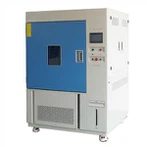
A product may work perfectly at -40°C and also work perfectly at +120°C, but that does not mean it can survive moving between these temperatures quickly. Sudden temperature changes can crack solder joints, deform materials, weaken seals, and cause electrical failures in automotive and electronic products. In some applications, the temperature may change from -40°C to +120°C within seconds, creating a level of stress that normal environmental testing cannot reproduce.
This article explains the difference between a Temperature Shock Chamber and a Temperature Cycling Chamber, how their test methods and standards differ, and how manufacturers can choose the right equipment for automotive components, electronic products, batteries, and other temperature-sensitive products.
1. Temperature Shock Chamber vs Temperature Cycling Chamber and How to Choose
The main difference is how quickly the temperature changes. A Temperature Shock Chamber is designed for rapid movement between hot and cold conditions. A Temperature Cycling Chamber changes temperature in a controlled ramp, allowing the product to gradually move from one temperature condition to another.
A typical air-to-air Temperature Shock Chamber uses two or three zones. The hot zone can reach up to +220°C, while the cold zone can reach down to -75°C. A basket transfers the test sample between the zones in ≤3 seconds. After transfer, the equipment can recover to the target condition within ≤5 minutes. Temperature fluctuation can be controlled within ±0.5°C, with temperature deviation within ±2°C.
A Temperature Cycling Chamber is better suited to gradual temperature changes. For example, a test may ramp from -40°C to +125°C at a controlled rate, hold the product at both temperature extremes, and then return to the starting condition. This method is useful when the purpose is to evaluate long-term thermal expansion and contraction rather than an extremely fast thermal shock.
| Item |
|
Temperature Cycling Chamber |
|---|---|---|
| Main purpose | Rapid thermal shock | Controlled temperature cycling |
| Temperature change | Very fast | Controlled ramp |
| Typical range | -75°C to +220°C | Application dependent |
| Transfer time | ≤3 seconds for LIB equipment | Controlled by ramp rate |
| Recovery | ≤5 minutes | Depends on ramp and load |
| Typical automotive test | -40°C to +150°C | -40°C to +125°C |
| Typical electronics test | -55°C to +125°C | -40°C to +125°C |
| Key standards | IEC 60068-2-14, MIL-STD-810 Method 503, JESD22-A104/A106 | IEC 60068-2-14, ISO 16750-4, JESD22-A104 |
| Battery application | Thermal shock and safety | Thermal cycling and durability |
| Irradiance | Not applicable | Not applicable |
| Best for | Sudden thermal stress | Repeated gradual thermal stress |


The relevant standards also depend on the product. IEC 60068-2-14 covers temperature change testing, while MIL-STD-810 Method 503 is used for military thermal shock testing. Semiconductor products may use JESD22-A104 or JESD22-A106, and automotive electronic components may be evaluated according to LV124. For automotive environmental testing, ISO 16750-4 is also commonly relevant to climatic loads.
One important point is that neither temperature shock nor temperature cycling uses irradiance as a test parameter. Irradiance values such as 0.35 W/(m²·nm) at 340 nm belong to xenon arc weathering tests, not thermal testing. For temperature equipment, the important numerical parameters are temperature range, ramp or transfer time, dwell time, recovery time, fluctuation, and deviation.
For product selection, choose a Temperature Shock Chamber when the product must survive sudden temperature changes. Choose a Temperature Cycling Chamber when controlled heating and cooling over longer periods is the main requirement.
2. Why Temperature Shock Testing Is Important for Automotive and Electronic Products
Sudden Temperature Changes Can Cause Hidden Product Failures
Automotive sensors, connectors, PCBs, battery components, seals, displays, and electronic modules can experience large temperature differences during actual operation. A component may start in a cold environment and then be exposed to engine heat or direct solar heating.
Temperature shock testing exposes these products to rapid hot and cold transitions before they reach the market. Typical automotive conditions can range from -40°C to +150°C, while electronics may be tested between -55°C and +125°C for 30 to 300 cycles. More demanding automotive applications may require up to 1000 cycles.
LIB Industry Provides Practical Temperature Shock Solutions
LIB Industry provides air-to-air Temperature Shock Chamber solutions for automotive, electronics, semiconductor, aerospace, defense, and battery applications. The equipment can operate from approximately -75°C to +220°C, with transfer between hot and cold zones in ≤3 seconds.
The system uses a two-zone or three-zone structure, programmable touchscreen control, USB and communication interfaces, and multiple safety protections. For battery applications, explosion-proof configurations, over-temperature protection, pressure protection, and leakage protection can be included. The equipment is designed for repeatable testing rather than simply producing extreme temperatures.
LIB Industry equipment has been supplied for applications involving companies and projects in automotive, electronics, battery, and other industrial fields. Its environmental testing solutions are used internationally, supporting different test conditions, specimen sizes, and standards.
Standards for Automotive, Electronics, Batteries and Coatings
| Standard | Application |
|---|---|
| IEC 60068-2-14 | Temperature change and thermal shock testing |
| MIL-STD-810 Method 503 | Military thermal shock |
| JESD22-A104 | Semiconductor temperature cycling |
| JESD22-A106 | Semiconductor thermal shock |
| LV124 | Automotive electronic component testing |
| ISO 16750-4 | Environmental conditions and electrical/electronic equipment in road vehicles |
| IEC 60068-2-14 Na | Thermal shock sequence for specific product testing |
| IEC 60068 series | Environmental testing of electrical and electronic products |
These standards help manufacturers define temperature limits, dwell conditions, transfer requirements, cycle numbers, and acceptance criteria. The exact procedure should always follow the applicable product specification or customer test method.
3. Thai Customer Uses Temperature Shock Equipment for Automotive Component Testing
A Thai customer purchased LIB Industry Temperature Shock Chamber equipment for automotive component performance testing. The application focuses on stable and repeatable thermal shock testing according to IEC 60068-2-14, helping the customer evaluate how products respond to rapid temperature changes.
A typical IEC 60068-2-14 thermal shock sequence can be organized around a high-temperature condition, a low-temperature condition, defined dwell periods, rapid transfer, and repeated cycles. For battery-related testing, the supplied application data includes a high-temperature condition of +85°C to +125°C with a 30-minute dwell, a low-temperature condition of -40°C with a 30-minute dwell, and 50 to 100 cycles. LIB equipment can achieve transfer in ≤3 seconds, while the general standard condition may allow a longer transfer period depending on the selected method.
A practical test process is:
Place the automotive component in the test basket and confirm its electrical connections.
Precondition the hot zone to the required temperature, such as +85°C or +125°C.
Precondition the cold zone to the required low temperature, such as -40°C.
Stabilize the two zones before starting the cycle.
Transfer the sample rapidly between the hot and cold zones.
Hold the sample for the specified dwell time, such as 30 minutes.
Repeat the required number of cycles, such as 50 to 100 cycles.
Check electrical performance, sealing, appearance, mechanical condition, and other acceptance criteria after testing.
The customer was satisfied with the equipment because the system provides accurate temperature control, rapid transfer, stable operation, and programmable testing. The temperature fluctuation can be controlled within ±0.5°C, while temperature deviation can be controlled within ±2°C.
The equipment also provides several practical advantages:
High safety: Over-temperature, pressure, and leakage protections help protect operators, samples, and the equipment. Explosion-proof configurations are available for demanding battery applications.
Accurate testing: Fast transfer, stable temperature control, and programmable cycles help produce repeatable results.
Flexible configuration: Different test volumes, temperature ranges, basket dimensions, cable ports, and safety configurations can be customized according to the customer's product and test method.
Durable materials: The exterior uses coated A3 steel, while suitable internal construction and sealing materials are selected for long-term environmental testing.
Easy operation: A programmable color touchscreen controller supports complex test sequences, while USB and communication interfaces support data management and monitoring.
Service support: LIB Industry provides installation guidance, operation training, technical support, a 3-year warranty, and lifetime service. Remote assistance and English-speaking technical support are available, and on-site training can be arranged when required.
These features make the equipment suitable for laboratories that need reliable testing without adding unnecessary operating complexity.
4. FAQs on the Temperature Shock Chamber
What is the main difference between a Temperature Shock Chamber and a Temperature Cycling Chamber?
A Temperature Shock Chamber changes between hot and cold zones very quickly, often within seconds. A Temperature Cycling Chamber normally uses a controlled heating and cooling rate.
Which standards can a Temperature Shock Chamber meet?
Common standards include IEC 60068-2-14, MIL-STD-810 Method 503, JESD22-A104, JESD22-A106, and LV124. Automotive applications may also reference ISO 16750-4.
What temperature range does LIB Industry provide?
LIB Temperature Shock Chamber systems can be configured from approximately -75°C to +220°C, depending on the model and application.
How fast can the sample transfer between hot and cold zones?
LIB air-to-air systems can transfer the test basket in ≤3 seconds. This rapid movement creates genuine thermal shock rather than a slow temperature cycle.
Can LIB Industry customize the equipment?
Yes. Temperature range, test basket dimensions, loading capacity, cable holes, controller functions, safety systems, and other configurations can be developed according to the customer's test requirements.
Does LIB Industry provide installation and training?
Yes. LIB Industry provides operation guidance and technical training. On-site training can also be arranged according to the project requirements.
How long does delivery take?
Standard delivery is generally 7 to 15 days, while large or customized equipment may require a different production schedule. LIB Industry also provides global shipping and protective packaging.
What warranty and after-sales service are provided?
LIB Industry provides a 3-year warranty and lifetime technical service. The technical team can provide troubleshooting, operation guidance, and long-term support after installation.
The choice between a Temperature Shock Chamber and a Temperature Cycling Chamber depends mainly on the speed of temperature change required by the test. If a product must withstand rapid transitions such as -40°C to +125°C, a Temperature Shock Chamber is the more relevant solution. If the goal is repeated heating and cooling at a controlled rate, a Temperature Cycling Chamber is more suitable.
For automotive components, electronics, batteries, and semiconductor products, reliable temperature testing can reveal failures before they become expensive field problems. With rapid transfer, temperature control within ±0.5°C fluctuation, programmable test cycles, safety protection, customization options, and long-term technical support, LIB Industry provides practical solutions for demanding environmental reliability testing.
Contact LIB Industry to develop a professional and efficient solution tailored to your specific standards and stringent requirements.