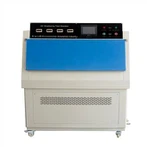
A paint coating can look perfect when it leaves the factory, but sunlight, heat, moisture, and repeated wetting can slowly change its color, gloss, adhesion, and surface condition. For outdoor plastics and coatings, waiting several years to see natural weathering is not practical when a new product needs to be evaluated today.
This is exactly where accelerated weathering testing proves its value. As one customer from Serbia using the LIB Astm G151 Test Chamber UV-SI-260 put it: "Hello Alice, How are you? These chamber use colleagues from Quality... So far, they didnt have any problem with UV chamber and we tested without any problems. Yes, thank you, I know that support from your side is excellent and I am grateful,Best regards,"
This article explains what an Astm G151 Test Chamber is, how the equipment works, why accelerated light exposure is important for plastics and coatings, and how to choose between an Astm G151 Test Chamber and a Xenon Arc Test Chamber for different weathering applications.
1. Why Is an Astm G151 Test Chamber Important for Plastics and Coatings?
Accelerated Weathering Makes Material Changes Easier to Evaluate
An Astm G151 Test Chamber is used to expose nonmetallic materials to controlled laboratory light sources. Plastics, paints, coatings, textiles, automotive parts, and outdoor products can be tested under controlled light, temperature, moisture, and spray conditions. Instead of depending only on outdoor exposure, laboratories can create repeatable conditions and compare the performance of different materials.
ASTM G151 provides general guidance for accelerated exposure equipment. More specific procedures are selected according to the light source and application. For example, ASTM G155 is used for xenon arc equipment, while ASTM G154 covers fluorescent UV equipment. ISO 4892-2 is specifically used for xenon arc exposure of plastics in the presence of moisture.
Why LIB Industry Is a Reliable Supplier
LIB Industry has supplied environmental simulation equipment to customers in more than 60 countries and has experience serving automotive, electronics, plastics, coatings, solar, and industrial testing applications. Customer applications include equipment supplied for companies and organizations such as Apple, Mercedes-Benz, BYD, Nidec, and Aptera, covering temperature, weathering, and other environmental reliability tests.
For light aging applications, LIB Industry can provide equipment using 4500 W or 6500 W water-cooled xenon arc lamps, with daylight, window glass, and UV extended filters. The equipment can also be configured with irradiance monitoring, black panel temperature control, water spray, humidity control, programmable cycles, and data export.
The equipment can be customized according to specimen size, test standard, exposure cycle, sample holder, irradiance requirement, and laboratory space.
Standards for Plastics and Coatings
| Standard | Applicable Use |
|---|---|
| ASTM G151 | General accelerated exposure using laboratory light sources |
| ASTM G155 | Xenon arc exposure of materials |
| ASTM G154 | Fluorescent UV lamp exposure of materials |
| ISO 4892-2 | Xenon arc exposure of plastics |
| ISO 4892-3 | Fluorescent UV exposure of plastics |
| ASTM D6695 | Xenon arc exposure of coatings and related materials |
| ISO 11341 | Artificial weathering of paints and varnishes using filtered xenon arc radiation |
| ASTM D7869 | Accelerated weathering of coatings under controlled temperature and humidity conditions |
| IEC 60068-2-5 | Simulated solar radiation testing for equipment and components |
The exact exposure cycle should always be selected according to the product standard. ASTM G151 does not mean that every test must use the same irradiance, temperature, or spray cycle.
2. Xi'an Jiaotong University Case and Practical Testing Advantages
Xi'an Jiaotong University purchased an Astm G151 Test Chamber from LIB Industry for research related to material light stability and product performance. The research team was satisfied with the equipment for controlled light aging work and recommended the equipment to other university researchers.
How the Equipment Works
A typical xenon arc weathering test can follow a simple process:
Step 1: Prepare the samples
Clean the specimens and record their initial color, gloss, appearance, strength, or other required properties.
Step 2: Install the samples
Place the specimens on the sample holder with sufficient spacing so that light and spray can reach the exposed surfaces evenly.
Step 3: Select the light source and filter
A xenon arc lamp is used when full-spectrum simulation is required. LIB equipment can use daylight, window glass, or UV extended filters according to the application.
Step 4: Set irradiance
A commonly used condition is 0.35 W/(m²·nm) at 340 nm. Another commonly used condition is 1.10 W/(m²·nm) at 420 nm. The correct value depends on the selected test method.
Step 5: Set temperature
The black panel temperature can be controlled according to the selected procedure. Common test conditions can include approximately 63°C or 70°C.
Step 6: Set moisture and spray
The equipment can alternate between light, water spray, humidity, and dark periods. For example, one common cycle uses 102 minutes of light followed by 18 minutes of water spray.
Step 7: Run and record the test
The controller continuously monitors important parameters such as irradiance and black panel temperature. Test data can be exported through USB or Ethernet.
Step 8: Evaluate the samples
After exposure, the laboratory compares the samples with the original specimens or control samples. Color change, gloss loss, cracking, chalking, blistering, or other changes can then be measured.
Practical Benefits for Laboratories
Precise exposure control: The radiometer monitors irradiance while PID control helps maintain stable temperature conditions.
Flexible programming: The touchscreen controller can store more than 120 test programs, with up to 100 segments for complex exposure sequences.
Uniform exposure: A rotating sample holder can accommodate up to 42 samples, helping distribute light and spray more evenly.
Stable temperature: The water-cooled xenon lamp helps control lamp temperature and maintain stable operation.
Safer operation: Protection functions can include over-temperature protection, water level protection, lamp protection, door safety functions, and automatic shutdown.
Durable materials: The internal working area uses SUS304 stainless steel, providing corrosion resistance and easier cleaning.
Easy data management: USB and Ethernet interfaces support test data export and laboratory traceability.
Customization: Sample holders, chamber dimensions, exposure programs, irradiance settings, spray systems, and other functions can be adjusted according to project requirements.
LIB Industry also provides a 3-year warranty and lifetime technical service. English after-sales support is available 24/7, and installation guidance, technical support, and on-site training can be arranged for suitable projects.
3. Astm G151 Test Chamber vs. Xenon Arc Test Chamber
An Astm G151 Test Chamber and a Xenon Arc Test Chamber should not be treated as two completely separate testing concepts. ASTM G151 provides general accelerated exposure guidance for laboratory light sources, while ASTM G155 provides specific practice for operating xenon arc lamp equipment.
The better choice depends on the light source and the material test method.
| Item |
|
|
|---|---|---|
| Main reference | ASTM G151 | ASTM G155 |
| Light source | Depends on the selected equipment | Xenon arc lamp |
| Main purpose | General accelerated laboratory exposure | Full-spectrum weathering simulation |
| Spectrum | Depends on light source and filter | Approximately 280 to 800 nm with suitable filters |
| 340 nm condition | Common application value 0.35 W/(m²·nm) | Common xenon arc setting |
| 420 nm condition | Depends on selected method | Common application value 1.10 W/(m²·nm) |
| Temperature | Set according to the test method | Black panel temperature can include 63°C or 70°C |
| Moisture | Depends on the procedure | Water spray, humidity, or wet and dry cycles |
| Plastic testing | Applicable according to selected method | ISO 4892-2 |
| Coating testing | Applicable according to selected method | ASTM D6695, ISO 11341 |
| Fluorescent UV | Possible only with suitable UV equipment | Not applicable |
| Full-spectrum sunlight simulation | Depends on light source | Main application |


For plastics requiring xenon arc exposure, ISO 4892-2 is a key reference. For coatings, ASTM D6695 and ISO 11341 may be relevant. When the laboratory specifically requires fluorescent UV and condensation exposure, ASTM G154 is the more relevant equipment practice.
For simulated solar radiation testing of equipment or components, IEC 60068-2-5 is another important reference. It addresses the effects of solar radiation on equipment and components rather than defining a universal accelerated weathering condition for every material.
The equipment should therefore be selected from the required standard first, followed by the required spectrum, irradiance, temperature, moisture cycle, specimen size, and evaluation method.
Popular Temperature humidity and UV Weathering test chambers
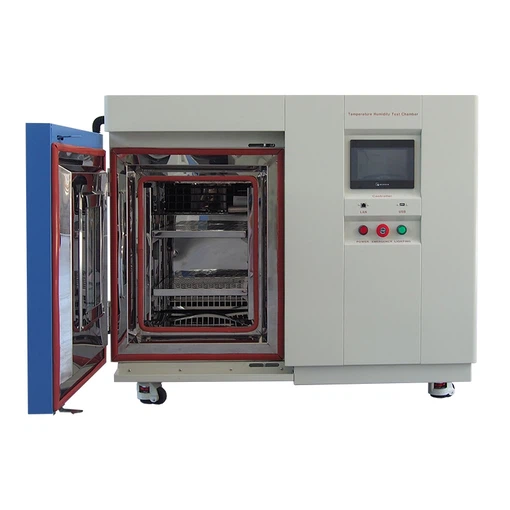
Compact Environmental Test Chamber, Small Temperature Humidity Testing Solution
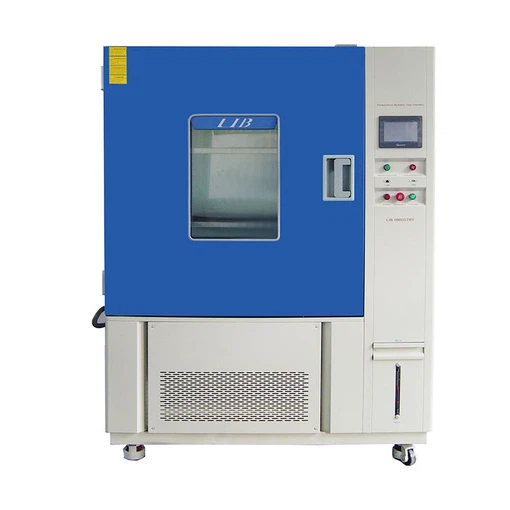
Reliable Climate Test Chamber, Precision Temperature Humidity Testing Equipment
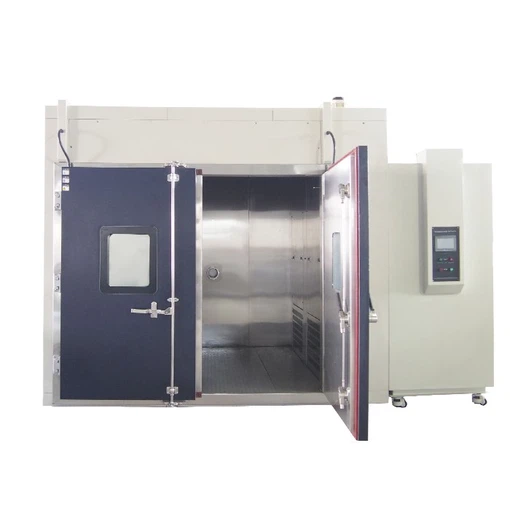
Large Volume Environmental Chamber, Walk-In Climate Testing Solution


Rapid Temperature Cycling Chamber, High Speed Thermal Shock Testing Solution
4. FAQs on the Astm G151 Test Chamber
Q1: What is an Astm G151 Test Chamber used for?
An Astm G151 Test Chamber is used for accelerated exposure of nonmetallic materials using laboratory light sources. Typical applications include plastics, coatings, paints, textiles, automotive components, and outdoor materials.
q2: Is ASTM G151 the same as ASTM G155?
No. ASTM G151 provides general accelerated exposure guidance. ASTM G155 specifically covers the operation of xenon arc lamp apparatus. A xenon arc system can therefore be used within the ASTM G151 framework while following the more specific ASTM G155 procedure.
q3: What irradiance should I use?
There is no single irradiance value for every ASTM G151 test. Depending on the selected method, commonly used xenon arc conditions include 0.35 W/(m²·nm) at 340 nm and 1.10 W/(m²·nm) at 420 nm. The required value should be confirmed from the applicable product or material standard.
q4: Can LIB Industry customize the equipment?
Yes. LIB Industry can customize chamber size, sample holders, test programs, irradiance control, temperature settings, spray functions, water systems, and other configurations according to the required test conditions.
q5: What after-sales service does LIB Industry provide?
LIB Industry provides a 3-year warranty and lifetime technical service. The English-speaking after-sales team provides 24/7 support, and installation guidance and operator training can be arranged according to the project.
q6: How long does delivery take?
For suitable standard configurations, fast shipment can be arranged within approximately 7 to 15 days. The exact delivery time depends on the equipment model, customization requirements, production schedule, and destination.
q7: Can the equipment test both plastics and coatings?
Yes. With the correct xenon lamp, filter, irradiance, temperature, moisture, and exposure cycle, the equipment can support testing applications for both plastics and coatings. The applicable standard should be confirmed before the test program is created.
An Astm G151 Test Chamber provides a controlled way to study how materials respond to laboratory light exposure. The key is not simply increasing light intensity. Irradiance, spectrum, temperature, moisture, spray, exposure time, and sample positioning all affect the result.
LIB Industry combines xenon arc technology, programmable control, irradiance monitoring, water cooling, sample rotation, safety functions, customization, and long-term technical support to provide practical weathering test solutions for research laboratories and manufacturers.
Contact LIB Industry to develop a professional and efficient solution tailored to your specific standards and stringent requirements.