When electronic devices fail in deserts, construction sites, or roadside environments, the cause is often invisible-fine dust particles smaller than 75 μm penetrating the enclosure. A tiny gap in sealing can lead to short circuits, overheating, corrosion, or mechanical wear. For manufacturers in automotive, lighting, electronics, and industrial machinery, dust protection is not optional-it is a certification requirement.
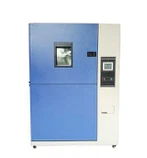
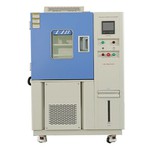
LIB's IP5X/IP6X Dust Test Chamber is engineered to strictly comply with international standards such as IEC 60529, ISO 20653, and IEC 60068-2-68. By simulating high-concentration dust environments (2–4 kg/m³) under controlled airflow and temperature conditions (up to +50 °C), LIB helps manufacturers verify sealing integrity and durability before products enter the market.
IEC Standard for Dust Test
The IEC standard for dust testing is primarily defined in IEC 60529, which establishes the Ingress Protection (IP) rating system.
Under IEC 60529:
The first digit (0–6) indicates protection against solid objects and dust.
IP5X = Dust-protected (limited ingress allowed, no harmful deposits).
IP6X = Dust-tight (no dust ingress permitted).
For IP6X testing, the standard specifies:
Talcum powder with a nominal particle size of 50 μm.
A 75 μm wire mesh sieve to filter large particles.
Dust concentration: 2–4 kg/m³.
Temperature: up to +50 °C.
Relative humidity: below 30% RH.
Test duration: typically 8 hours (continuous dust circulation).
Optional vacuum pressure applied to enclosure (to simulate breathing effect).
Another important reference is IEC 60068-2-68, which focuses on environmental testing procedures for sand and dust exposure.
For automotive applications, ISO 20653 defines IP ratings specifically adapted for road vehicles, including combined dust and water testing.

Sand And Dust Test Chamber for IEC620529 Testing
Together, these standards ensure repeatable, measurable, and certifiable dust resistance evaluation.
LIB Dust Test Chamber Advantages Under IEC Standards
LIB's chamber is engineered specifically to meet IEC and ISO requirements with measurable performance parameters.
|
|
|
| Name | IP66 Dust Proof Tester |
|
Workroom dimension (mm) |
800*800*800 D*W*H |
|
External dimension (mm) |
950*3150*1800 D*W*H |
|
Interior Volume (L) |
510 |
|
Diameter of Turntable (mm) |
600 |
|
Turntable loads |
20kgs Max |
|
Turntable Rotation Speed |
0~7r/min (Adjustable) |
|
Internal Diameter of IPX5 Nozzle |
6.3 mm |
|
Internal Diameter of IPX6 Nozzle |
12.5 mm |
|
Water Flow Rate IPX5/ IPX6 |
12.5L/min ±5% / 100L/min ±5% |
|
Controller |
Programmable color LCD touch screen controller |
|
Ethernet connection, PC Link, USB |
|
|
Build-in Water Tank(mm) |
370*375*950 |
|
View Window Size(mm) |
475*475 |


 |
 |
|
| Test Area | LAN and USB | Controller |

1. Accurate Dust Concentration Control
A closed-loop vertical airflow system maintains 2–4 kg/m³ dust concentration. Air velocity is adjustable from 0–29 m/s, ensuring uniform dust suspension and eliminating dead zones.
2. 50 μm Standard Dust Simulation
Integrated 75 μm mesh sieve ensures compliance with IEC 60529 particle size requirements. Heating tubes prevent dust caking, maintaining continuous circulation during long test cycles (up to 99 h 59 min programmable).
3. Robust Industrial Construction
Inner chamber: SUS304 stainless steel (corrosion-resistant).
Outer shell: 4 mm A3 steel with protective coating.
This ensures long-term stability even under repeated high-dust cycles.
4. Advanced PID Control System
7-inch color touchscreen.
120 programmable programs, 100 segments each.
PCLink, Ethernet, and USB data export.
Real-time monitoring and CSV report generation.
5. Safety and Test Integrity
Electromagnetic door lock prevents accidental opening.
Over-temperature and overcurrent protection.
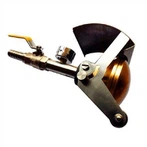
Vacuum pressure gauge and flowmeter ensure precise IEC-required negative pressure testing.
These features ensure full compliance with IEC 60529 and ISO 20653 while improving laboratory efficiency.
LIB Dust Test Chamber Procedure for Lighting (IEC 60529 IP6X Example)
Lighting products (LED streetlights, industrial lamps) commonly require IP6X certification under IEC 60529. Below is a typical 8-hour IP6X dust test cycle and how LIB supports each step.

Step 1: Sample Preparation
According to IEC 60529:
Install lamp in normal operating position.
Seal cable entries as in real installation.
LIB Advantage:
Adjustable stainless-steel sample holder (50 kg load capacity) supports various lamp sizes and orientations.
Step 2: Chamber Setup
Set parameters:
Dust: 50 μm talcum powder.
Concentration: 2–4 kg/m³.
Temperature: 23–50 °C.
Humidity: <30% RH.
Duration: 8 hours continuous.
LIB Advantage:
PID touchscreen allows one-click preset for IEC 60529 IP6X cycle. Programs can be saved and reused for production batch testing.
Step 3: Vacuum Application
If required, apply internal negative pressure to simulate enclosure breathing.
LIB Advantage:
Built-in vacuum system with pressure gauge and flowmeter ensures stable suction per IEC standard.
Step 4: Dust Circulation
Vertical airflow distributes dust evenly throughout chamber.
LIB Advantage:
Circulation fans maintain stable airflow.
Heating tubes prevent dust clumping.
75 μm sieve ensures compliance with particle size specification.
Result: Uniform dust exposure across entire lighting enclosure.
Step 5: Observation During Test
IEC does not require stopping the test for inspection.
LIB Advantage:
Large tempered-glass window.
Built-in LED lighting.
Window wiper for dust removal.
Operators monitor the sample without disturbing internal conditions.
Step 6: Post-Test Inspection
After 8 hours:
Remove sample.
Open enclosure.
Verify no dust ingress.
If no dust is detected, product passes IP6X.
LIB Advantage:
Stable and repeatable dust distribution ensures accurate pass/fail judgment without variability.
FAQs on the Dust Test Chamber
Q1: What is the difference between IP5X and IP6X?
IP5X allows limited dust ingress without harmful effects. IP6X requires complete dust-tight sealing-no ingress allowed under IEC 60529.
Q2: What dust is used?
Standard talcum powder with 50 μm nominal particle size, filtered through 75 μm mesh.
Q3: How long does IP6X testing take?
Typical duration is 8 hours continuous exposure, but programmable from 1 minute to 99 hours 59 minutes.
Q4: Can large industrial equipment be tested?
Yes. Standard volumes range from 800 L to 2000 L, with walk-in customized models available.
Q5: Is the chamber compliant with international standards?
Yes. LIB chambers comply with IEC 60529, IEC 60068-2-68, ISO 20653, ASTM, and MIL testing protocols.
Dust ingress can cause electrical failure, corrosion, and costly product recalls. IEC dust testing provides a measurable and internationally recognized method to verify enclosure integrity before certification and market release.
LIB's IP5X/IP6X Dust Test Chamber delivers controlled, repeatable, and standards-compliant testing-helping manufacturers reduce risk, accelerate development cycles, and ensure product reliability in harsh dusty environments.
Contact LIB Industry to develop a professional and efficient solution tailored to your specific testing standards and rigorous requirements.