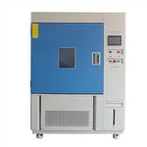
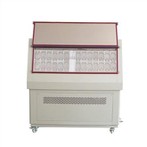
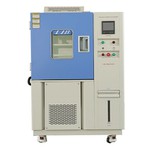
Thermal shock chambers are critical tools in the realm of environmental testing, designed to evaluate the resilience and durability of materials and products when exposed to sudden and extreme temperature changes. These chambers are indispensable across various industries, from electronics to automotive, where ensuring product reliability under fluctuating environmental conditions is paramount. In this blog, we'll delve into the purpose of thermal shock chambers, how they function, and their applications in different sectors.
What Are Thermal Shock Chambers?
Thermal shock chambers are specialized testing devices designed to assess the resilience of products when exposed to rapid and extreme temperature variations. These chambers replicate conditions where products undergo sudden shifts from freezing to intense heat, or vice versa, within a short period. The primary objective is to replicate real-world scenarios and identify potential vulnerabilities that might compromise product performance or reliability.
Industries rely on thermal shock chambers to validate the durability of components and materials. For instance, in electronics manufacturing, where circuit boards and semiconductor devices are exposed to varying environmental conditions, these chambers ensure that products can withstand thermal stresses without malfunctioning or deteriorating. Similarly, automotive manufacturers use thermal shock testing to verify that vehicle components, such as sensors and control modules, maintain operational efficiency across a wide range of temperatures-from sub-zero climates to sweltering heat.
By subjecting products to rapid thermal cycles, manufacturers can detect weaknesses that may lead to operational failures under normal usage conditions. This proactive approach helps mitigate risks associated with product recalls and customer dissatisfaction, ensuring that products meet stringent reliability standards before reaching consumers.
Thermal shock chambers play a crucial role in enhancing product quality and longevity across diverse industries, where robustness and reliability are paramount to maintaining competitive advantage and customer trust.
How Do Thermal Shock Chambers Work?
Thermal shock chambers operate by rapidly cycling between extreme temperatures. They typically have two or more zones: a hot zone and a cold zone. The product being tested is swiftly moved between these zones, exposing it to drastic temperature changes within seconds. This process is repeated over several cycles to simulate the stress products might experience during their lifecycle.
The design and operation of these chambers are critical to achieving accurate and reliable results. Advanced thermal shock chambers are equipped with precise temperature control systems, ensuring that the desired temperature range is accurately maintained. They also feature robust construction to handle the mechanical stress imposed by rapid temperature changes.
Here's a step-by-step look at how a thermal shock chamber works:
- Initial Setup: The product to be tested is carefully positioned inside the chamber, and specific test parameters-such as temperature ranges and cycling intervals-are programmed into the chamber's control system.
- Cycling Process: Thermal shock chamber begins cycling between the designated hot and cold zones. During each cycle, the product rapidly moves between these zones, experiencing abrupt changes in temperature. This process is repeated multiple times to simulate the cumulative stress that products endure during their operational lifespan.
- Monitoring and Data Collection: Throughout the testing phase, sensors within the chamber continuously monitor the product's response to temperature variations. These sensors record critical data points, such as temperature profiles and any observed changes in the product's performance or structural integrity.
- Analysis and Reporting: Upon completing the prescribed number of thermal cycles, the accumulated data is thoroughly analyzed. Engineers and researchers examine the data to pinpoint any potential weaknesses or vulnerabilities in the product. This analysis is crucial for identifying areas that may require design improvements or modifications to enhance product reliability.
What Are the Applications of Thermal Shock Chambers?
Thermal shock chambers have a wide range of applications across various industries. Their ability to simulate real-world conditions makes them invaluable for product development, quality control, and reliability testing. Here are some key applications:
- Electronics Industry
As mentioned earlier, electronic components are particularly susceptible to thermal shock. Thermal shock chambers help ensure that circuit boards, semiconductors, and other electronic parts can withstand rapid temperature changes without failure. This is crucial for the reliability of consumer electronics, aerospace components, and automotive electronics.
- Automotive Industry
Vehicles operate in diverse environmental conditions, from freezing temperatures in winter to extreme heat in summer. Thermal shock chambers test automotive parts, including engine components, sensors, and materials, to ensure they perform reliably under these conditions. This helps improve vehicle safety and durability.
- Aerospace Industry
In aerospace applications, materials and components face extreme temperature variations, especially during takeoff and re-entry. Thermal shock chambers simulate these conditions to test the resilience of aerospace materials, ensuring they can withstand the stresses of space travel and atmospheric re-entry.
- Manufacturing and Quality Control
Thermal shock chambers are used in the manufacturing process to test the durability of materials and products before they reach the market. This helps manufacturers identify and address potential issues early, ensuring high product quality and reducing the risk of recalls.
- Research and Development
In R&D settings, thermal shock chambers are used to study the behavior of new materials and products under extreme conditions. This helps researchers develop more robust and reliable products, pushing the boundaries of innovation.
Conclusion
Thermal shock chambers play a crucial role in ensuring the reliability and durability of products across various industries. By simulating rapid temperature changes, these chambers help identify potential weaknesses and failures, allowing manufacturers to improve their products and ensure they meet the highest quality standards. Whether in electronics, automotive, aerospace, or manufacturing, thermal shock chambers are indispensable tools for enhancing product resilience and performance.
If you want to learn more about this kind of Thermal Shock Chamber, welcome to contact us info@libtestchamber.com.
References
1. Anderson, D. C., & Richardson, D. (2003). Thermal Shock Testing of Electronic Components. IEEE Transactions on Components and Packaging Technologies, 26(1), 72-79.
2. Yan, J., & Fan, Z. (2010). A Review of Thermal Cycling Test Standards for Electronics Reliability Assurance. IEEE Transactions on Device and Materials Reliability, 10(1), 5-14.
3. ASTM International. (2021). Standard Test Method for Thermal Shock Testing of Ceramic Materials. ASTM C1481-21.
4. MIL-STD-883G. (2011). Test Method Standard – Microcircuits. Department of Defense Test Method Standard.
5. Zhao, L., et al. (2018). Thermal Shock Resistance of Automotive Composites: Experimentation and Modeling. Journal of Composite Materials, 52(13), 1793-1805.
6. Dai, L., et al. (2015). Thermal Shock Behavior of Aerospace Materials: Challenges and Advances. Materials Science and Engineering: A, 644, 178-191.
7. Oksanen, A., & Paulasto-Kröckel, M. (2011). Thermal Shock Reliability of Lead-Free Solder Joints in Automotive Electronics. Microelectronics Reliability, 51(1), 207-216.
8. Shaffer, J. L., & Pence, R. W. (2007). Thermal Shock of Advanced Ceramic Materials for Aerospace Applications. Ceramics International, 33(8), 1435-1443.
9. Zeng, K., & Mao, J. (2012). Applications of Thermal Shock Testing in Quality Control of Electronic Products. International Journal of Manufacturing Technology and Management, 26(1-2), 24-41.
10. European Space Agency. (2020). ECSS-Q-ST-70-55C: Space Product Assurance – Thermal Cycle Testing.