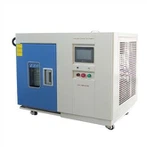
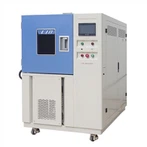
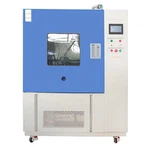
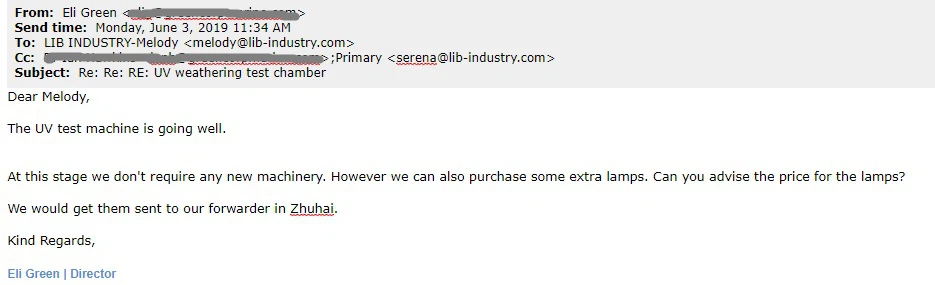
One of our Australian customers, Eli Green, Director, shared his experience after installing the LIB UV Weathering Test Chamber: "The UV test machine is going well." The system has been operating reliably in daily testing, delivering consistent results to the point that no additional equipment was needed-only extra UV lamps to support ongoing test demand. This real-world feedback reflects LIBUV chamber's stability, durability, and suitability for long-term use.
In the realm of microbiology, precision and control are paramount. One indispensable tool that has revolutionized laboratory practices is the UV Chamber. This article delves into the multifaceted applications of UV chambers in microbiology labs, exploring their significance, functionality, and impact on scientific research.
The Fundamentals of UV Chambers in Microbiology
UV chambers, also known as ultraviolet sterilization chambers, are specialized equipment designed to harness the power of ultraviolet light for various microbiological applications. These chambers provide a controlled environment where UV radiation can be utilized effectively and safely.
1. Understanding UV Light and Its Properties
Ultraviolet light is a type of electromagnetic radiation with wavelengths shorter than visible light but longer than X-rays. In microbiology, UV-C light, with wavelengths between 200-280 nanometers, is particularly useful due to its germicidal properties. This specific range of UV light can effectively inactivate microorganisms by damaging their DNA and RNA, preventing replication and rendering them non-viable.
2. Components of a UV Chamber
A typical UV chamber consists of several key components:
- UV lamps: These are the primary source of ultraviolet radiation.
- Reflective interior surfaces: To maximize UV exposure throughout the chamber.
- Safety features: Including interlocks to prevent accidental exposure to UV light.
- Timer: For precise control of exposure duration.
- Shelving or racks: To hold samples or equipment being treated.
3. Types of UV Chambers Used in Microbiology
UV chambers come in various configurations to suit different laboratory needs:
- Benchtop UV chambers: Compact units for small-scale sterilization tasks.
- Walk-in UV chambers: Large-scale facilities for sterilizing entire rooms or large equipment.
- UV crosslinkers: Specialized chambers for DNA/RNA work.
- UV PCR workstations: Designed specifically for polymerase chain reaction procedures.
Primary Applications of UV Chambers in Microbiology Labs
UV chambers serve multiple crucial functions in microbiology laboratories, contributing significantly to research integrity and safety protocols.
1. Sterilization and Decontamination
One of the primaries uses of UV chambers is the sterilization of laboratory equipment and surfaces. UV light effectively eliminates a wide range of microorganisms, including bacteria, viruses, and fungi. This non-chemical sterilization method is particularly valuable for equipment that cannot withstand high temperatures or chemical treatments. Researchers can place items such as pipettes, culture plates, and small instruments in the UV chamber to ensure they are free from microbial contamination before use.
2. DNA and RNA Manipulation
UV chambers play a crucial role in molecular biology techniques involving nucleic acids. UV crosslinkers are used to bind DNA or RNA to membranes in techniques like Southern, Northern, and Western blotting. The UV light creates covalent bonds between the nucleic acids and the membrane surface, fixing them in place for subsequent analysis. Additionally, UV treatment can be used to create mutations in DNA for genetic studies or to inactivate contaminating DNA in PCR experiments.
3. Maintaining Sterile Work Environments
In microbiology, maintaining a sterile work environment is crucial to prevent contamination and ensure the accuracy of experimental results. UV chambers can be used to sterilize entire workstations or biosafety cabinets. By running a UV cycle before and after use, researchers can significantly reduce the risk of contamination in their work area. This is particularly important when working with sensitive cultures or performing experiments that require strict sterile conditions.
Advanced Applications and Emerging Trends in UV Chamber Usage
As technology advances, the applications of UV chambers in microbiology continue  to expand, opening new avenues for research and innovation.
1. UV Chambers in Antimicrobial Resistance Studies
The global challenge of antimicrobial resistance has led to increased use of UV chambers in studying resistant microorganisms. Researchers use UV chambers to investigate the efficacy of UV light against antibiotic-resistant bacteria, exploring its potential as an alternative sterilization method in healthcare settings. These studies involve exposing resistant strains to controlled UV doses and analyzing survival rates and genetic changes.
2. Integration with Biosafety Protocols
UV chambers are increasingly being integrated into comprehensive biosafety protocols in microbiology labs. They serve as an additional layer of protection, complementing other safety measures like chemical disinfectants and personal protective equipment. In high-containment laboratories dealing with dangerous pathogens, UV chambers play a crucial role in decontamination procedures, ensuring that potentially hazardous materials are safely treated before disposal or removal from the containment area.
3. UV Chambers in Environmental Microbiology
Environmental microbiologists are finding innovative uses for UV chambers in their research. These chambers are used to simulate environmental UV exposure, allowing researchers to study how microorganisms in soil, water, or air respond to different levels of UV radiation. This research is crucial for understanding microbial ecology and the impact of environmental changes on microbial communities. UV chambers are also used in developing UV-based water and air purification systems, contributing to advancements in environmental protection and public health.
Best Practices and Safety Considerations in UV Chamber Usage
While UV chambers are invaluable tools in microbiology, their effectiveness and safety depend on proper usage and maintenance.
1. Proper Operation and Maintenance
To ensure optimal performance and longevity of UV chambers:
- Regular cleaning: Clean the chamber interior and UV lamps to maintain efficiency.
- Lamp replacement: Replace UV lamps according to manufacturer recommendations.
- Calibration: Periodically verify the UV intensity to ensure effective sterilization.
- Record keeping: Maintain logs of usage, maintenance, and any issues encountered.
2. Safety Protocols
UV radiation can be harmful to human health if not properly managed. Safety measures include:
- Proper training for all users on UV chamber operation and risks.
- Use of personal protective equipment, including UV-resistant eyewear and skin protection.
- Installing warning signs and indicators when UV chambers are in use.
- Implementing fail-safe mechanisms to prevent accidental exposure.
3. Limitations and Considerations
Understanding the limitations of UV chambers is crucial:
- UV light does not penetrate opaque materials, limiting its effectiveness on shadowed surfaces.
- Some materials may degrade with repeated UV exposure.
- Certain microorganisms may develop UV resistance over time.
- UV treatment may not be suitable for all types of laboratory materials or equipment.
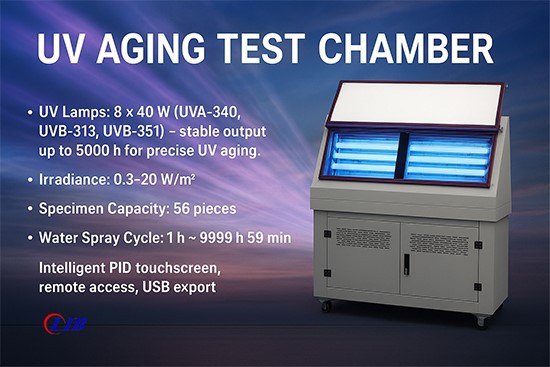
Advantages of the LIB UV Chamber
|
Model |
UV-SI-260 |
|
|
Internal Dimension (mm) |
450*1170*500 |
|
|
Overall Dimension (mm) |
680*1300*1500 |
|
|
Irradiation Source |
Fluorescent UV lamps (8) - 40 W |
|
|
Temperature Range |
Ambient ~ 90 ℃ ±2℃ |
|
|
Black Panel Temperature (BPT) |
35 ~ 80 ℃ |
|
|
Humidity Range |
≥95% RH |
|
|
Bandwidth |
290 ~ 400 nm |
|
|
Irradiance Control |
0.3~20 W/㎡ |
|
|
Distance of Specimen and lamp |
50 mm |
|
|
Heating Element |
Nichrome heater |
|
|
Controller |
Programmable color LCD touch screen controller |
|
|
Ethernet connection, PC Link,USB |
||
|
Water Supply System |
Automatic water supply, Water purification system |
|
|
Interior Material |
SUS304 stainless steel |
|
|
|
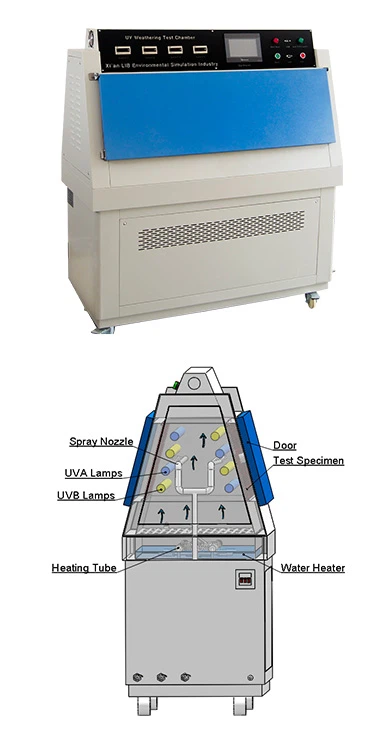
| Water Spray nozzles | UVA/B Lamps |
|
|
|
|
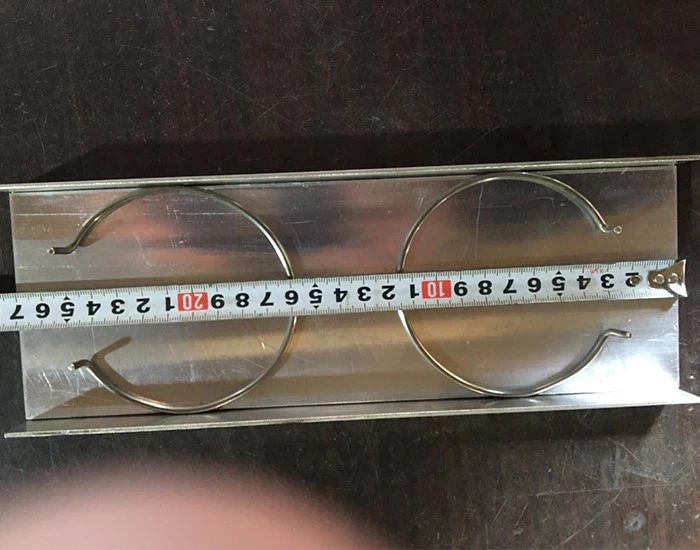
Specimen Holder Flat specimen holders, aluminum panels with rings. Each specimen size is 75 mm * 150 mm, can hold 56 pieces. Special sample holder can be customized |
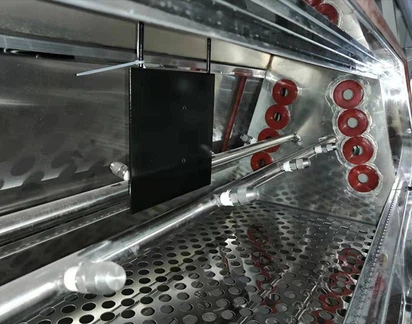
Black Panel The blackboard thermometer is composed of a stainless steel flat plate with a length of 150 mm, a width of 70 mm, and a thickness of 1 mm. |
1. Consistent and High-Precision UV Simulation
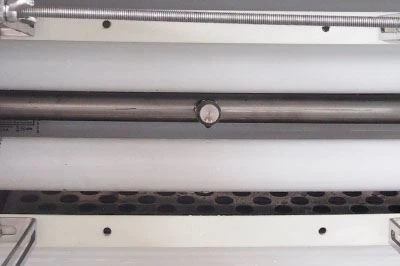
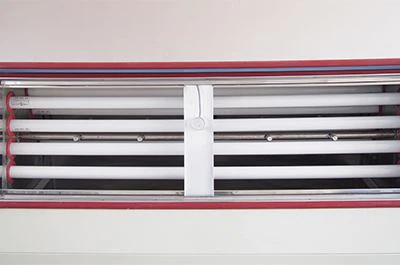
Equipped with high-quality QUV lamps with a service life of up to 5000 hours, the chamber maintains a stable and reliable UV spectrum throughout testing. It incorporates U.S.-manufactured lamps (UVA-340, UVB-313, UVB-351) that deliver precise wavelength control, ensuring accurate replication of ultraviolet exposure conditions.
2. Comprehensive Environmental Simulation
Beyond UV exposure, the chamber is capable of reproducing multiple environmental factors such as rainfall, elevated temperatures, high humidity, condensation, and dark cycles. With temperatures reaching up to 90°C and humidity levels of ≥95% RH, it enables thorough weathering evaluations under various real-world conditions.
3. Efficient Rain Spray System with Optimized Water Usage
The integrated spray system features 10 nozzles with a flow rate of approximately 0.3 L/min and an automatic water supply function. By combining UV radiation with controlled water spray, the chamber closely mimics natural outdoor environments, improving test realism while enhancing operational efficiency and reducing water consumption.
4. Flexible Sample Mounting for Uniform Exposure
The chamber includes up to 52 adjustable sample holders designed to accommodate different sizes and shapes. Its flat-panel layout ensures even UV distribution across all samples, helping to achieve consistent and repeatable test results.
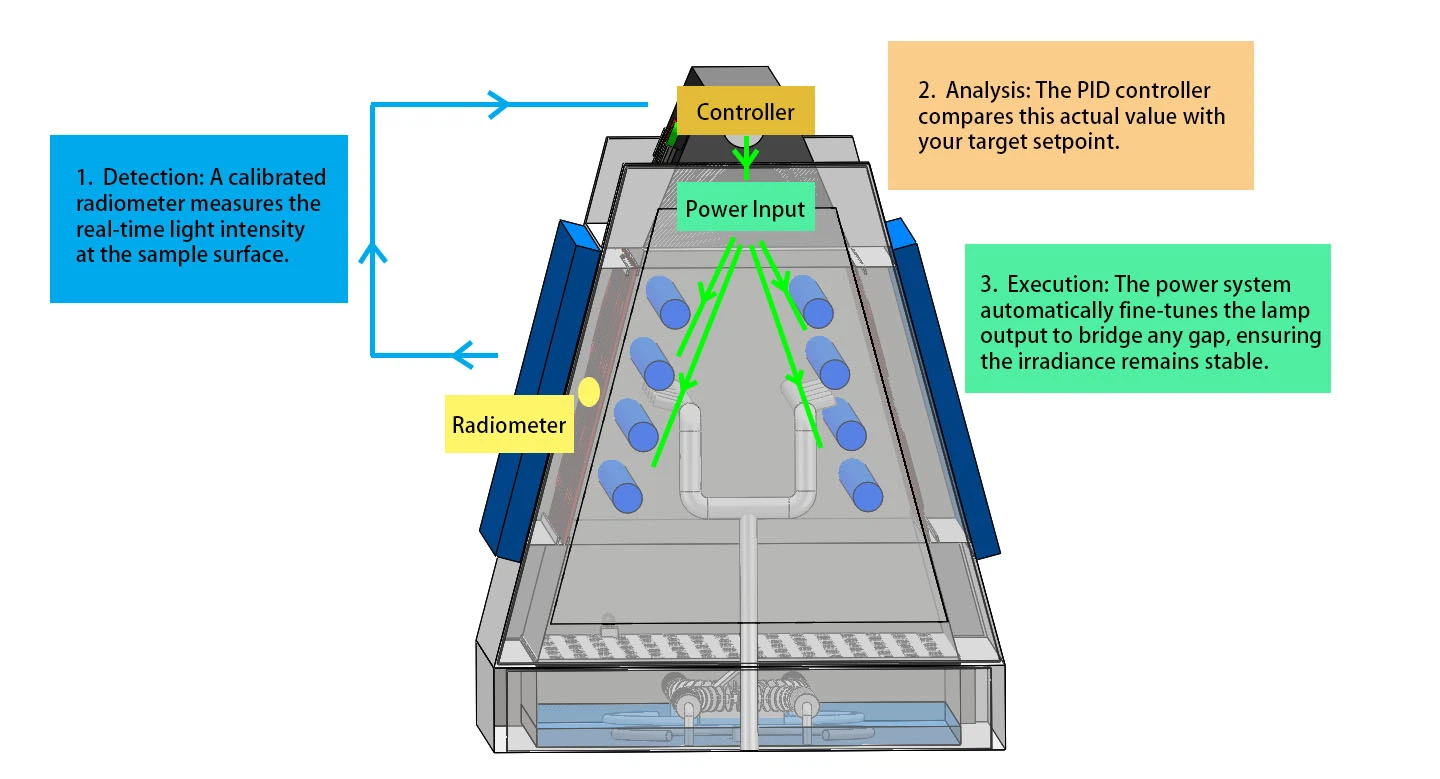
5. Advanced PID Control for Smart Operation
A programmable PID touchscreen controller provides precise regulation of temperature and UV intensity. Users can configure up to 120 programs with 100 steps each to meet diverse testing requirements. The system supports multiple languages, remote operation, automatic alarms, and scheduled start-up. A built-in USB interface allows easy data export for traceability and further analysis, minimizing manual intervention and improving workflow efficiency.
Future Perspectives: Innovations in UV Chamber Technology
The field of UV chamber technology continues to evolve, promising exciting developments for microbiology research.
1. Advanced UV-LED Technology
The integration of UV-LED technology in chambers offers several advantages:
- Longer lifespan compared to traditional mercury lamps.
- More energy-efficient operation.
- Precise control over wavelength, allowing targeted microbial inactivation.
- Reduced warm-up time, enabling quicker sterilization cycles.
2. Smart UV Chambers
The advent of smart technology is transforming UV chambers:
- IoT-enabled chambers allow remote monitoring and control.
- AI-driven systems optimize UV exposure based on specific microbial targets.
- Integration with laboratory information management systems (LIMS) for improved data tracking and analysis.
3. Combination Technologies
Innovative approaches are combining UV technology with other sterilization methods:
- UV-ozone chambers for enhanced sterilization efficacy.
- Pulsed-UV systems for more efficient microbial inactivation.
- Integration with HEPA filtration for comprehensive air purification in biosafety cabinets.
Conclusion
UV chambers have become an integral part of modern microbiology laboratories, offering versatile applications in sterilization, molecular biology, and environmental studies. As technology advances, these chambers continue to evolve, promising even greater precision, efficiency, and safety in microbiological research. By understanding the capabilities, proper usage, and emerging trends in UV chamber technology, microbiologists can harness this powerful tool to push the boundaries of scientific discovery while maintaining the highest standards of laboratory safety and integrity.
For more information about our UV chambers and other environmental testing solutions, please contact LIB Industry at info@libtestchamber.com. Our team of experts is ready to assist you in finding the perfect UV chamber solution for your microbiology laboratory needs.