your product passes a quick splash test in-house, gets approved for shipment, then fails within weeks once it's submerged in a flooded basement, a car wash bay, or a rice paddy sensor network. The gap between "looks waterproof" and "certified waterproof" is exactly where IP68 Test Equipment comes in.
This article breaks down what IP68 Test Equipment complies with, how it actually works, and what test methods are used, so you know exactly what to expect before your product goes to market.
What Is IP68 Test Equipment?
IP68 Test Equipment is a chamber built to confirm whether an enclosure can withstand continuous, long-term water immersion beyond the

level required for high-pressure jets alone. Unlike a simple splash tester, this equipment is engineered to submerge a specimen at specified depths and durations, then verify no water has entered the enclosure. The interior of an IP68 chamber is typically constructed from corrosion-resistant 304 stainless steel, since the tank is exposed to continuous water contact during every test cycle. Depth and duration settings are adjustable, allowing manufacturers to simulate anything from a 1-meter accidental drop into water to a 3-meter sustained submersion, depending on the product's intended use.
Standards IP68 Test Equipment Satisfies and How It Works
IP68 Test Equipment is built to meet IEC 60529, the core international standard defining ingress protection ratings, along with ISO 20653 for automotive-specific water and dust exposure, and IEC 60068-2-18 for immersion test methods. In the rating system, the digit "8" in the second position means the product has been verified to withstand continuous immersion under conditions agreed between manufacturer and user, typically deeper and longer than the IPX7 standard requires. The chamber works by lowering the specimen into a controlled water tank using a motorized lift system, while a pressure and depth sensor confirms the exact submersion level throughout the cycle. A PID controller keeps

water temperature and depth stable, so results stay consistent from one test to the next.
Test Methods Used in IP68 Test Equipment
During an IP68 test, the specimen is sealed and connected to a power monitoring port so operators can check for electrical failure the moment it occurs, rather than waiting until the cycle ends. The chamber submerges the sample to a programmed depth, commonly between 1 and 3 meters, for a set duration that can extend from 30 minutes to several hours depending on the applicable standard. Touchscreen controllers typically allow up to 120 stored programs, so a lab can run automotive, consumer electronics, and industrial test profiles back-to-back without manual reconfiguration. After the immersion cycle, the specimen is inspected for internal water ingress, and functional testing confirms whether the product still operates correctly.
Thai Customers Are Highly Satisfied with the Stability of the IP 6X Sand and Dust Test Chamber
A group of Thai manufacturers recently used LIB Industry's IP 6X Sand and Dust Test Chamber to validate the sealing performance of their outdoor equipment housings, and the results left a strong impression. Several points stood out to their engineering team:
Standards compliance: the chamber meets IEC 60529 and satisfies CE, CSA safety requirements, so results are accepted for international certification without repeat testing.
High safety design: electromagnetic door locking and over-temperature protection kept long unattended test cycles running without incident.
Strong test precision: dust concentration remained stable throughout each run, giving repeatable results test after test.
Cost-effective supply: every unit ships with 2 kg of complimentary talcum powder, letting the team begin verification testing without extra material cost.
Full customization: chamber capacity can be built up to 2000 L, matching larger housings or multiple simultaneous samples.
Long-term confidence: a 3-year warranty with permanent maintenance support gave the team peace of mind for continuous production-line testing.
These advantages made the decision easy for a facility that needed dependable, standards-backed dust protection verification without recurring calibration headaches.
IP66 vs IP68 Test Equipment: Comparison and How to Choose
| Feature |
|
|
|---|---|---|
| Core standard | IEC 60529 IPX6 | IEC 60529 IPX8 |
| Test method | High-pressure water jets (12.5 mm nozzle, 100 L/min) | Continuous submersion at defined depth and duration |
| Typical depth/pressure | Surface-level jet exposure | 1–50 meters continuous immersion |
| Best suited for | Outdoor lighting, industrial enclosures, washdown areas | Underwater sensors, submerged connectors, flood-prone installations |
| Relative investment | Lower | Higher, due to tank and lift mechanisms |


If your product only needs to survive rain, spray, or pressure washing, IP66 testing is generally sufficient and more budget-friendly. If your product may end up fully submerged, such as in outdoor drainage sensors or underwater cameras, IP68 testing is essential to confirm the enclosure holds up under sustained water pressure. Many manufacturers choose a dual-rated platform that handles both IP66 and IP68 verification, avoiding the added cost of running two separate systems.
Popular environemntal Test Chambers
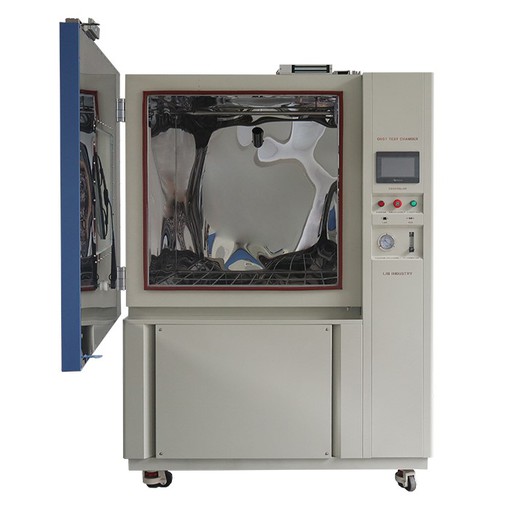
Reliable Dust Ingress Protection Testing, Accurate IP6X Sealing Performance Verification
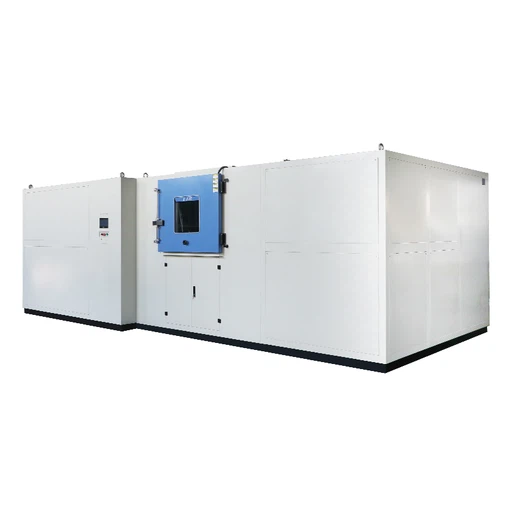
Military-Grade Environmental Reliability Testing, Simulates Extreme Desert Dust And Sand Conditions

High-Pressure Hot Water Protection Testing,
Advanced Waterproof And Dustproof Validation
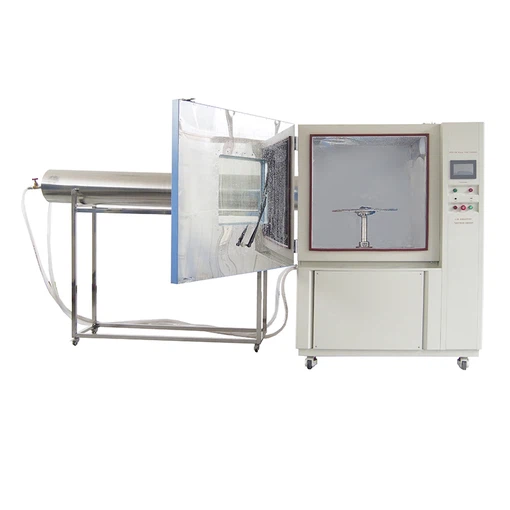
Reliable Water And Dust Protection Testing, IEC 60529 Compliant Ingress Protection Verification
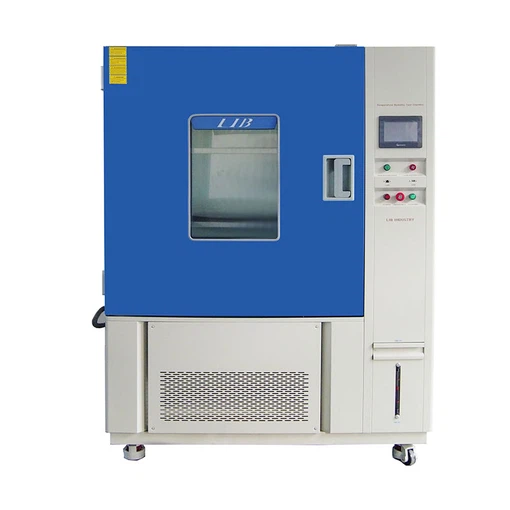
Accelerated Environmental Reliability Testing, Long-Term Product Durability Evaluation
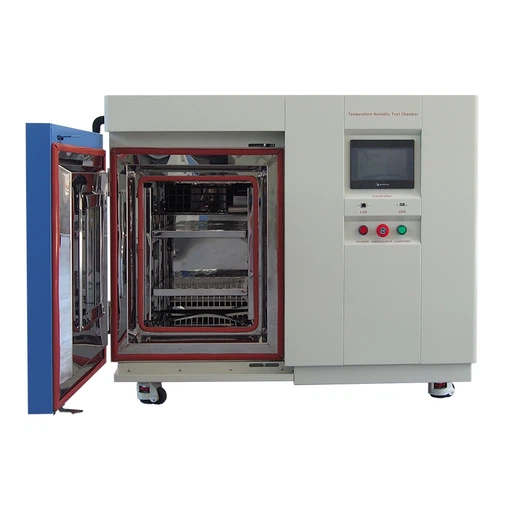
Space-Saving Laboratory Testing Solution, Precise Temperature And Humidity Control
FAQs on the IP68 Test Equipment
Q1: What after-sales service comes with IP68 Test Equipment?
LIB Industry provides a 3-year warranty, lifetime maintenance support, and a 24/7 English-speaking technical team with a 2-hour response window. If an issue cannot be resolved remotely, spare parts are shipped on-site within 7–15 days.
Q2: How is the equipment shipped, and how long does delivery take?
Chambers are shipped by sea or air freight depending on destination and urgency, with standard sea shipments typically arriving within 30–45 days. Each unit is packed in a reinforced crate to protect the stainless steel tank and touchscreen controller during transit.
Q3: Can the immersion depth or tank size be customized?
Yes. Beyond standard configurations, LIB Industry can build customized tank depths and volumes to match specific product dimensions and testing requirements.
Q4: Is installation and training support available after delivery?
Yes. LIB Industry's technical team offers remote setup guidance, and on-site installation assistance can be arranged for larger orders upon request.
Contact LIB Industry today to discuss how our IP68 Test Equipment can validate your product's long-term immersion resistance and protect your brand's reliability in the field.