



When it comes to evaluating the water resistance of products, the IPX4 test is a crucial benchmark. As an IPX4 test provider, I've encountered numerous inquiries about whether a product with a metal casing can pass the IPX4 test. In this blog, we'll explore this question in depth, examining the factors at play and providing insights based on scientific understanding and practical experience.


Understanding the IPX4 Test
The IPX4 test is part of the Ingress Protection (IP) rating system, which classifies the degree of protection provided by enclosures against the intrusion of solid objects and water. The "X" in IPX4 indicates that there is no protection rating for solid objects, while the "4" signifies protection against splashing water from any direction. During the IPX4 test, water is sprayed onto the product from all sides at a specific pressure and volume for a set period. The product is considered to have passed the test if no harmful effects are observed, such as water ingress that could damage the internal components.
The Role of Metal Casings
Metal casings are commonly used in various products due to their durability, strength, and aesthetic appeal. However, the ability of a product with a metal casing to pass the IPX4 test depends on several factors:
1. Sealing and Gaskets
One of the most critical factors is the quality of the seals and gaskets used in the product. Even if a product has a metal casing, if the seals are not properly designed or installed, water can penetrate through gaps and joints. For example, in electronic devices, the seams between the metal casing and the display or other components need to be sealed effectively to prevent water ingress. High - quality gaskets made of materials like silicone can provide a reliable seal, ensuring that the product can withstand the splashing water during the IPX4 test.
2. Corrosion Resistance
Metal is susceptible to corrosion, especially when exposed to water. If the metal casing is not adequately protected against corrosion, rust can form over time, which may compromise the integrity of the casing and lead to water ingress. To prevent this, manufacturers often apply protective coatings or use corrosion - resistant metals such as stainless steel. A well - protected metal casing can maintain its structural integrity during the IPX4 test and provide long - term water resistance.
3. Design and Construction
The design of the metal casing also plays a significant role. A well - designed casing should have proper drainage channels to allow any water that enters to drain out quickly. Additionally, the shape and structure of the casing can affect how water interacts with it. For example, a smooth and rounded casing may shed water more easily than a casing with sharp edges or complex geometries that can trap water.
Case Studies and Examples
Let's look at some real - world examples to illustrate the relationship between metal casings and IPX4 test results.
Example 1: A Metal - Cased Outdoor Speaker
A manufacturer developed an outdoor speaker with a metal casing. To ensure it could pass the IPX4 test, they used high - quality silicone gaskets around the edges of the casing and the speaker grille. The metal was treated with a corrosion - resistant coating, and the casing was designed with drainage holes at the bottom. During the IPX4 test, the speaker was able to withstand the splashing water without any water ingress, and it passed the test successfully.
Example 2: A Metal - Cased Industrial Controller
In another case, an industrial controller with a metal casing failed the IPX4 test. The problem was traced back to the seals around the control panel. The seals were not properly installed, allowing water to seep into the internal components. After re - evaluating and improving the sealing design, the product was retested and passed the IPX4 test.
The Importance of Testing Equipment
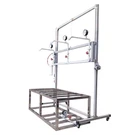
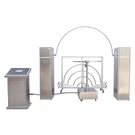
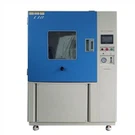
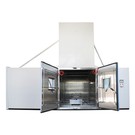
As an IPX4 test provider, we use state - of - the - art testing equipment to ensure accurate and reliable results. Our IP Water Test Machine is designed to simulate the splashing water conditions of the IPX4 test precisely. It allows us to control the water pressure, flow rate, and spraying angle to replicate real - world scenarios. Additionally, our UL 50E Rain Spray Test Machine and Water Spray Testing Chamber provide a controlled environment for testing products of different sizes and shapes.
Conclusion
In conclusion, a product with a metal casing can pass the IPX4 test, but it depends on several factors, including the quality of seals, corrosion resistance, and design. By paying attention to these factors during the product development process, manufacturers can increase the likelihood of their metal - cased products passing the IPX4 test.
If you are a manufacturer looking to test your products for IPX4 water resistance, we are here to help. Our team of experts has extensive experience in conducting IPX4 tests and can provide you with accurate and reliable results. Contact us for more information on our testing services and to discuss your specific requirements. We look forward to working with you to ensure the water resistance of your products.
References
- International Electrotechnical Commission (IEC) standards for Ingress Protection (IP) ratings.
- Manufacturer's guidelines for metal casings and their water - resistant properties.
- Case studies and reports from previous IPX4 tests conducted by our company.