

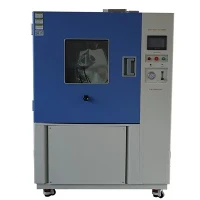
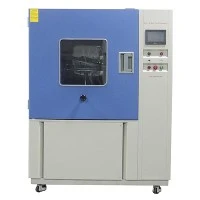

Hey there! As a supplier of IPx8 testers, I've had a fair share of hands - on experience with these nifty devices. They're super useful for testing how well products can withstand water immersion, which is crucial for a whole bunch of industries, like electronics, automotive, and even some outdoor gear. But like any piece of tech, IPx8 testers aren't without their limitations. Let's dive right in and take a closer look.
1. Test Conditions Variability
One of the biggest headaches with IPx8 testers is the variability in test conditions. The IPx8 standard itself doesn't have a one - size - fits - all set of rules for water depth, immersion time, or the water's characteristics. Different manufacturers might interpret the standard in their own way. For example, some might test at a depth of 1 meter for 30 minutes, while others could go for 3 meters for an hour.
This lack of uniformity makes it hard to compare the test results across different products. If you're a consumer looking to buy a waterproof device, it can be really confusing to figure out which one is truly more water - resistant. And as a supplier, it means we have to be extra clear with our customers about the specific test conditions we use with our IPx8 testers. Otherwise, they might end up with unrealistic expectations about their product's waterproof capabilities.
2. Limited to Water Immersion
IPx8 testers are designed specifically for water immersion tests. They're great at simulating how a product will hold up when it's completely submerged in water. But in the real world, products can face all sorts of other environmental challenges. For example, they might be exposed to high - pressure water jets, like when you're cleaning a device with a strong hose. Or they could be in a situation where there's a lot of water splashing around, like in a kitchen or a bathroom.
In these cases, an IPx8 tester won't give you the full picture. If you need to test a product's resistance to water splashing, you'd be better off using an IPX3 IPX4 Water Spray Test Chamber. And for more extreme conditions, like dust and water ingress protection, an IP54 Waterproof Test Chamber or IP66K Test Devices might be more appropriate. So, while IPx8 testers are important, they're just one piece of the puzzle when it comes to testing a product's overall environmental resistance.


3. Complexity of Testing Some Product Designs
Another limitation is the difficulty of testing certain product designs. Some products have complex shapes, small crevices, or moving parts. When you're using an IPx8 tester, it can be challenging to ensure that water reaches all the areas that need to be tested. For instance, a smartwatch with a lot of buttons and a curved display might have areas where water can get trapped or where the seal between different components is hard to evaluate.
In these cases, the test results might not accurately reflect the product's real - world waterproof performance. The tester might show that a product is IPx8 compliant, but in actual use, water could still seep into those hard - to - reach areas. This is a problem for both us as suppliers and for our customers. We need to find ways to improve the testing methods for these types of products, but it's definitely a tricky task.
4. Cost and Maintenance
IPx8 testers aren't cheap. They're specialized pieces of equipment that require a significant investment. And it's not just the initial purchase cost. There are also ongoing maintenance and calibration expenses. The water in the tester needs to be kept clean and at the right temperature and pressure. The sensors and other components need to be regularly checked and calibrated to ensure accurate test results.
For small businesses or startups, the cost of buying and maintaining an IPx8 tester can be a major barrier. They might have to rely on third - party testing services, which can also be expensive and time - consuming. As a supplier, we understand these concerns, and we're always looking for ways to make our products more cost - effective and easier to maintain.
5. Limited Predictive Power for Long - Term Use
An IPx8 test is typically a short - term test. It gives you an idea of how a product will perform under specific water immersion conditions for a set period of time. But it doesn't tell you much about how the product will hold up over the long term. In real - world use, a product might be submerged in water multiple times, or it could be exposed to water with different chemical compositions.
Over time, these factors can cause wear and tear on the product's waterproof seals and other components. The IPx8 test might show that a product is initially waterproof, but after a few months or years of use, it could start to leak. This means that while the IPx8 test is useful for getting an initial assessment, it's not a guarantee of long - term waterproof performance.
Conclusion and Call to Action
Despite these limitations, IPx8 testers are still an essential tool for many industries. They provide a standardized way to test the water - immersion resistance of products, which is crucial for ensuring their quality and reliability. At our company, we're constantly working on improving our IPx8 testers to overcome these limitations as much as possible.
If you're in the market for an IPx8 tester or have any questions about our products, don't hesitate to reach out. We're here to help you find the best testing solution for your needs. Whether you're a large manufacturer or a small business, we can work with you to ensure that you get accurate and reliable test results.
References
- International Electrotechnical Commission (IEC) standards related to IP ratings
- Industry reports on waterproof testing equipment and its limitations