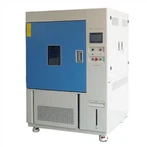
Electronic modules, automotive sensors, pharmaceutical samples, and communication devices are expected to survive freezing winters, tropical humidity, rapid thermal cycling, and high-temperature storage. Yet in many laboratories, full-size environmental chambers occupy too much floor space, consume large amounts of power, and slow down testing workflows. Engineers increasingly need compact equipment that can reproduce real environmental stress conditions directly beside the workbench.
A recent customer feedback from Saudi Arabia confirmed the stable performance of LIB's TH-80 Mini Climatic Chamber. The user shared: "Good evening, dear Karen. I truly appreciate your continued support. It's been a while since our last operation, and everything went well at that time. If we encounter any issues, I will be sure to contact you." This reflects strong satisfaction with the chamber's reliability and consistent operation in real testing environments.
This article explains how a Mini Climatic Chamber works, how it controls temperature and humidity with high precision, the differences between a mini chamber and a traditional reach-in chamber, and how LIB's compact systems help laboratories perform reliable environmental testing according to international standards.
How Does a Mini Climatic Chamber Work?
1. Wide Environmental Simulation Range vs Natural Exposure Testing
Natural outdoor testing may require months or even years before materials show corrosion, cracking, delamination, or electrical failure. Environmental conditions such as sunlight, rain, humidity, and temperature also change daily, making results difficult to repeat.
A Mini Climatic Chamber performs accelerated environmental simulation under controlled laboratory conditions. LIB Mini Climatic Chambers provide temperature ranges from –86 °C to +150 °C and humidity control from 20 % to 98 % RH. Instead of waiting for seasonal weather changes, laboratories can reproduce desert heat, tropical moisture, cold storage, or rapid temperature cycling within hours or days.
For example:
① Automotive electronics often require thermal cycling between –40 °C and +85 °C.
② Consumer electronics commonly undergo 85 °C / 85 % RH humidity aging tests.
③ Battery modules may require repeated heating and cooling cycles according to IEC and ISO standards.
Compared with outdoor exposure testing, Mini Climatic Chamber performed testing offers: Faster failure analysis, Repeatable environmental conditions, Lower testing cost, Standard-compliant validation, Reduced product development time.
2. Temperature and Humidity Control Working Principle
A Mini Climatic Chamber works through coordinated heating, cooling, humidification, dehumidification, and airflow circulation systems.
LIB Mini Climatic Chambers use compressor-based refrigeration systems combined with electric heating elements to achieve stable temperature transitions. Cooling rates reach approximately 1 °C/min while heating rates reach 3 °C/min.
High-precision PT100 Class A sensors continuously monitor chamber conditions with 0.001 °C sensing accuracy. The PID intelligent controller automatically adjusts compressor output, heaters, and humidification systems to maintain:
① Temperature fluctuation within ±0.5 °C
② Temperature deviation within ±2 °C
③ Humidity deviation within ±2.5 % RH
④ The humidity system uses steam humidification and closed-loop water recovery. Condensed water is recycled back into the humidification system, reducing water consumption by up to 50 %.
⑤ Inside the chamber, centrifugal airflow fans and precision-designed air ducts eliminate hot and cold zones. Uniform airflow distribution ensures all test specimens receive consistent environmental exposure.
3. Application Fields and International Standards
Mini Climatic Chambers are widely used across electronics, automotive, aerospace, pharmaceutical, defense, and telecommunications industries.
Typical automotive applications include: ADAS sensor validation, ECU reliability testing, Battery module thermal cycling, Connector corrosion testing, Cabin electronics qualification.
Common environmental testing standards include:
① IEC 60068-2-1 Low Temperature Test
② IEC 60068-2-2 High Temperature Test
③ IEC 60068-2-14 Temperature Change Test
④ IEC 60068-2-30 Damp Heat Cyclic Test
⑤ ISO 16750 Environmental Conditions for Road Vehicles
⑥ MIL-STD-810 Environmental Engineering Tests
⑦ JESD22-A104 Temperature Cycling for Semiconductors
LIB Mini Climatic Chambers are designed to support these testing procedures with programmable temperature ramps, humidity control, and long-duration cycling stability.
Difference Between LIB Mini Climatic Chamber and Reach-In Climatic Chamber
Although both systems perform environmental simulation, their applications and laboratory requirements are different.
1. Mini Climatic Chamber
LIB Mini Climatic Chambers are designed for: Laboratories with limited space, R&D departments, Electronic component testing, Small-batch validation, Benchtop operation
The TH-50 model occupies only 800 × 1050 mm, while the TH-80 model occupies approximately 900 × 1100 mm. Noise levels remain at or below 65 dBA, allowing operation inside offices or development laboratories.
Advantages include: lower energy consumption, faster installation, easier maintenance, shorter stabilization times, rirect workstation testing. Mini chambers are ideal when testing: PCBs, sensors, IC modules, small batteries, pharmaceutical samples, communication devices.
2. Reach-In Climatic Chamber
Reach-in Climatic Chambers are larger floor-standing systems designed for large-volume testing, automotive assemblies, aerospace components, mass production validation, and multi-sample batch testing.
These equipment typically provide larger internal volume, higher load capacity, greater airflow capacity, and extended continuous operation, however they require dedicated laboratory space, higher electrical consumption, more installation preparation, and higher maintenance costs.
How to Choose the Right Chamber
|
Choose a LIB Mini Climatic Chamber if: ① Sample sizes are small or medium ② Laboratory space is limited ③ Fast R&D testing is required ④ Noise control is important ⑤ Energy efficiency matters |
Choose a Reach-In Climatic Chamber if: ① Testing large assemblies ② Running mass qualification programs ③ Requiring large internal capacity ④Performing heavy-load testing |
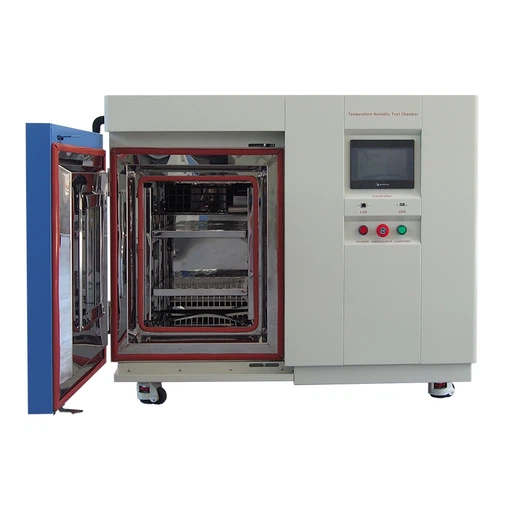
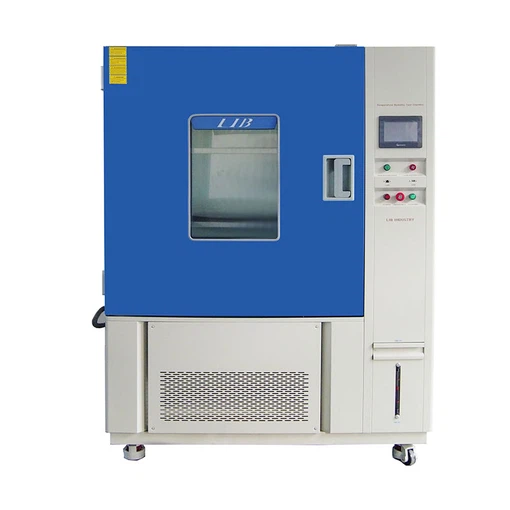
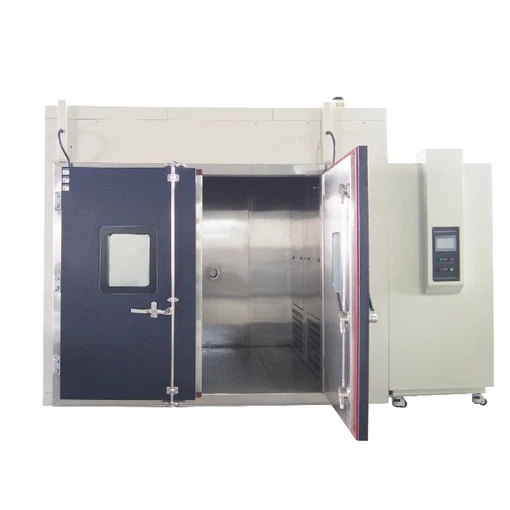
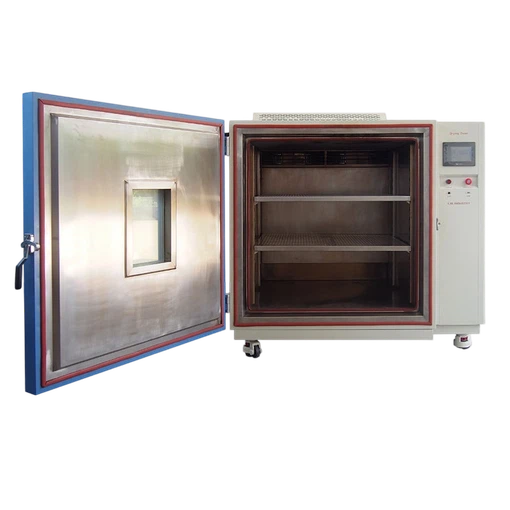


LIB Mini Climatic Chamber for Electronic Temperature Cycling Testing
One of the most commonly used electronic reliability standards is JESD22-A104 Temperature Cycling Testing for semiconductor and electronic assemblies.
1. Typical JESD22-A104 Thermal Cycling Requirements
A common cycle condition includes:
|
Low temperature: –40 °C High temperature: +85 °C Transition rate: 10 °C/min maximum Dwell time: 15–30 minutes per temperature stage Total cycles: 500 to 1000 cycles Typical cycle sequence: Stabilize at +25 °C Cool to –40 °C Hold for 30 minutes |
Heat to +85 °C Hold for 30 minutes Repeat continuously This test evaluates: Solder joint fatigue PCB expansion stress Semiconductor package cracking Connector durability Material delamination |
2. Recommended LIB Mini Climatic Chamber Model
LIB TH-80 Mini Climatic Chamber is suitable for this testing because it provides:
|
|
|
|||||||
| Model | TH-50 | TH-80 | ||||||
| Internal dimension (mm) |
320x350x450 |
400x400x500 | ||||||
| Overall dimension (mm) | 800x1050x950 | 900×1100×1000 | ||||||
| Temperature range | -86 ℃ ~+150 ℃ | |||||||
| Temperature fluctuations | ± 0.5 ℃ | |||||||
| Humidity Range | 10%/20%~95 % | |||||||
| Temperature deviation | ± 2.0 ℃ | |||||||
| Temperature Sensor | PTR Platinum Resistance PT100Ω/MV A-class | |||||||
| Temperature Resolution | ± 0.001 ℃ | |||||||
| Exterior Material | Steel Plate with A protective coating | |||||||
| Interior Material | SUS 304 stainless steel | |||||||


3. Advantages of LIB Mini Climatic Chamber
① Compact Laboratory Installation
The chamber fits directly beside testing instruments, reducing sample transport time and improving workflow efficiency.
② Stable Environmental Accuracy
PT100 sensors and PID control maintain highly stable environmental conditions during long-duration cycling tests.
③ Quiet Operation
≤65 dBA noise levels allow continuous operation inside development laboratories without disturbing engineers or sensitive measurements.
④ Energy and Water Saving Design
Closed-loop humidification recycling reduces water consumption while optimized refrigeration lowers operating costs.
⑤ Global Technical Support
LIB provides 3-year warranty coverage, lifetime technical assistance, remote troubleshooting, and spare-parts delivery within 7–15 days worldwide.
FAQs on the Mini Climatic Chamber
Q1: What sample sizes can a Mini Climatic Chamber test?
Mini Climatic Chambers are suitable for PCBs, sensors, batteries, connectors, pharmaceutical samples, communication modules, and small automotive electronics.
Q2: Can the chamber perform both temperature and humidity testing?
Yes. LIB Mini Climatic Chambers support combined temperature and humidity testing from 20 % to 98 % RH.
Q3: Does the chamber support international testing standards?
Yes. LIB systems support IEC 60068, ISO 16750, MIL-STD-810, JESD22, and other environmental reliability standards.
Q4: Is installation complicated?
No. Mini Climatic Chambers are designed for fast installation with standard electrical connections and compact footprints.
Q5: How is the equipment transported internationally?
LIB chambers use reinforced export wooden packaging, internal anti-vibration protection, and moisture-resistant wrapping to ensure safe global transportation.
Q6: What after-sales service does LIB provide?
LIB provides a 3-year warranty, lifetime technical support, online installation guidance, calibration assistance, spare parts delivery within 7–15 days, and 24/7 English-language technical service.
Environmental reliability testing no longer requires oversized chambers or dedicated testing rooms. LIB Mini Climatic Chambers combine compact installation, accurate environmental simulation, low-noise operation, and international-standard compliance into one efficient laboratory solution.
Contact LIB Industry today to discover how Mini Climatic Chambers can improve your product reliability testing, accelerate development cycles, and deliver consistent environmental testing performance for electronics, automotive systems, pharmaceuticals, and advanced industrial applications.