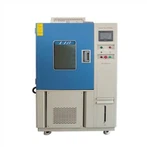
Product shelf-life validation is no longer limited to pharmaceuticals. Today, automotive electronics, batteries, cosmetics, food packaging, medical devices, and industrial materials all require long-term environmental reliability testing before entering the market. Manufacturers must know exactly how products behave after months or years of storage, transportation, and field use.
Recently, a customer from Romania shared positive feedback after installing a LIB climatic chamber: "The chamber was successfully installed, as far as I know everything is ok, I don't have any complaints from my colleagues. If any issues arise, we will contact you. Thank you." The chamber is now being used for continuous environmental simulation and product reliability validation in laboratory applications.
This article explains what temperature range is used in Climatic chamber for product shelf-life validation, how environmental chambers accelerate aging compared with natural exposure, how LIB controls temperature deviation within ±2 °C, and how high-temperature waterproof testing is performed according to international standards.
Temperature Range Is Used in Climatic Chamber for Product Shelf-Life Validation
1. Standard Temperature Range for Shelf-Life Validation
Most Climatic chamber for product shelf-life validation systems operate between –40 °C and +150 °C, with humidity control from 20 % RH to 98 % RH. For pharmaceutical stability testing under ICH Q1A, common conditions include:
① 25 °C / 60 % RH for long-term storage
② 30 °C / 65 % RH for intermediate testing
③ 40 °C / 75 % RH for accelerated aging
For electronics and automotive components, IEC 60068-2 standards commonly require:
① –40 °C cold storage tests
② 85 °C damp heat testing
③ Thermal cycling between –40 °C and +125 °C
These temperature ranges simulate real transportation, warehouse, and outdoor operating environments within a short testing period.
3. Natural Aging vs Chamber-Performed Testing
Natural environmental exposure may take 1–3 years before product degradation becomes visible. Temperature changes outdoors are slow, unstable, and difficult to repeat. Humidity, sunlight, and seasonal conditions vary continuously, making accurate comparison difficult.
A Climatic chamber for product shelf-life validation performs accelerated aging under controlled laboratory conditions. For example: A cosmetic package stored naturally for 12 months can be evaluated within 30–60 days at 40 °C / 75 % RH. Automotive electronic modules can complete 500 thermal cycles within several weeks. Battery cells can undergo continuous high-temperature aging at 85 °C without interruption. This greatly reduces product development time while improving repeatability and compliance with certification standards.
3. Applications and Industry Standards
Different industries use different standards for shelf-life validation and environmental durability testing.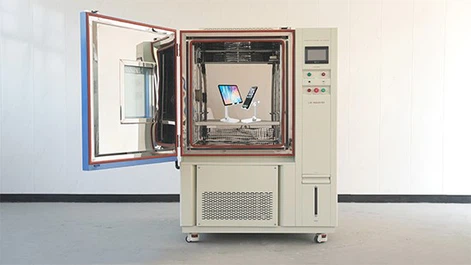
① Automotive Industry
Automotive suppliers commonly follow: IEC 60068-2, ISO 16750, SAE J1455
Typical tests include: High-temperature storage at +125 °C, Humidity cycling at 85 °C / 85 % RH, Thermal shock from –40 °C to +85 °C. These tests validate ECUs, sensors, connectors, LED lamps, and battery systems.
② Pharmaceutical Industry
Pharmaceutical laboratories use: ICH Q1A, FDA stability requirements, GMP guidelines. The equipment verify drug stability, packaging integrity, and expiration periods.
③ Electronics Industry
Consumer electronics manufacturers use: IEC 60529, IEC 60068, MIL-STD-810H. Products such as smartphones, PCB boards, displays, and communication devices are tested for moisture resistance and long-term operational reliability.
How LIB Climatic Chamber Controls Temperature Deviation Within ±2 °C
Temperature stability directly affects the accuracy of shelf-life validation results. Even small fluctuations can lead to inconsistent aging rates and unreliable data.
LIB Climatic chamber for product shelf-life validation systems use several technologies to maintain temperature deviation within ±2 °C and fluctuation within ±0.5 °C.
1. PT100 Class A Precision Sensors
The chamber uses PT100 Class A platinum resistance sensors with measurement resolution up to ±0.001 °C. These sensors continuously monitor air temperature inside the working chamber and send feedback signals to the controller in real time.
2. PID Intelligent Temperature Control
LIB chambers use advanced PID control algorithms to automatically adjust: Heater output, Compressor operation, Air circulation speed.
The PID system predicts temperature changes before overshoot occurs. This minimizes sudden fluctuations during heating and cooling transitions. For example: Heating rate: 3 °C/min, Cooling rate: 1 °C/min, Even during rapid thermal cycling, temperature remains stable throughout the chamber.
3. Uniform Airflow Circulation System
Dual centrifugal fans distribute conditioned air evenly through multi-directional airflow channels. Precision-designed air ducts eliminate hot and cold zones. The airflow system maintains: Temperature uniformity within ±1.5 °C, Stable humidity distribution, Consistent exposure for multi-sample testing. This is especially important for automotive harnesses, medical devices, and multi-layer electronic assemblies.
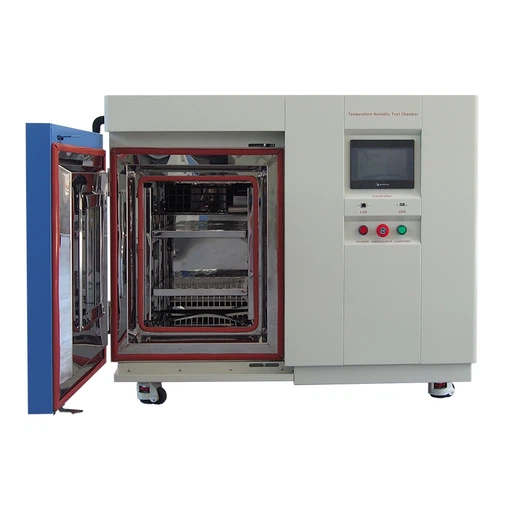
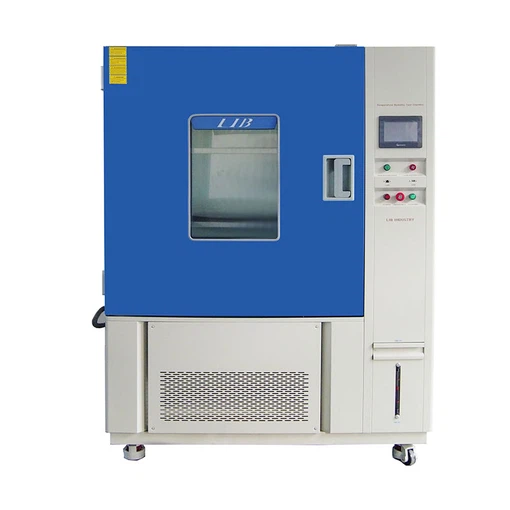
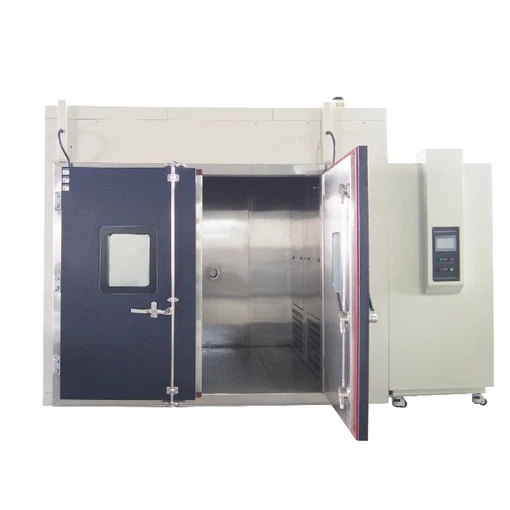


LIB Climatic Chamber For Product Shelf-Life Validation
1. Common Shelf-Life Validation Standard: IEC 60068-2 Environmental Testing
One of the most commonly used standards for Climatic chamber for product shelf-life validation is IEC 60068-2. This standard is widely applied in electronics, automotive, battery, aerospace, and industrial component testing to evaluate product reliability under temperature and humidity stress conditions.
|
Typical testing conditions include: High-temperature storage at +85 °C Low-temperature storage at –40 °C Damp heat testing at 85 °C / 85 % RH Temperature cycling between –40 °C and +85 °C |
Common test durations: 240-hour damp heat exposure 500 thermal cycles 1000-hour continuous aging tests |
|
These cycles help manufacturers evaluate: Material deformation Seal aging Corrosion resistance Electronic performance stability Moisture penetration Product lifespan under environmental stress |
Products commonly tested include: Automotive ECUs LED lighting systems Battery modules Electronic connectors PCB assemblies Industrial sensors |
2. LIB Climatic Chamber For Product Shelf-Life Validation Testing Process
LIB Climatic chamber for product shelf-life validation systems simulate long-term environmental exposure under stable laboratory conditions.
|
|
Name | Temperature Humidity Climatic Chamber for Composites | ||||
|
Model |
TH-100 |
|||||
|
Internal dimension (mm) |
400*500*500 |
|||||
|
Overall dimension (mm) |
860*1050*1620 |
|||||
|
Capacity |
100L |
|||||
|
Temperature range |
-20℃ ~+150 ℃ |
|||||
|
Low type |
A: -40℃ B:-70℃ C -86℃ |
|||||
|
Humidity Range |
20%-98%RH |
|||||
|
Temperature deviation |
± 2.0 ℃ |
|||||
|
Heating rate |
3 ℃ / min |
|||||
|
Cooling rate |
1 ℃ / min |
|||||
|
Controller |
Programmable color LCD touch screen controller, Multi-language interface, Ethernet , USB |
|||||
|
Refrigerant |
R404A, R23 |
|||||
|
Exterior material |
Steel Plate with protective coating |
|||||
|
Interior material |
SUS304 stainless steel |
|||||
|
Standard configuration |
1 Cable hole (Φ 50) with plug; 2 shelves |
|||||
|
Timing Function |
0.1~999.9 (S,M,H) settable |
|||||

|
|
|
|
|
|
| Robust Workroom | Cable Hole | Temperature and Humidity Sensor | PID controller |


3. Advantages of LIB Climatic Chamber For Product Shelf-Life Validation
① Stable Environmental Control
Temperature fluctuation remains within ±0.5 °C and humidity stability within ±2.5 % RH during continuous operation.
② Fast Temperature Recovery
The chamber quickly returns to set conditions after door opening, reducing test interruption.
③ Programmable Multi-Step Testing
Up to 120 programmable test profiles with 100 steps each simplify complex aging procedures.
④ Energy and Water Saving
Closed-loop humidification reduces water consumption by up to 70 % and lowers operating costs.
⑤ Durable Industrial Design
SUS304 stainless steel construction improves corrosion resistance and supports long-term laboratory operation.
FAQs on the LIB Temperature Range Is Used in Climatic Chamber for Product Shelf-Life Validation
Q1:What is the standard temperature range of LIB climatic chambers?
LIB chambers typically operate from –70 °C to +150 °C depending on the model.
Q2: Can LIB chambers perform both temperature and humidity testing?
Yes. LIB chambers support combined temperature-humidity testing from 20 % RH to 98 % RH.
q3: What standards does LIB equipment comply with?
LIB chambers support testing according to: IEC 60068, IEC 60529, ISO 20653, ICH Q1A, MIL-STD-810H, SAE J1455
Q4: Does LIB provide installation and training services?
Yes. LIB provides remote guidance, operation manuals, video support, and online technical training for customers worldwide.
q5: How is the chamber transported internationally?
LIB chambers are packed in reinforced export plywood packaging with internal shock protection. Sea freight, air freight, and door-to-door logistics services are available.
Discover how LIB Climatic chamber for product shelf-life validation systems help laboratories achieve faster certification, reliable aging analysis, and stable environmental simulation for automotive, pharmaceutical, and electronics testing worldwide. Contact LIB Industry today to get customized Climatic chamber for product shelf-life validation solutions, technical specifications, pricing support, and professional environmental testing consultation for your laboratory applications.