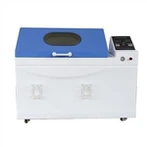
Composite materials are now widely used in automotive, aerospace, construction, electronics, and renewable energy industries. However, composites are constantly exposed to changing temperatures, humidity, condensation, and environmental stress throughout their service life. These environmental factors can affect mechanical strength, dimensional stability, adhesion performance, and long-term durability.
LIB's Temperature And Humidity Aging Chamber For Composites helps manufacturers evaluate these risks before products reach the market. By accurately reproducing temperature and humidity conditions in a controlled laboratory environment, it provides reliable aging data for product development, quality control, certification, and performance validation.
How Does a Temperature And Humidity Aging Chamber For Composites Work?
1. Simulating Real Environmental Conditions
A Temperature And Humidity Aging Chamber For Composites operates by controlling temperature, humidity, airflow, and exposure duration inside a sealed testing space.
High-precision PT100 Class A temperature sensors continuously monitor chamber conditions with a resolution of ±0.001°C. The refrigeration system, heating system, humidification unit, and PID controller work together to maintain stable environmental conditions.
For example, a composite automotive component can be exposed to temperatures ranging from -40°C to +85°C while humidity levels are maintained between 20% RH and 98% RH. This allows manufacturers to observe potential issues such as cracking, delamination, swelling, discoloration, and mechanical degradation before field deployment.
2. Why Composite Aging Testing Is Necessary
Composite materials combine different substances such as fibers, resins, adhesives, and fillers. While this structure provides excellent strength-to-weight ratios, it can also create vulnerabilities when exposed to moisture and temperature fluctuations.
Humidity can penetrate resin systems and weaken bonding interfaces. Repeated temperature cycling can generate thermal expansion differences between materials, causing internal stress and fatigue.
A Temperature And Humidity Aging Chamber For Composites accelerates these environmental effects within days or weeks instead of years. Manufacturers can predict long-term product performance, improve material formulations, and reduce warranty risks before commercial release.
3. Standards That Require Environmental Aging Testing
Many industries require temperature and humidity aging evaluations according to internationally recognized standards.
Common testing standards include:
IEC 60068-2-1 Low Temperature Test
IEC 60068-2-2 Dry Heat Test
IEC 60068-2-30 Damp Heat Cyclic Test
IEC 60068-2-78 Damp Heat Steady State Test
ISO 16750 Environmental Testing for Road Vehicles
ASTM D5229 Moisture Absorption Properties of Composite Materials
ASTM D1183 Cyclic Humidity Exposure
MIL-STD-810 Environmental Engineering Considerations
ISO 4892 Artificial Weathering Requirements
SAE J1211 Environmental Design Guidelines for Automotive Electronics
LIB equipment are designed to perform testing in accordance with these standards, providing repeatable and globally recognized test results.
After Two Reach-In Chambers, Measurement Canada Orders Another LIB Walk-In Temperature And Humidity Aging Chamber For Composites
After successfully operating two LIB reach-in Temperature And Humidity Aging Chambers For Composites, Measurement Canada

For Composites Currently
Operating at Measurement Canada
expanded its testing capability by purchasing a LIB walk-in Temperature And Humidity Aging Chamber For Composites.
As a government agency responsible for measurement accuracy and regulatory compliance, Measurement Canada requires highly stable environmental conditions for performance verification and durability testing of various products and instruments.
Several factors contributed to the repeat order:
Proven Testing Accuracy
The chambers provide temperature stability of ±0.5°C and humidity stability of ±2.5% RH. Uniform airflow design keeps chamber variation within ±1.5°C, ensuring reliable and repeatable testing results.
Flexible Cable Access
Customized cable holes allow sensors, monitoring equipment, and external measurement devices to remain connected during testing. Multiple hole sizes and configurations are available to support complex testing setups.
Easy Sample Loading
The walk-in design enables operators to move large testing assemblies directly into the chamber. Adjustable racks and customized

For Composites for Measurement Canada
shelving simplify loading and unloading procedures while improving laboratory efficiency.
Comprehensive Safety Protection
Multiple safety systems, including over-temperature protection, low-water protection, compressor overload protection, door-open alarms, power failure recovery, and an emergency stop function, ensure safe operation while protecting both valuable test specimens and laboratory personnel throughout the testing process.
Compliance and Traceability
The chambers support laboratory documentation requirements through continuous data logging, programmable test profiles, and complete test traceability. This assists organizations performing testing under ISO/IEC 17025 laboratory quality systems.
Following the success of this installation, additional government laboratories and regulatory agencies are currently discussing environmental chamber projects with LIB.
Reach-In vs Walk-In Temperature And Humidity Aging Chamber For Composites: Which One Should You Choose?
Selecting the correct chamber depends on specimen size, testing volume, future expansion plans, and available laboratory space.
| Feature |
Reach-In Temperature And Humidity Aging Chamber For Composites |
Walk-In Temperature And Humidity Aging Chamber For Composites Chamber |
|---|---|---|
| Chamber Volume | 50L – 2000L | Customized Large Capacity |
| Sample Size | Small and Medium Components | Large Products and Assemblies |
| Floor Space Requirement | Compact | Larger Installation Area |
| Initial Investment | Lower | Higher |
| Loading Method | Manual Shelves | Direct Walk-In Access |
| Customization Level | Standard and Semi-Custom | Fully Customized |
| Cable Holes | Available | Multiple Customized Ports |
| Typical Industries | Electronics, Materials, Sensors | Automotive, Aerospace, Government Labs |
| Installation | Plug-and-Play | On-Site Assembly Available |
| Future Expansion | Limited | Highly Flexible |


Choose a Reach-In Chamber If:
You test small or medium-sized composite samples.
Laboratory space is limited.
You require frequent product development testing.
Lower initial investment is preferred.
Choose a Walk-In Chamber If:
You test large composite assemblies.
Multiple products must be tested simultaneously.
Government or certification testing requires large-scale evaluations.
Future testing capacity expansion is expected.
LIB Popular Aging Chambers For Composites
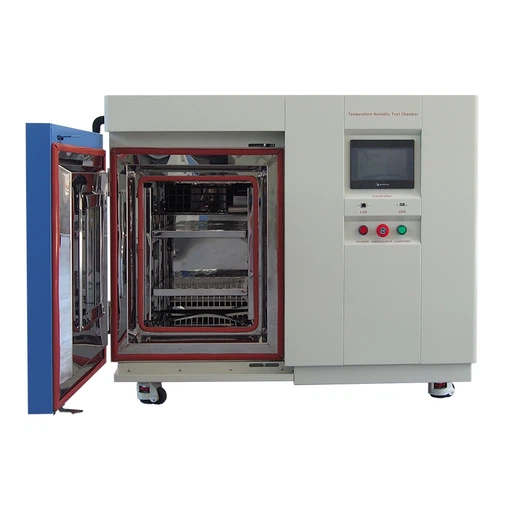
Compact size, affordable cost, low-noise operation, benchtop installation, easy operation.
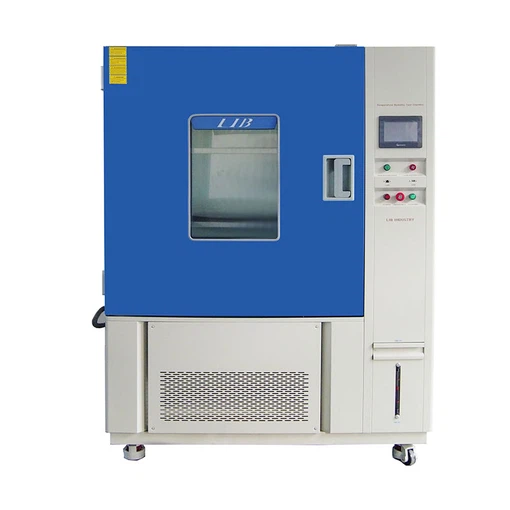
Standard models, precise control, easy operation, flexible customization.
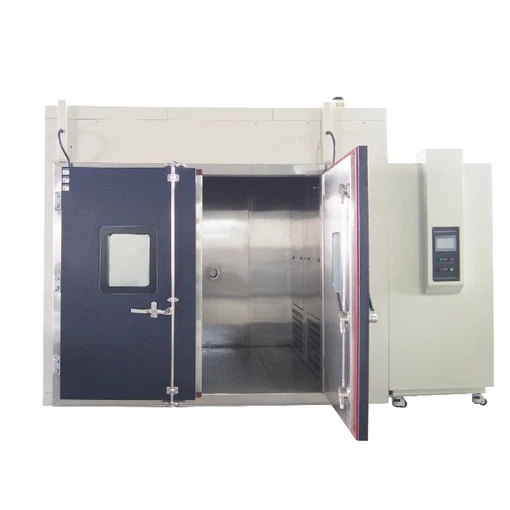
Full-vehicle testing, strong customization capability, suitable for large specimens, 93 m³ large-scale testing project delivered to Vietnam.
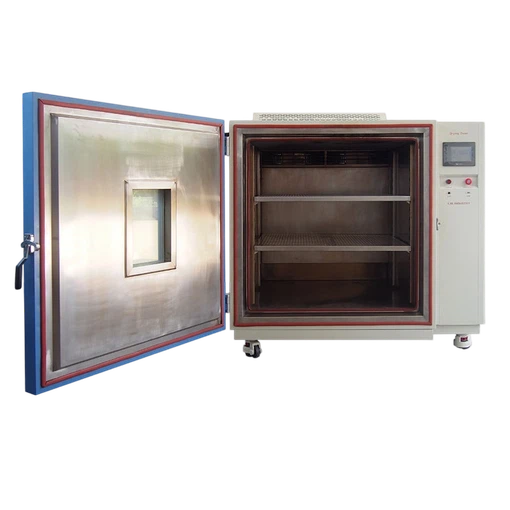

Stable temperature and humidity control, ramp rates of 5, 10, and 20 °C available.

Extreme explosion-proof safety, temperature ramp rate up to 20 °C, trusted by automotive battery manufacturers.
FAQs on the Temperature And Humidity Aging Chamber For Composites
q1: What humidity range can LIB provide?
Standard chambers provide humidity control from 20% RH to 98% RH. Customized configurations can be developed for specific applications.
q2: Can the chamber perform long-term aging tests?
Yes. The chamber is designed for continuous operation during 500-hour, 1000-hour, or even longer aging programs while maintaining stable environmental conditions.
q3: Can cable holes be customized?
Yes. Circular or square cable ports can be customized in size, quantity, and location to accommodate sensors, power cables, fluid lines, and monitoring equipment.
q4: How is the chamber shipped internationally?
Reach-in chambers are delivered fully assembled. Walk-in chambers are shipped in modular sections and installed by LIB engineers or authorized service teams at the customer site.
q5: What after-sales service does LIB provide?
LIB provides comprehensive after-sales support, including installation guidance, remote technical support, on-site commissioning, calibration assistance, spare parts supply, and lifetime technical consultation to ensure reliable long-term operation.
q6: How long is the delivery time?
Standard models are typically available within several weeks. Customized walk-in chambers require additional engineering and manufacturing time depending on project specifications.
Contact LIB Industry today to discuss your Temperature And Humidity Aging Chamber For Composites requirements and discover the ideal solution for your laboratory.