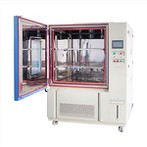
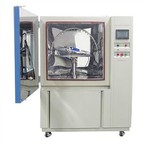
Modern products are expected to survive freezing winters, hot summers, humid coastal regions, and rapid temperature changes throughout their service life. Whether it is an automotive sensor, an electronic controller, a battery module, or a communication device, manufacturers must verify reliability before products reach the market.
This article explains how a Temperature Humidity Chamber
performs temperature cycling tests, why this technology was developed, how industries use it to comply with international standards, and how to choose between a standard Temperature Humidity Chamber and a Fast Change Rate Thermal Cycle Chamber for your testing requirements.
The Development of Temperature Humidity Chambers
Why Environmental Simulation Became Necessary
As products became more sophisticated, natural outdoor testing was no longer practical. Waiting months or years for environmental exposure delayed product development and increased costs. Manufacturers needed a controlled laboratory solution capable of reproducing real-world environmental conditions quickly and repeatedly.
Temperature Humidity Chambers were developed to simulate heat, cold, humidity, condensation, and cyclic environmental stress. By exposing products to accelerated environmental conditions, engineers can identify weaknesses, improve designs, and shorten development cycles. For example, a connector that may fail after two years outdoors can often reveal defects within days through accelerated laboratory testing.

Industries and Standards Driving Demand
Today, Temperature Humidity Chambers are widely used in automotive, aerospace, electronics, defense, telecommunications, pharmaceutical, medical device, and renewable energy industries.
The Temperature Humidity Chamber supports qualification and reliability testing according to numerous internationally recognized standards. Typical examples include IEC 60068-2-1 for low-temperature exposure, IEC 60068-2-2 for high-temperature endurance evaluation, IEC 60068-2-30 for cyclic damp heat testing, and IEC 60068-2-78 for steady-state humidity assessment. In the automotive sector, ISO 16750 is frequently applied to validate the environmental durability of electronic components installed in vehicles. Aerospace and defense manufacturers often reference MIL-STD-810H when evaluating product performance under harsh environmental conditions. Semiconductor and electronic device reliability programs commonly utilize JESD22 environmental stress procedures, while ASTM D4332 provides conditioning requirements for packaging materials and industrial products before performance testing. Together, these standards help manufacturers verify product reliability, safety, and long-term performance under controlled laboratory conditions.
Typical conditions include 85°C/85% RH for electronics aging, -40°C low-temperature storage testing, and thermal cycling from -40°C to +85°C for automotive electronic components.
Different Types of Temperature Humidity Chambers
Not all environmental chambers perform the same tests.
Benchtop chambers are commonly used for small electronic devices and laboratory samples. Reach-in Temperature Humidity Chambers are the most popular solution for product qualification and reliability testing. Walk-in chambers accommodate large assemblies, complete products, and batch testing.
For applications requiring rapid thermal transitions, Fast Change Rate Thermal Cycle Chambers can achieve temperature change rates of 5°C/min, 10°C/min, or even 15°C/min. These equipment are commonly used for accelerated life testing, ESS (Environmental Stress Screening), and automotive validation programs.
LIB Best-Selling Temperature Humidity Chambers

Space-Saving Laboratory Design, Precise Temperature and Humidity Control

Versatile Testing for Multiple Industries, Stable and Uniform Environmental Conditions

Easy Access for Large Test Specimens, High-Capacity Environmental Simulation

Rapid Heating Performance, Reliable Long-Term Thermal Aging Tests

Up to 20°C/min Temperature Ramp Rates, Accelerated Product Reliability Validation

Combined Climatic and Vibration Testing, Reduced Testing Time and Improved Correlation
Measurement Canada Expanded from a Reach-In Chamber to a TH-080C Walk-In Temperature Humidity Chamber
After successfully operating a LIB reach-in Temperature Humidity Chamber for product performance evaluation, Measurement Canada expanded its testing capabilities by purchasing a TH-080C Walk-In Temperature Humidity Chamber.
The organization required a larger environmental testing space capable of accommodating bigger samples while maintaining the same level of temperature and humidity accuracy. The walk-in design significantly improved operational efficiency because technicians could easily move products in and out without disassembly, reducing preparation time and minimizing handling risks.
The TH-080C provides stable temperature and humidity control for long-duration qualification testing. High-precision PT100 Class A sensors maintain temperature stability within ±0.5°C while humidity control remains within ±2.5% RH. Uniform airflow distribution ensures all test specimens experience consistent environmental conditions.
Safety was also an important consideration. The chamber incorporates over-temperature protection, compressor protection, water shortage alarms, leakage protection, emergency stop functions, and intelligent fault diagnostics. These features support continuous operation during long-term reliability tests.
The equipment design complies with CE requirements and supports testing programs based on IEC 60068, ISO 16750, CSA environmental verification requirements, and other international standards. Because of the chamber's performance, reliability, and cost-effectiveness, additional discussions are underway with other Canadian government agencies and testing organizations interested in expanding their environmental testing capabilities.
Key benefits reported by the customer include:
① Convenient walk-in access for large products
② Stable long-duration operation
③ High temperature and humidity accuracy
④ Reduced test preparation time
⑤ Comprehensive safety protection
⑥ Compliance with international testing standards
⑦ Lower operating costs compared with multiple smaller chambers
LIB Temperature Humidity Chamber vs Fast Change Rate Thermal Cycle Chamber
Although both chambers perform environmental testing, their purposes are different.
Feature
|
|
|
Temperature Range
| -20°C to +150°C
| -20°C to +150°C
|
Optional Low Temperature
| -40°C, -70°C, -86°C
| -40°C, -70°C, -86°C
|
Humidity Control
| 20% RH to 98% RH
| Optional
|
Heating Rate
| 1-3°C/min
| 5-15°C/min
|
Cooling Rate
| 1°C/min
| Up to 15°C/min
|
Primary Purpose
| Environmental simulation
| Accelerated thermal cycling
|
Typical Standards
| IEC 60068-2-30, IEC 60068-2-78
| IEC 60068-2-14, JESD22-A104
|
Sample Types
| Electronics, materials, pharmaceuticals
| Automotive electronics, PCBs, semiconductors
|
Operating Cost
| Lower
| Higher
|
Test Duration
| Longer exposure tests
| Short accelerated tests
|


How to Choose the Right Chamber
Choose a Temperature Humidity Chamber if your testing requires humidity control, long-duration aging, storage simulation, pharmaceutical stability studies, or material conditioning.
Choose a Fast Change Rate Thermal Cycle Chamber when thermal fatigue, solder joint reliability, automotive validation, ESS screening, or accelerated product qualification is the primary objective.
For example, an automotive ECU may undergo thermal cycling between -40°C and +125°C for 1000 cycles according to IEC 60068-2-14, while a plastic enclosure may require 85°C and 85% RH exposure for 1000 hours according to IEC 60068-2-78.
FAQs on the Temperature Humidity Chamber
Q1: How does a Temperature Humidity Chamber perform temperature cycling tests?
The chamber automatically alternates between programmed high and low temperature setpoints using PID-controlled heating and refrigeration systems. Typical cycles may range from -40°C to +85°C or -70°C to +150°C, depending on product requirements and applicable standards.
Q2: Can LIB chambers comply with international testing standards?
Yes. LIB chambers support testing according to IEC 60068 series, ISO 16750, MIL-STD-810H, JESD22, ASTM standards, ICH guidelines, CSA requirements, and many other international specifications.
Q3: How is the chamber shipped internationally?
LIB chambers are packaged using reinforced export-grade wooden crates with shock-resistant protection. Before shipment, equipment undergoes factory acceptance testing (FAT), calibration verification, and operational inspection to ensure safe transportation and immediate commissioning upon arrival.
Q4: What after-sales service does LIB provide?
LIB provides installation guidance, operation training, calibration support, spare parts supply, preventive maintenance recommendations, and remote technical assistance. Engineers can also provide customized testing solutions according to specific industry standards and product requirements.
Q5: Can the chamber be customized?
Yes. Chamber dimensions, temperature ranges, humidity ranges, cable ports, viewing windows, shelving systems, data acquisition functions, and controller languages can all be customized according to customer requirements.
Contact LIB Industry today for expert consultation, chamber selection assistance, and customized environmental testing solutions.