In many industrial environments, dust is more than just a nuisance. Fine particles carried by air can enter electronic enclosures, damage mechanical components, and reduce product lifespan. Equipment used in outdoor lighting, automotive electronics, industrial sensors, and communication devices must continue operating reliably even when exposed to harsh dusty conditions.
A customer from Canada recently shared positive feedback after installing a LIB IP6X Dust Test Chamber. As Darren noted in his message: "We have used our new equipment on a few occasions and are satisfied with their functionality." Feedback like this highlights how reliable dust simulation equipment helps laboratories verify product durability and perform environmental testing with confidence.
To help manufacturers better understand dust resistance testing, this article explains how an IP6X Dust Test Chamber simulates real dust environments, how standardized testing procedures work, and how companies use these tests to verify product reliability before release.
Principles Behind How an IP6X Dust Test Chamber Simulates Real Dust Conditions
1. Simulating High-Concentration Dust Environments
Real outdoor and industrial environments often contain suspended fine particles that accumulate inside equipment over time. In deserts, construction zones, or factories, airborne dust concentrations can become extremely high. Standards such as IEC 60529 (IP5X/IP6X), IEC 60068-2-68, and ISO 20653 require products to be tested under controlled dust exposure conditions to verify enclosure sealing performance.
LIB's IP6X Dust Test Chamber reproduces these environments by circulating fine talcum powder with a nominal particle size of 50 μm inside a sealed chamber. The dust concentration is maintained at approximately 2–4 kg/m³, while chamber temperature can reach up to +50 °C to simulate hot and dusty outdoor conditions. This controlled environment allows engineers to observe how dust interacts with seals, connectors, and electronic components.
Industries that rely on this type of testing include electronics manufacturing, automotive electronics, and industrial equipment production. Testing helps ensure compliance with standards such as IEC 60529, IEC 60068-2-68, ISO 20653, MIL-STD-810, and ASTM dust simulation procedures.
2. Precision Dust Circulation and Distribution
A realistic dust simulation requires stable airflow and uniform particle distribution. Without proper circulation, dust may accumulate in one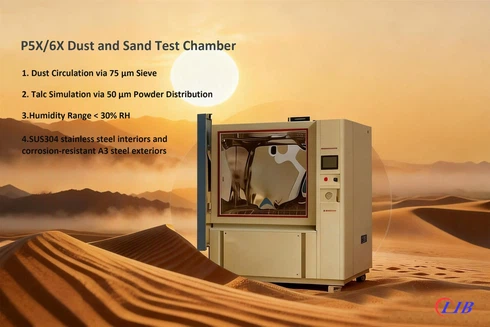 area and fail to replicate real environmental exposure.
LIB's IP6X Dust Test Chamber uses a vertical dust circulation system that continuously lifts and redistributes particles throughout the chamber. Airflow carries the talcum powder through specially designed outlets, ensuring that dust reaches every surface of the test specimen. The chamber includes flowmeters and pressure gauges to maintain stable air movement and consistent dust density.
To prevent dust clumping, heating elements inside the chamber maintain dry conditions while the interior structure-made of SUS304 stainless steel-resists corrosion and abrasion. Continuous monitoring ensures that the airflow, dust concentration, and exposure time remain within the parameters required by IEC 60529 IP6X testing protocols.
Such precise environmental control makes the chamber suitable for testing electrical connectors, sensors, lighting enclosures, and sealed electronic housings used in demanding industries.
3. Standard-Based Dust Resistance Validation
Dust testing is not only about exposing products to powder; it must also follow strict standardized procedures to ensure reliable certification results.
The IP6X rating represents the highest level of dust protection under the Ingress Protection (IP) classification system defined in IEC 60529. To pass the IP6X test, the enclosure must demonstrate complete dust-tight protection, meaning no dust penetration is allowed after the test cycle.
LIB IP6X Dust Test Chambers support multiple industry standards, including:
IEC 60529 – IP5X and IP6X dust ingress tests
ISO 20653 – Road vehicle environmental protection testing
IEC 60068-2-68 – Environmental testing for electronics
MIL-STD-810 – Military environmental engineering standards
ASTM dust circulation testing procedures
These standards are commonly applied in industries such as automotive electronics, telecommunications infrastructure, industrial machinery, and outdoor lighting products.
Lighting Dust Protection Testing Using the LIB IP6X Dust Test Chamber
1. IEC 60529 Dust Test Procedure for Lighting Equipment
Lighting products used outdoors must maintain reliable operation in dusty environments such as highways, industrial plants, and construction areas. According to IEC 60529 IP6X requirements, the dust test follows a structured cycle.
Typical testing conditions include:
Test duration: 6 hours per cycle
Dust material: Talcum powder with a nominal particle diameter of 50 μm
Dust concentration: 2–4 kg/m³ circulating airflow
Temperature: Ambient up to +50 °C
Relative humidity: below 30 % RH
Observation: Continuous monitoring through viewing window
Specimen orientation: Multiple positions to ensure full dust exposure
If no dust enters the enclosure during the test cycle, the product successfully achieves the IP6X dust-tight rating.
2. LIB DI-800 IP6X Dust Test Chamber in Practice
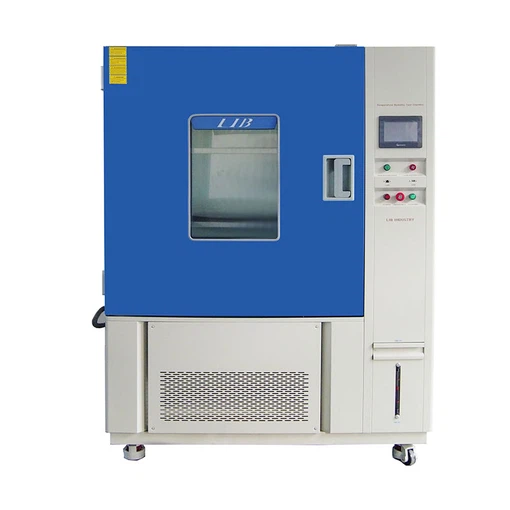
A typical example is the LIB DI-800 IP6X Dust Resistant Sand and Dust Test Chamber, widely used for lighting and electronic enclosure validation.
Key specifications include:
| Name | IP66 Dust Proof Tester |
|
|
Workroom dimension (mm) |
800*800*800 D*W*H |
|
|
External dimension (mm) |
950*3150*1800 D*W*H |
|
|
Interior Volume (L) |
510 |
|
|
Diameter of Turntable (mm) |
600 |
|
|
Turntable loads |
20kgs Max |
|
|
Turntable Rotation Speed |
0~7r/min (Adjustable) |
|
|
Internal Diameter of IPX5 Nozzle |
6.3 mm |
|
|
Internal Diameter of IPX6 Nozzle |
12.5 mm |
|
|
Water Flow Rate IPX5/ IPX6 |
12.5L/min ±5% / 100L/min ±5% |
|
|
Controller |
Programmable color LCD touch screen controller |
|
|
Ethernet connection, PC Link, USB |
||
|
Build-in Water Tank(mm) |
370*375*950 |
|
|
View Window Size(mm) |
475*475 |

 |
 |
|
| Test Area | LAN and USB | Controller |

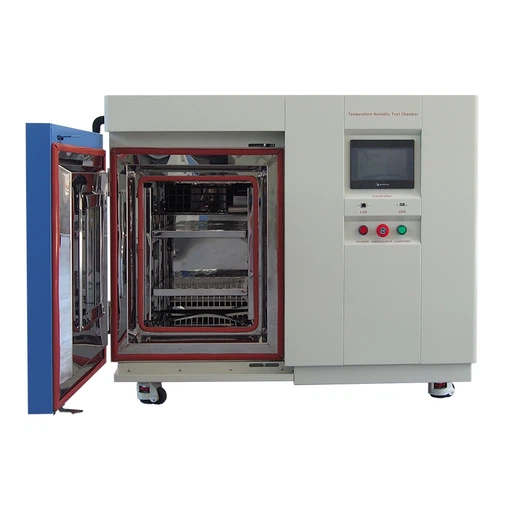
The chamber precisely replicates IEC 60529 test conditions by controlling dust concentration, airflow, and exposure duration. Vertical dust circulation ensures uniform particle distribution while operators monitor the test through the viewing window.
3. Advantages of LIB Dust Test Chambers
1. Accurate Environmental Simulation
Stable airflow and controlled dust concentration replicate real outdoor dust environments with high repeatability.
2. Durable Industrial Construction
The chamber combines SUS304 stainless steel interior and A3 steel exterior, ensuring long-term durability and corrosion resistance.
3. Flexible Programmable Operation
The color touchscreen controller supports up to 120 test programs and 100 steps per program, enabling complex multi-stage testing.
4. Comprehensive Safety Protection
The chamber is equipped with multiple safety features, including an electromagnetic door lock, overcurrent protection, earth leakage protection, phase sequence protection, and over-temperature protection, ensuring safe and stable operation throughout the testing process.
Maintenance Guide for LIB IP6X Dust Test Chambers
1. Regular Dust System Cleaning
Dust particles can accumulate in filters, pipes, and circulation channels over time. Operators should inspect and clean the dust circulation system regularly to ensure stable airflow and consistent dust concentration.
2. Electrical and Sensor Inspection
Controllers, sensors, and wiring should be checked periodically. Dust buildup around electrical components should be removed using compressed air to prevent overheating or inaccurate measurements.
3. Seal and Structural Maintenance
Door seals, viewing windows, and chamber joints must remain airtight. Inspect seals every few months and replace worn components to maintain accurate dust testing conditions.
Routine maintenance typically requires only a few minutes but significantly extends equipment lifespan and ensures reliable testing performance.


FAQs on the LIB IP6X Dust Test Chamber
Q1: What particle size is used for IP6X testing?
Standard testing uses talcum powder with a nominal particle size of 50 μm, filtered through a 75 μm sieve to prevent clumping.
Q2: Can the chamber test products at high temperatures?
Yes. The chamber operates at temperatures up to +50 °C, which matches requirements in IEC 60529 dust testing procedures.
Q3: What safety features are included?
The system includes electromagnetic door locks, overcurrent protection, earth leakage protection, phase sequence protection, and over-temperature safety systems.
Q4: What support and shipping services does LIB provide?
LIB offers global technical support, remote diagnostics, and a 3-year warranty. Equipment is securely packaged and typically delivered within 7–15 days, depending on configuration.

Accurate dust testing is essential for verifying enclosure protection and ensuring products can withstand harsh environmental conditions. LIB's IP6X Dust Test Chambers provide precise, repeatable simulations aligned with international standards, helping manufacturers achieve reliable certification results.
Contact LIB Industry to explore our solutions and request a consultation for your dust resistance testing needs.