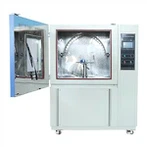
In the world of materials testing and quality assurance, xenon arc weathering chambers play a crucial role in simulating and accelerating the effects of environmental conditions on various products. These sophisticated devices provide valuable insights into how materials will perform over time when exposed to sunlight, moisture, and other atmospheric elements. In this comprehensive guide, we'll explore the inner workings of xenon arc chambers, their applications, and why they're indispensable in modern testing laboratories.

Xenon Arc Technology
Xenon arc weathering chambers are advanced testing equipment designed to replicate the damaging effects of sunlight and weather conditions on materials. By utilizing xenon arc lamps, these chambers can simulate natural sunlight with remarkable accuracy, allowing researchers and manufacturers to evaluate the long-term performance of their products in a controlled environment.
The Science Behind Xenon Arc Lamps
Xenon arc lamps are at the heart of these weathering chambers. These specialized light sources produce a spectrum that closely mimics natural sunlight, including ultraviolet (UV), visible, and infrared radiation. The xenon gas within the lamp is excited by an electrical discharge, creating an intense light that closely resembles the solar spectrum.
Spectral Distribution and Filter Systems
To achieve an even closer match to natural sunlight, xenon arc weathering chambers employ sophisticated filter systems. These filters help adjust the spectral distribution of the light, ensuring that the radiation reaching the test specimens accurately represents outdoor conditions. Different filter combinations can be used to simulate various environments, from tropical climates to high-altitude conditions.
Intensity Control and Monitoring
Precise control of light intensity is crucial for accurate testing. Xenon arc chambers feature advanced monitoring systems that continuously measure and adjust the light output to maintain consistent exposure levels throughout the testing period. This ensures reproducible results and allows for the acceleration of weathering effects without compromising the validity of the test.
Components and Functionality of Xenon Arc Chambers
A xenon arc weathering chamber is a complex system comprised of several key components working in harmony to create a controlled testing environment. Understanding these components is essential to grasp how these chambers function and deliver reliable results.
Chamber Design and Construction
The chamber itself is typically constructed with high-quality, corrosion-resistant materials to withstand the harsh conditions created during testing. The interior is designed to maximize light distribution and ensure uniform exposure of test specimens. Many chambers feature rotating sample racks to further enhance exposure uniformity.
Environmental Control Systems
Beyond light exposure, xenon arc chambers also control other environmental factors such as temperature and humidity. Sophisticated heating and cooling systems maintain precise temperature conditions, while humidity control mechanisms simulate various moisture levels. These systems work together to create a comprehensive weathering environment.
Spray Systems and Water Quality
Much xenon arc weathering chambers incorporate water spray systems to simulate rain or dew. These systems can be programmed to deliver water at specific intervals and durations. The quality of water used in these systems is carefully controlled to prevent contamination and ensure consistent test results.
The Testing Process in Xenon Arc Chambers
The testing process in a xenon arc weathering chamber is meticulously designed to provide accurate and reproducible results. Let's explore the steps involved in conducting a typical test using this advanced equipment.
Sample Preparation and Mounting
Before testing begins, samples must be carefully prepared and mounted within the chamber. This often involves cutting materials to specific sizes and securing them in sample holders. Proper preparation ensures that samples are exposed uniformly and that results are comparable across different tests.
Programming Test Parameters
Operators program the xenon arc chamber with specific test parameters based on industry standards or custom protocols. These parameters include light intensity, temperature, humidity levels, and exposure cycles. The ability to customize these settings allows for the simulation of various real-world scenarios.
Monitoring and Data Collection
Throughout the testing period, the xenon arc weathering chamber continuously monitors and records environmental conditions. Advanced systems may feature real-time data logging and remote monitoring capabilities, allowing researchers to track the progress of their tests without being physically present at the laboratory.
Advantages of Xenon Arc Weathering Chambers
Xenon arc weathering chambers offer several distinct advantages over other testing methods, making them an invaluable tool in materials research and quality assurance.
Accelerated Testing Capabilities
One of the primary benefits of xenon arc chambers is their ability to accelerate the weathering process. Tests that might take years to complete in natural outdoor conditions can be conducted in a matter of weeks or months, allowing for faster product development cycles and more rapid identification of potential issues.
Reproducibility and Consistency
Unlike outdoor exposure tests, which are subject to natural variations in weather and climate, xenon arc chambers provide a controlled and reproducible testing environment. This consistency allows for more accurate comparisons between different materials and formulations.
Versatility in Testing Conditions
Xenon arc weathering chambers can be programmed to simulate a wide range of environmental conditions, from tropical heat and humidity to arid desert climates. This versatility makes them suitable for testing products destined for various global markets.
Maintenance and Best Practices
To ensure the longevity and accuracy of xenon arc weathering chambers, proper maintenance and adherence to best practices are essential.
Regular Calibration and Verification
Periodic calibration of light intensity, temperature, and humidity sensors is crucial to maintain the accuracy of test results. Many laboratories implement regular verification procedures to ensure that their xenon arc chambers are performing within specified tolerances.
Lamp Replacement and Maintenance
Xenon arc lamps have a finite lifespan and must be replaced periodically to maintain consistent light output. Proper handling and installation of these lamps are critical to ensure safe operation and accurate test results.
Cleaning and Inspection Routines
Regular cleaning of the chamber interior, sample holders, and optical components is necessary to prevent contamination and ensure uniform light distribution. Routine inspections can help identify potential issues before they affect test results.
Conclusion
In conclusion, xenon arc weathering chambers are sophisticated and indispensable tools in the field of materials testing. By simulating and accelerating the effects of sunlight and weather, these chambers enable manufacturers and researchers to develop more durable and reliable products. Understanding how xenon arc chambers work is crucial for anyone involved in materials science, quality assurance, or product development.
Contact Us
If you're interested in learning more about Xenon Arc Chambers or need a customized solution for your testing needs, don't hesitate to reach out to our team of experts. Contact us at info@libtestchamber.com for personalized advice and cutting-edge environmental testing solutions.
References
1. Johnson, M. S., & McCreery, R. L. (2018). "The Xenon Arc Lamp: Principles and Applications in Materials Testing." Journal of Materials Research, 33(15), 2211-2226.
2. Zhang, L., et al. (2019). "Advancements in Xenon Arc Weathering Chamber Technology for Accelerated Aging Tests." Progress in Organic Coatings, 137, 105328.
3. Smith, A. B., & Brown, C. D. (2020). "Comparative Analysis of Natural and Artificial Weathering Methods: The Role of Xenon Arc Chambers." Polymer Degradation and Stability, 172, 109076.
4. Thompson, R. C., et al. (2017). "Calibration and Maintenance Protocols for Xenon Arc Weathering Chambers in Industrial Applications." Journal of Testing and Evaluation, 45(6), 2098-2112.
5. Hernández-Chavarría, F., & Rodríguez-Herrera, A. (2021). "Environmental Simulation Using Xenon Arc Technology: A Review of Current Practices and Future Trends." Applied Sciences, 11(9), 4105.
6. Park, S. J., & Kim, J. H. (2018). "Optimizing Xenon Arc Chamber Parameters for Accurate Replication of Outdoor Weathering Conditions." Coatings, 8(6), 206.