
Dust exposure is one of the most common causes of product failure in real-world environments. Fine particles can slowly enter enclosures, damage circuits, block connectors, and shorten product lifetime. This is why manufacturers must verify dust protection performance before products are released to the market.
As shown in the customer feedback image, a U.S. lighting manufacturer shared positive experience after using the LIB IP6X Dust-Tightness Test Chamber: "I was under the impression that the feedback that your chamber was working well was positive feedback. I have no further comments about the chamber." This reflects the stable performance and reliability of LIB equipment in real industrial testing applications, especially for lighting and electronic product validation.
This article explains how IP6X dust-tightness testing is performed using different methods, how international standards define the procedure, and how LIB IP6X Dust Test Chamber ensures accurate and repeatable certification results.
Methods of Performing IP6X Dust-Tightness Testing
Natural Dust Exposure vs Controlled Laboratory Testing
Natural dust testing happens in real outdoor environments such as deserts, construction sites, or industrial areas. While it reflects real conditions, it is not repeatable because dust concentration, wind speed, temperature, and particle size cannot be controlled. Results vary significantly between locations and seasons.
In contrast, laboratory testing uses a controlled IP6X Dust-Tightness Test Chamber where conditions are standardized. Typical parameters include dust concentration of 2–4 kg/m³, temperature up to +50 °C, and talcum powder with a nominal particle size of 50 μm. This ensures that every test follows identical conditions, making results repeatable and internationally acceptable under IEC 60529.
Industrial Standard Testing in Automotive and Electronics
In automotive and industrial applications, IP6X testing is closely linked with international standards such as IEC 60529, ISO 20653, IEC 60068-2-68, and MIL-STD-810H Method 510. For example, automotive ECUs, sensors, and lighting systems must survive dusty environments without performance degradation.
ISO 20653 specifically defines protection levels for road vehicles, requiring enclosures to maintain full dust-tight performance under continuous exposure. MIL-STD-810H Method 510 adds more severe conditions, including blowing dust cycles lasting several hours to simulate desert operation conditions. These standards ensure components remain reliable in extreme environments.
IP6X vs IPX5 Testing Difference
IP6X focuses on complete protection against fine dust ingress, meaning no visible dust should enter the enclosure after testing. In contrast, IPX5 evaluates resistance to low-pressure water jets (typically 30 kPa, 12.5 L/min flow rate) rather than dust.
While IPX5 tests water resistance, IP6X tests solid particle protection. Both are often required together for outdoor products such as LED lighting, EV charging stations, and communication equipment, where devices must withstand both rain and dust simultaneously.
Working Principle of LIB IP6X Dust-Tightness Testing Chamber
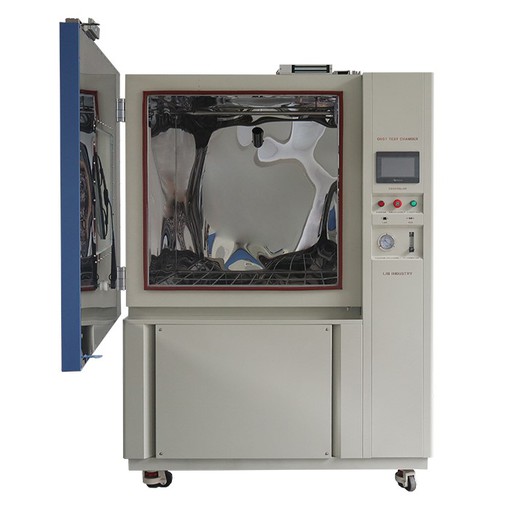
The LIB IP6X Dust Test Chamber is designed to reproduce harsh dust environments under controlled laboratory conditions. It operates using a vertical dust circulation system that continuously lifts and distributes fine talcum powder throughout the chamber.
The system maintains a stable dust concentration of 2–4 kg/m³ while airflow ensures uniform exposure across all test samples. A mesh sieve with a nominal 75 μm gap prevents particle clumping, while a heating system keeps the environment dry at up to +50 °C to simulate hot industrial or desert conditions.
A vacuum pressure system can also be applied to test sealing performance under negative pressure conditions. Combined with real-time monitoring of airflow and dust density, the chamber ensures full compliance with IEC 60529 IP6X testing requirements.

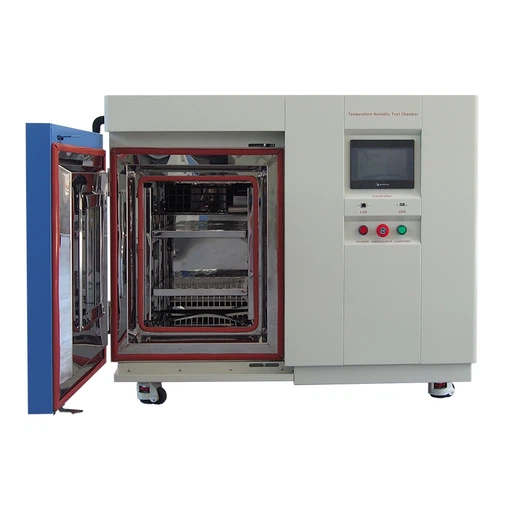
IP6X Dust-Tightness Testing According to IEC 60529 Standard
IEC 60529 defines IP6X as the highest dust protection level, meaning "dust-tight" with zero ingress allowed under test conditions. The standard IP6X procedure typically includes:
Test dust: Dry talcum powder filtered through a 75 μm sieve
Particle size: 50 μm nominal diameter
Dust concentration: 2–4 kg/m³
Temperature: Ambient to +50 °C
Duration: 2–8 hours depending on product specification
Airflow: Continuous dust circulation or vacuum-assisted exposure
Products are placed inside the chamber and exposed to continuous dust circulation. After the test cycle, the enclosure is inspected for any particle ingress. Even minimal dust penetration may result in failure depending on certification requirements.
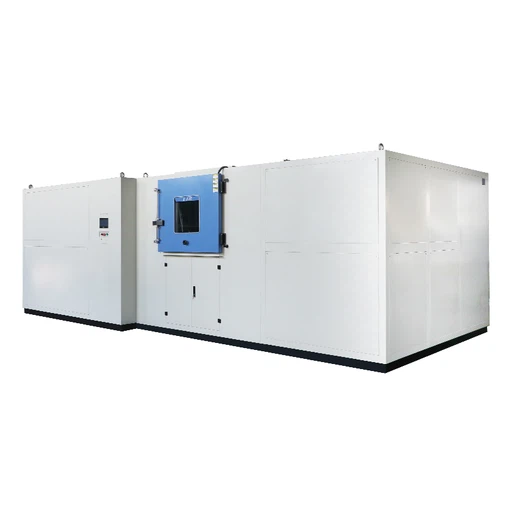
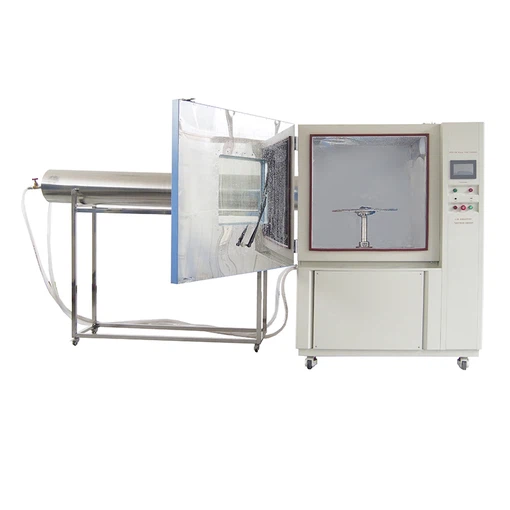
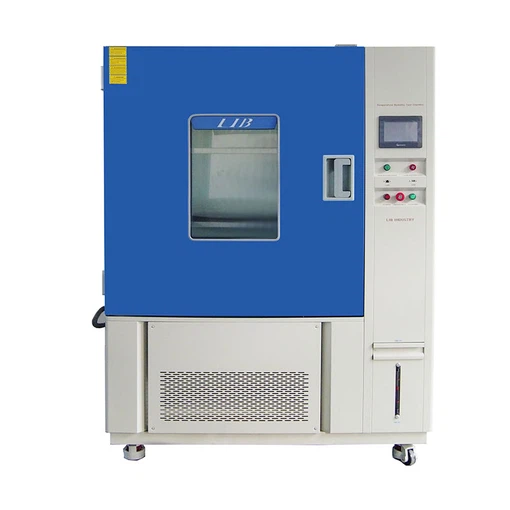
Based on this standard, LIB provides the DI-800 IP6X Dust-Tightness Test Chamber, designed specifically for IEC 60529 compliance testing of electronics, lighting systems, automotive components, and industrial enclosures.
| Name | IP66 Dust Proof Tester |
|
|
Workroom dimension (mm) |
800*800*800 D*W*H |
|
|
External dimension (mm) |
950*3150*1800 D*W*H |
|
|
Interior Volume (L) |
510 |
|
|
Diameter of Turntable (mm) |
600 |
|
|
Turntable loads |
20kgs Max |
|
|
Turntable Rotation Speed |
0~7r/min (Adjustable) |
|
|
Internal Diameter of IPX5 Nozzle |
6.3 mm |
|
|
Internal Diameter of IPX6 Nozzle |
12.5 mm |
|
|
Water Flow Rate IPX5/ IPX6 |
12.5L/min ±5% / 100L/min ±5% |
|
|
Controller |
Programmable color LCD touch screen controller |
|
|
Ethernet connection, PC Link, USB |
||
|
Build-in Water Tank(mm) |
370*375*950 |
|
|
View Window Size(mm) |
475*475 |

 |
 |
|
| Test Area | LAN and USB | Controller |

Advantages of LIB IP6X Dust Test Chamber
Stable Dust Simulation – Maintains consistent 2–4 kg/m³ dust concentration for repeatable test results.
Uniform Airflow Design – Vertical circulation ensures even particle distribution across all test samples.
Strong Structural Build – SUS304 stainless steel interior resists corrosion and long-term abrasion.
Smart Programmable Control – Supports up to 120 programs with 100 steps for automated testing.
Full Safety Protection System – Includes over-current, leakage, phase sequence, and over-temperature protection for safe operation.
FAQs on the LIB IP6X Dust-Tightness Testing Chamber
Q1: What industries commonly use IP6X dust testing?
IP6X testing is widely used in automotive electronics, LED lighting, telecommunications equipment, outdoor sensors, and industrial control systems that require reliable sealing performance in dusty environments.
Q2: What is the difference between IP5X and IP6X testing?
IP5X allows limited dust ingress that does not affect operation, while IP6X requires complete dust-tight protection with no dust penetration under test conditions defined in IEC 60529.
Q3: How is delivery and installation handled?
LIB provides global shipping with typical delivery times of 7–15 days depending on configuration. Equipment arrives pre-assembled, and installation can be completed within a few hours. Remote technical support and operation guidance are also provided after delivery.
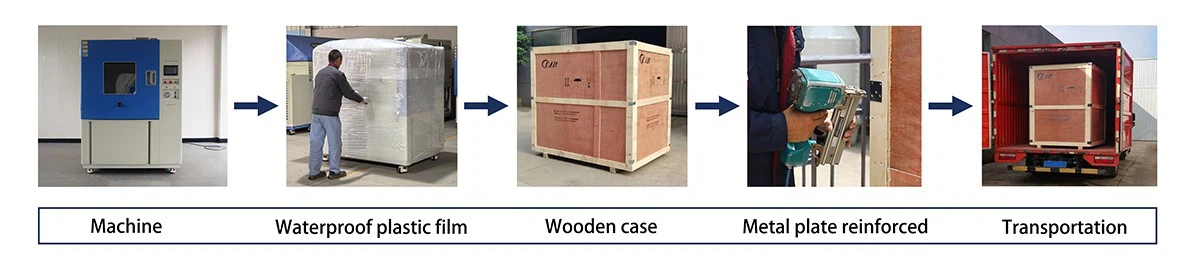
Reliable dust protection testing is essential for ensuring product durability in harsh environments. LIB IP6X Dust-Tightness Test Chambers deliver accurate, standardized, and repeatable results that help manufacturers meet global certification requirements and improve product reliability.
Contact LIB Industry to explore customized solutions and improve your dust resistance testing capability.


