A coating that looks perfect on day one can start blistering after a single rainy season near the coast. Early coating failures cost manufacturers millions in warranty claims every year, and most of them could be caught in a lab within 240 to 1000 hours.
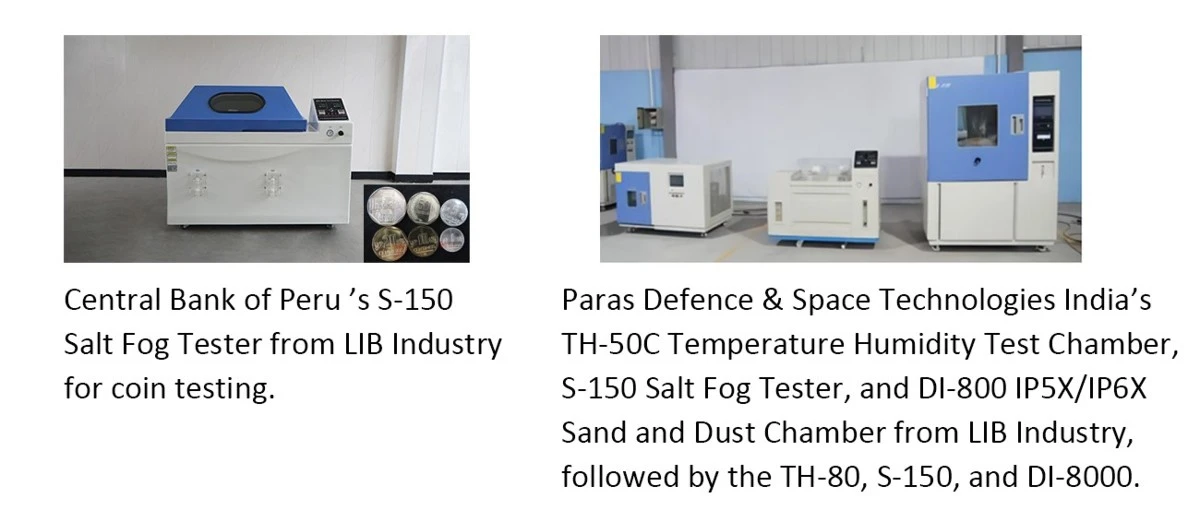
LIB Industry's S-150 Salt Spray Test Chamber has also received positive feedback from customers in Mexico. Christian, who uses the S-150 model, shared his experience:"The test chamber has been working wonderfully. I only had a minor issue with the saline solution leaking from the container, but it was resolved." Christian also expressed interest in the this chamber's preventive maintenance process, showing the importance of regular cleaning and inspection for long-term, reliable operation.
This article will show you why coating labs rely on salt tests, which standards apply, and which LIB Industry salt test chamber fits your coating work best.
Why Coating Labs Rely on Salt Test?
1. Why Salt Testing Matters for Coatings
Salt fog squeezes months of harsh outdoor exposure into a few days. A coated panel sits in a fine 5% NaCl mist at 35 ± 2 °C, then gets checked for three things:
① Blistering and rust spread
② Creepage from a scribe line
③ Loss of adhesion
Typical runs last 24 h, 96 h, 240 h, 500 h, 720 h, or more than 1000 h. Salt spray hours do not convert directly into outdoor years. They do give you a fair way to compare one coating against another and to keep every batch under control.
2. The Standards of Coating Salt Test
Most coating specifications point back to a small group of standards. Choose the method that matches your finish, then check that the test chamber meets it.
| Standard | Test Method |
|---|---|
| ASTM B117 | Neutral salt fog, 5% NaCl, 35 ± 2 °C, 83 kPa spray pressure |
| ISO 9227 NSS | Neutral salt spray, pH 6.5 to 7.2, for paint, powder coating, and zinc |
| ISO 9227 AASS | Acetic acid salt spray, pH 3.1 to 3.3, for decorative plating |
| ISO 9227 CASS | Acetic acid plus 0.26 g/L copper chloride, for high grade decorative finishes |
| JIS Z 2371 | Neutral salt spray used in Japanese specifications |
| ASTM G85 | Modified salt spray, including acidified and SO₂ cycles |
| ISO 11997 and ASTM D5894 | Cyclic tests with salt fog, drying, and humidity phases, D5894 adds UV |
| SAE J2334 and IEC 60068-2-52 | Cyclic corrosion for automotive and electronic parts |
3. Why LIB Industry Fits Coating Work
LIB Industry has built environmental test equipment in Xi'an since 2012 and supports customers in more than 60 countries through 29 distributors and 4 overseas service centers. Its production follows ISO 9001. The salt test chamber line holds the fog at 83 kPa and a deposition rate of 1 to 2 mL per 80 cm² per hour. PID control with PT100 Class A sensors keeps temperature fluctuation within ± 0.5 °C and deviation within ± 2 °C. Panels in the front corner therefore see the same conditions as panels at the back.
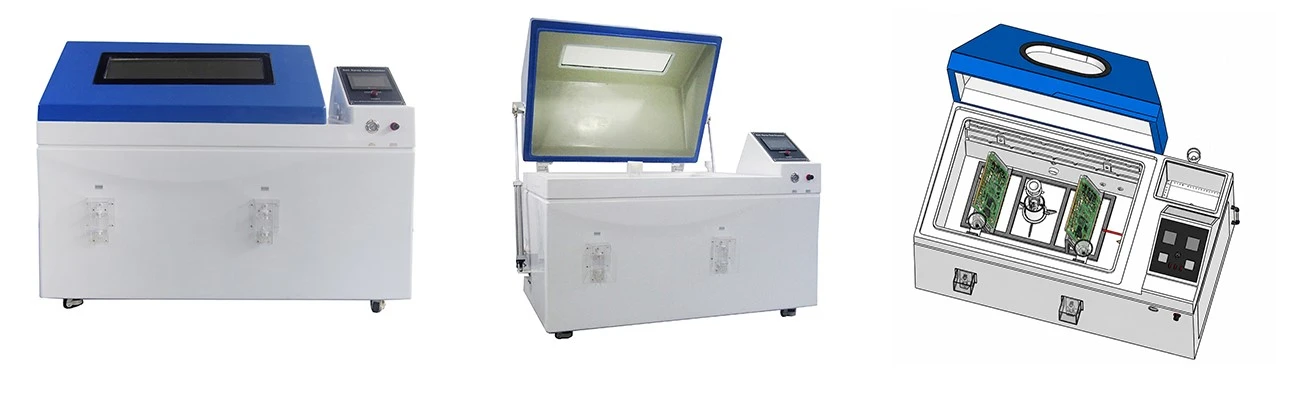
Recommended Salt Test Chambers for Coating Industry Testing from LIB Industry
1. Why Coating Labs Choose LIB Industry Salt Test Chambers
① Technical advantage: Each Salt Test Chamber is built from one piece of fiberglass reinforced plastic with a water sealed lid, so fog stays inside. The controller stores 120 programs with 100 steps each. Temperature, spray time, and test time are logged in real time, and data can be exported through USB or Ethernet. Water shortage, dry burn, over temperature, and leakage current protections let long runs finish without a shutdown.
|
|
||||||
| Model | S-150 | S-250 | S-750 | S-010 | S-016 | S-020 |
| Internal dimensions (mm) | 590*470*400 | 1000*640*500 | 1100*750*500 | 1000*1300*600 | 900*1600*720 | 1000*2000*800 |
| Overall dimensions (mm) | 1460*760*1140 | 1850*960*1350 | 1950*1030*1350 | 2000×1300×1600 | 2300×1300×1700 | 2700×1300×1900 |
| Interior Volume (L) | 110 | 320 | 410 | 780 | 1030 | 1600 |
| Temperature Range | Ambient ~ +60 ℃ | |||||
| Temperature Fluctuation | ± 0.5 ℃ | |||||
| Temperature Deviation | ± 2.0 ℃ | |||||
| Humidity Range | 95% ~ 98% RH | |||||
| Salt Fog Deposition | 1~2ml / 80cm2 · h | |||||
| Spray Type | Continuous / Periodic | |||||
| Salt Fog Collected | Fog collector and fog measure cylinder | |||||
| Air Preheating | Saturated air barrel | |||||
| Spraying System | Atomizer tower and Spray nozzles | |||||
| Controller | PID controller | |||||
| Safety Device | Humidifier Dry-combustion Protection; Over-temperature Protection; Over-current Protection; Water Shortage Protection; Earth leakage Protection | |||||
| Material | Glass fiber reinforced plastics | |||||
| Standard Configuration | 6 round bars and 5 V-shaped grooves | |||||
② Shipping advantage: Orders ship fast, and key spare parts are kept in international hubs for delivery within 7 to 15 days. LIB Industry also gives guidance on safe transport, setup, and first operation.
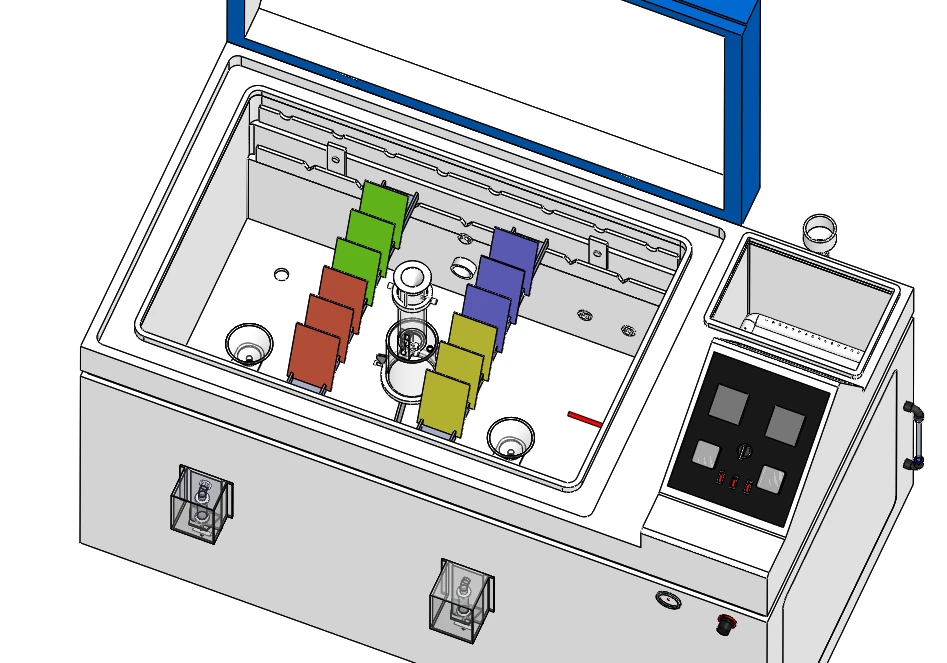
③ Customization advantage: Test chamber size, sample holders, and layout can be adjusted to your sample size, test standard, and installation space. Standard V groove and round rod holders hold samples at 15° to 30°.
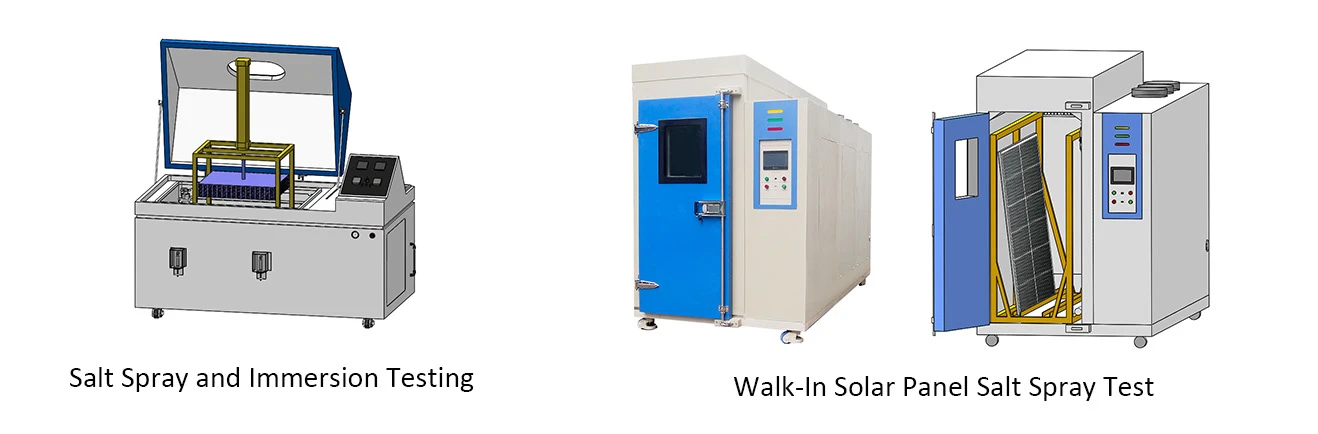
④ After sales advantage: Every unit carries a 3 year warranty and lifetime technical support, with an English speaking team available around the clock. If remote repair fails, a replacement is sent free of charge.
2. Basic Salt Test Chamber or Cyclic Salt Test Chamber: Which One Should You Choose?
The basic salt test chamber runs continuous or periodic spray. The cyclic salt test chamber adds drying, humidity, and wider temperature control, so one program can copy a full day outdoors.
|
|
|
|
|---|---|---|
|
|
|
|
| Basic Salt Spray Test Chamber for coating | Cyclic Salt Spray Test Chamber for coating | |
| Models | S-150, S-250, S-750 | SC-750, SC-010, SC-016, SC-020 |
| Volume | 110 L, 320 L, 410 L | 410 L, 780 L, 1280 L, 1600 L |
| Temperature range | Ambient to +60 °C | +10 °C to +90 °C |
| Humidity range | 95% to 98% RH | 30% to 98% RH |
| Test phases | Salt spray | Salt spray, dry, humidity |
| Main standards | ASTM B117, ISO 9227, JIS Z 2371 | ASTM D5894, ISO 11997, SAE J2334 |
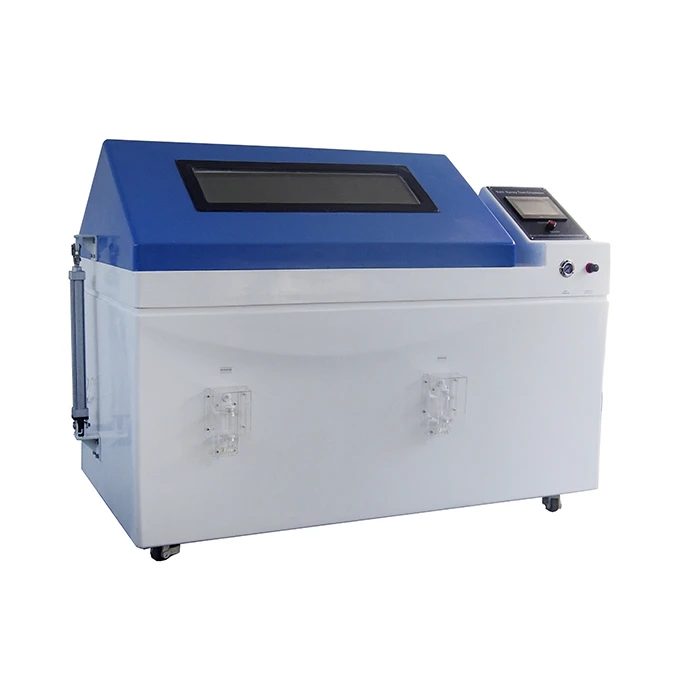
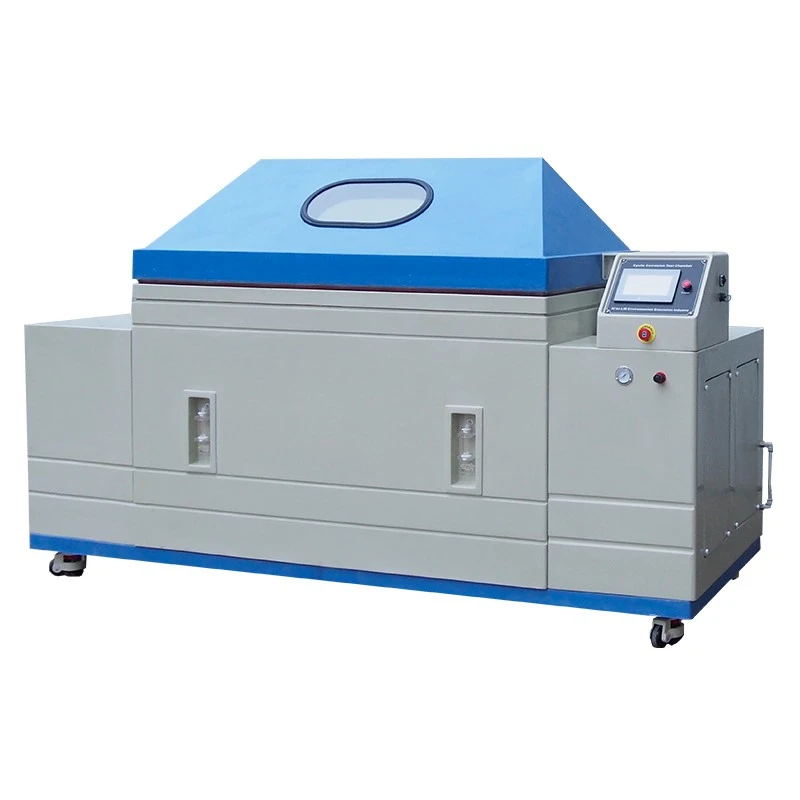
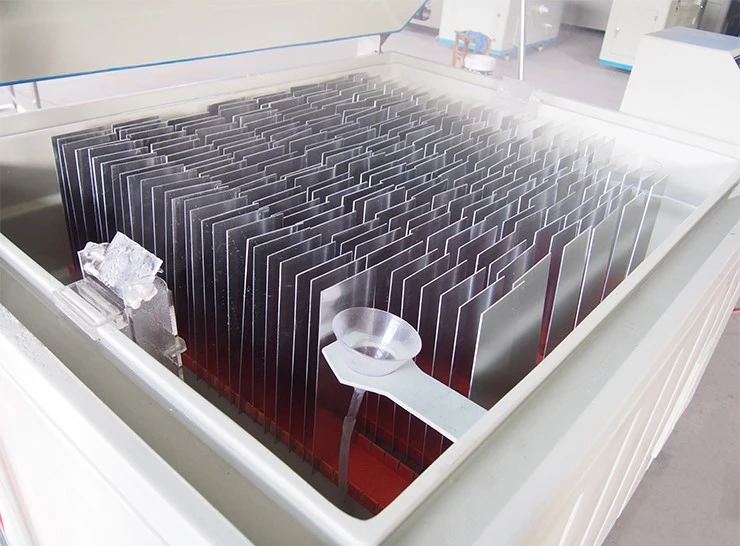
Choose the basic salt test chamber if your lab checks paint, powder coating, or zinc plating against ASTM B117 or ISO 9227. The S-250 with 320 L is a practical starting size for most quality control teams.
Choose the cyclic salt test chamber if you supply automotive makers or need results that track real field failure more closely. A cycle such as 8 h salt spray at 35 °C followed by 16 h drying at 40 to 50 °C is easy to set up. The SC-010 with 780 L suits mixed batches. If your specification calls for ASTM G85 acidified or SO₂ testing, the SSC-010, SSC-016, and SSC-020 models add SO₂ gas.
Comprehensive Environmental Tests for Coating Labs
Salt fog is only one part of coating life. Many labs pair it with these salt tests from LIB Industry:
① Xenon test chamber: Checks color fade and chalking under full spectrum light, following ISO 16474-2 and ASTM G155.
② UV test chamber: Checks gloss loss and cracking under fluorescent UV, following ASTM G154.
③ Temperature humidity test chamber: Checks blistering and adhesion under condensation, following ISO 6270-1 and ASTM D2247.
④ Dust test chamber: Checks how coated housings and seals resist fine dust.
Running these tests together gives you a complete picture before a product ships.
LIB Popular Spray Test Chambers and Climate Test Chambers For Coating

Controlled Temperature, Humidity & Salt Spray for Realistic Simulation, Highly Popular.

Temperature & Salt Spray Control Only, Precision Salt Spray Measurement, Standard Compliant.
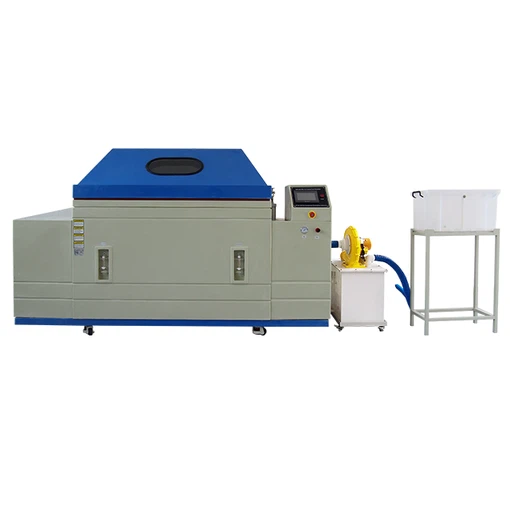
Controlled SO₂, Temperature, Humidity & Salt Spray for Industrial Environment Simulation.

Realistic Sunlight Simulation, Water-Cooled Lamp for Stability & Durability, Top Choice for Coating Companies.

UV Light Simulation Test, Stable Light Source, High Uniformity of Light Exposure.

Large Test Pieces, High-Volume Testing; Flexible Customization of Size & Function.
FAQs on the Salt Test Chambers for Coating Industry Testing
Q1: How long should I test a coating?
Follow your specification. Basic screening often uses 24 h or 96 h. Long term evaluation uses 240 h, 500 h, 720 h, or more than 1000 h.
Q2: How do I know the fog is correct?
Place fog collectors inside the test chamber and measure the fallen mist. The result must fall between 1 and 2 mL per 80 cm² per hour.
Q3: How do I stop salt fog from leaking?
Fill the water sealed groove around the lid with water before each run. The one piece fiberglass body resists salt and chemical attack.
Q4: What maintenance does a salt test chamber need?
Clean nozzles and the interior to stop salt crystals, change the saturated barrel water on schedule, and keep dust off electrical parts.
Explore LIB Industry's range of Basic Salt Spray Test Chambers, Cyclic Salt Spray Corrosion Chambers, and Salt Spray and Sulfur Dioxide Climatic Chambers. Whether you need continuous salt fog exposure, cyclic corrosion testing, or SO₂ testing, LIB Industry can recommend the right equipment based on your coating materials, sample size, test requirements, and applicable standards. Contact LIB Industry today to discuss your coating testing needs and get a customized salt spray test chamber solution.