
When it comes to printed circuit boards (PCBs), reliability under extreme environmental conditions determines product safety, lifespan, and compliance. Whether a device is used in automobiles, smartphones, or aerospace systems, even the slightest humidity-induced corrosion or temperature stress can cause failure. Testing these factors in controlled laboratory environments is essential to ensure long-term durability and global certification compliance.
LIB Temperature Humidity Chamber for PCB Testing recreates real-world environmental challenges-fluctuating temperatures, rapid humidity changes, and condensation events-to evaluate how PCBs perform over time. With precise control, repeatable results, and adherence to IEC 60068, ISO 16750, and UL 2580 standards, these chambers help manufacturers predict failures before they reach customers.
What Is PCB Testing and a Temperature Humidity Chamber
PCB testing is the process of verifying how printed circuit boards react to environmental stress such as heat, cold, and humidity. These tests reveal potential weak points like solder joint cracks, delamination, or corrosion.
A temperature humidity chamber provides a stable environment where temperature and humidity can be precisely adjusted. The system can simulate conditions from –70 °C to +150 °C and 20 %–98 % RH, allowing engineers to observe how PCBs behave during thermal cycling, long-term aging, or rapid temperature changes.
In environmental testing, repeatability and accuracy are critical. Chambers typically maintain ± 0.5 °C temperature fluctuation and ± 2.5 % RH humidity deviation, ensuring that every test run produces comparable data. By mimicking real-world stress factors-such as condensation during temperature transitions-these chambers prevent hidden defects from reaching production lines.
Temperature humidity chambers play a vital role in PCB reliability validation across industries such as automotive electronics, aerospace systems, and consumer devices. As electronic components become smaller and more complex, ensuring their stability under fluctuating temperature and humidity conditions becomes increasingly important. By reproducing extreme climates-from tropical humidity to arctic cold-engineers can identify material weaknesses and improve PCB design before mass production.
Moreover, temperature humidity testing supports compliance with international standards including IEC 60068, JEDEC JESD22, and MIL-STD-810. These rigorous tests provide manufacturers with verifiable data for quality control, product certification, and customer assurance. In this way, a temperature humidity chamber is not just a testing tool-it is an essential part of ensuring long-term performance, reliability, and safety in every electronic product.

Advantages of LIB Temperature Humidity Chambers for PCB Testing
|
|
 |
||||
| Name | Temperature Humidity Chamber | ||||
|
Model |
TH-100 |
TH-225 |
TH-500 |
TH-800 |
TH-1000 |
|
Internal dimension (mm) |
400*500*500 |
500*600*750 |
700*800*900 |
800*1000*1000 |
1000*1000*1000 |
|
Overall dimension (mm) |
860*1050*1620 |
960*1150*1860 |
1180*1350*2010 |
1280*1550*2110 |
1500*1550*2110 |
|
Capacity |
100L |
225L |
500L |
800L |
1000L |
|
Temperature range |
-20℃ ~+150 ℃ |
||||
|
Low type |
A: -40℃ B:-70℃ C -86℃ |
||||
|
Humidity Range |
20%-98%RH |
||||
|
Temperature deviation |
± 2.0 ℃ |
||||
|
Heating rate |
3 ℃ / min |
||||
|
Cooling rate |
1 ℃ / min |
||||
|
Controller |
Programmable color LCD touch screen controller, Multi-language interface, Ethernet , USB |
||||
|
Refrigerant |
R404A, R23 |
||||
|
Exterior material |
Steel Plate with protective coating |
||||
|
Interior material |
SUS304 stainless steel |
||||
|
Standard configuration |
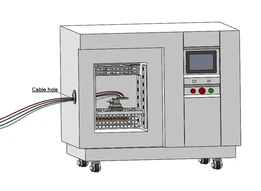
1 Cable hole (Φ 50) with plug; 2 shelves |
||||
|
Timing Function |
0.1~999.9 (S,M,H) settable |
||||

|
|
|
|
| Robust Workroom | Cable Hole | Temperature and Humidity Sensor |


PCB environmental tests generally include three stages:
Step 1: Thermal Cycling Tests
PCBs are subjected to repeated temperature shifts to examine how solder joints and materials expand and contract. LIB chambers accelerate this process using heating and cooling rates of 3 °C/min and 1 °C/min, shortening test time while maintaining precision.
LIB Advantage: Stable PID temperature control and PT100 Class A sensors (± 0.001 °C accuracy) ensure each thermal cycle is consistent, providing reliable stress data for fatigue analysis.
Step 2: Damp Heat Test
Humidity testing reveals how moisture affects insulation resistance and corrosion. A major challenge is dew formation-when moist air condenses on cold PCBs.
LIB Advantage: To prevent condensation, LIB chambers use a nitrogen-purging system, which replaces moist air and minimizes dew buildup. This keeps PCB surfaces dry and prevents short circuits or oxidation, ensuring the test environment remains stable.
Step 3: Long-Term Stability and Aging Test
PCBs are held at fixed temperature-humidity conditions (for example, 85 °C / 85 % RH for 500 hours) to measure performance degradation.
LIB Advantage: LIB chambers maintain uniform airflow with multi-directional centrifugal fans, achieving even temperature and humidity distribution without hot or wet spots. Combined with data logging and remote monitoring, it enables traceable, long-duration testing that meets IEC 60068-2-67 and so on.
Together, these features make LIB's Temperature Humidity Chambers ideal for quality assurance and R&D validation in automotive, electronics, and aerospace industries.
Desktop, Standing, and Walk-In Options of LIB Temperature Humidity Chambers
|
|
|
|
|
|---|---|---|---|
 |
 |
 |
|
| Name | Small Climatic Test Chamber | Standing Climatic Test Chamber | Walk-In Climatic Test |
| Capacity |
TH-50: 800x1050x950 mm TH-80: 900×1100×1000mm |
Capacity: 100L; 225L; 500L; 800L; 1000L |
>20m³ |
| Throughput | Ideal for small components, sensors, boards | Subassemblies or mid-volume batches |
Bulk testing of items or vehicles as a whole |
| Energy Saving |
Automatic Moisture Circulation in Humidity System
|
Automatic Moisture Circulation in Humidity System
|
Automatic Moisture Circulation in Humidity System
|
| Operational Cost | Lowest | Medium | Highest |
| Standards Coverage | Full IEC / ISO / ASTM compliance | ||
| Noise Level | ≤ 65 dBA | ||
| Best For | R&D, QA benches, universities | Production QA lines, reliability labs.. | Automotive, aerospace system testing... |


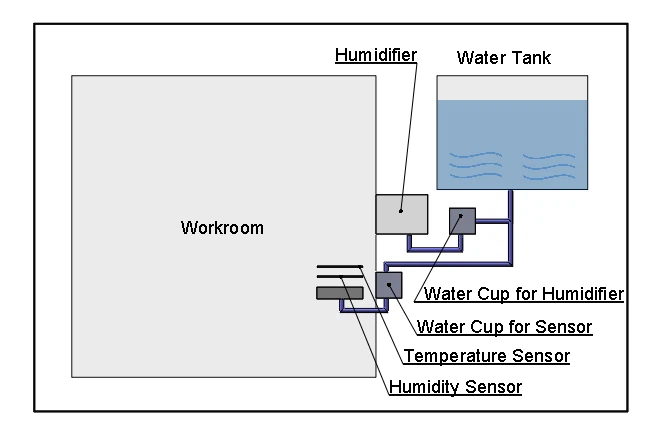
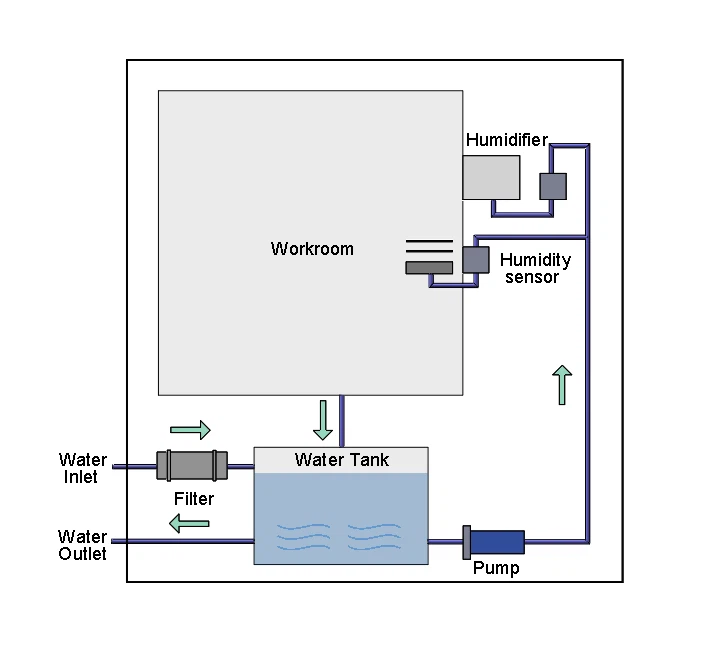
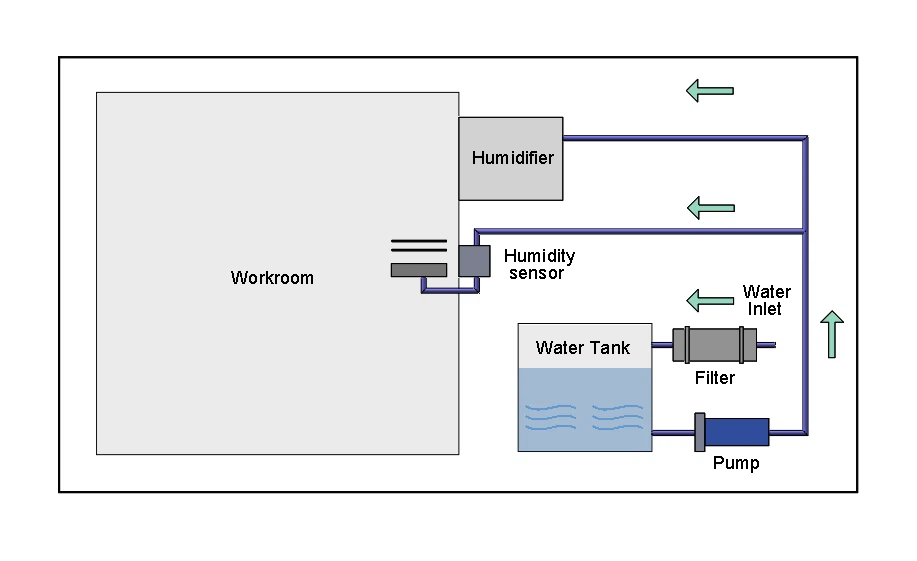
LIB provides chambers in three configurations to fit different testing needs:
Benchtop Models (TH-50 / TH-80): Compact units with internal volumes of 50–80 L, perfect for PCB and small-component testing. Noise levels remain below 60 dBA, suitable for lab benches.
Standing Models (100–2000 L): Larger capacity chambers for full electronic assemblies or multiple PCB boards. These offer IEC 60068 and ISO 16750 compliance for industrial QA labs.
Walk-In Chambers (≥ 8 m³): Designed for system-level testing, including automotive or aerospace components, maintaining the same precision as smaller units.
All versions support temperature ranges from –70 °C to +150 °C, humidity 20 %–98 % RH, and energy-saving closed-loop humidification systems that recycle up to 70 % of water. With optional glass viewing windows, cable ports, and multi-language touchscreen controllers, users can easily monitor complex multi-stage tests.
Common Questions About Temperature Humidity Chambers
Q1: If a custom test port and viewing window are required, will there be delivery delays? What is the fastest delivery time?
You don't need to worry about delays! For standard test ports or regular window sizes, production time remains unchanged. If special customization is needed (such as non-standard designs), LIB arranges fabrication accordingly and ensures on-time delivery. Optical glass windows typically add only 5–10 days, and progress is closely tracked to minimize waiting time.
Q2: What refrigerant is used in Europe? According to the latest European refrigerant regulations, can CO₂ refrigerant be used?
As of January 1, 2024, European regulations require refrigerants with a GWP (Global Warming Potential) ≤ 150 for laboratory equipment. LIB's refrigerants fully comply with this rule, ensuring environmental and legal conformity. However, CO₂ refrigerants use different system technology and cannot be directly substituted.
Q3: What material and type is the glass in the observation window?
The observation window is made of tempered, double-layer hollow glass with a conductive anti-frost film, ensuring durability and clear visibility during testing without frost interference.
Q4: Can an embedded glass door be installed separately?
Yes. LIB accepts all non-standard customizations, including embedded glass doors or special configurations, ensuring both functionality and aesthetic design.
Q5: Is there audible and visual alarm functionality?
Yes. The chamber includes an audible alarm as standard. A visual alarm is also available as an optional upgrade, providing real-time alerts for critical events.
Contact LIB Industry today to request a demo, get a quote, or customize your ideal PCB testing chamber. Experience precision, reliability, and compliance-for every test, every time


