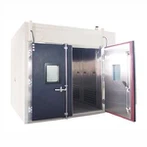
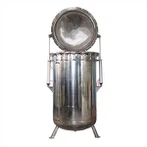
Industrial ovens are versatile and essential tools used across various industries for a range of applications. These robust pieces of equipment play a critical role in processes that require precise temperature control and consistent heat distribution. In this blog, we will explore the diverse uses of industrial ovens, highlighting their significance in different sectors.
Are Industrial Ovens Used in Manufacturing for Curing Processes?
Industrial ovens play a pivotal role in various manufacturing sectors by facilitating curing processes, which are essential for achieving optimal product quality and performance standards. Curing involves the application of controlled heat to harden or toughen materials, ensuring that they meet stringent durability and functionality requirements. This thermal treatment method is extensively utilized across diverse industries, each with specific curing needs to ensure materials and components are fit for their intended use.
In the automotive and aerospace industries, where reliability and performance are paramount, industrial ovens are crucial in the production of composite materials. These materials, often used in structural components, must bond effectively to achieve the required strength and durability. Industrial ovens provide the precise temperature control necessary for curing these composites, ensuring they can withstand the demanding conditions of automotive and aerospace applications. The curing process helps in the development of components that are not only robust but also lightweight, contributing to the overall efficiency and safety of vehicles and aircraft.
The electronics industry also relies heavily on industrial ovens for curing processes, particularly for adhesives and coatings applied to circuit boards and other electronic components. The meticulous curing of these materials is essential to guarantee secure bonding and optimal performance. By ensuring that adhesives and coatings are properly cured, industrial ovens help enhance the longevity and reliability of electronic devices, reducing the risk of failure in critical applications. This is especially important in high-tech industries where even minor defects can lead to significant malfunctions.
Moreover, the use of industrial ovens for curing extends to other manufacturing sectors such as textiles, plastics, and pharmaceuticals. In the textile industry, curing ovens are used to set dyes and finishes on fabrics, ensuring colorfastness and durability. In plastics manufacturing, curing processes help in achieving the desired mechanical properties and stability of plastic components. Similarly, in the pharmaceutical industry, curing ovens are used to process and stabilize various formulations, ensuring that the final products meet stringent quality standards.
How Do Industrial Ovens Heat Treatment?
Heat treatment is a basic cycle in metallurgy and materials science, used to modify the physical and substance properties of materials to accomplish wanted qualities like expanded strength, hardness, and sturdiness. Industrial ovens are imperative in this unique circumstance, as they give the controlled climate important to exact intensity therapy. These ovens can accomplish and keep up with the high temperatures expected for different intensity therapy processes while guaranteeing uniform warming and precise temperature control.
One normal intensity therapy process is strengthening, which includes warming metals to a particular temperature and afterward permitting them to gradually cool. This cycle assuages inward burdens, further develops flexibility, and refines the microstructure of the metal, improving its mechanical properties. Industrial ovens utilized for strengthening are intended to keep up with exact temperature control to guarantee the metal cools consistently, forestalling distorting or other primary issues.
In the glass business, tempering ovens assume a fundamental part in the creation cycle. Glass items are continuously cooled in these ovens to forestall the arrangement of inner anxieties that could prompt breaking or breaking. The sluggish cooling process permits the glass particles to sink into a steady plan, bringing about an end result that is both strong and tastefully satisfying.
Likewise, in the plastic business, industrial ovens are utilized to warm treat plastic parts. This interaction can improve the mechanical properties of plastics, like expanding their elasticity, influence obstruction, and strength. Via cautiously controlling the warming and cooling cycles, industrial ovens guarantee that plastic parts accomplish the ideal attributes and execution principles.
Industrial ovens are likewise utilized in the treatment of earthenware production, composites, and other high-level materials. Every material requires explicit warming profiles and exact temperature the board to accomplish the ideal properties. High level industrial ovens are furnished with refined control frameworks that consider the customization of warming cycles, guaranteeing ideal outcomes for every application.
What Are the Key Applications of Drying and Dehydration in Industrial Ovens?
Drying and dehydration are critical applications of industrial ovens, playing a vital role in numerous industries, including pharmaceutical, chemical, and food sectors. These processes involve the removal of moisture from products, which is essential for ensuring their stability, shelf life, and overall quality.
In the pharmaceutical industry, drying ovens are indispensable for removing solvents from drugs and intermediates. This step is crucial to meet stringent purity standards and ensure the safety and efficacy of the final pharmaceutical products. By effectively eliminating moisture, drying ovens help prevent the degradation of active ingredients and enhance the stability of the medications during storage and distribution.
In the chemical industry, drying ovens are employed to remove moisture from various compounds, ensuring they maintain their desired properties and performance. Moisture can affect the chemical reactivity and stability of compounds, leading to undesirable changes in their behavior. By using drying ovens, manufacturers can achieve the precise moisture levels required for optimal performance of their chemical products. This is particularly important in the production of powders, granules, and other formulations where consistent moisture content is crucial.
Additionally, industrial ovens used for drying and dehydration must offer precise temperature control and uniform heat distribution to achieve consistent and reliable results. Advanced ovens are equipped with sophisticated control systems that allow operators to set specific drying parameters tailored to the needs of different materials. These features ensure that the drying process is efficient, reducing energy consumption and enhancing productivity.
Conclusion
Industrial ovens are vital tools that support a wide array of processes across different industries. From curing and heat treatment to drying and dehydration, these ovens provide the precise temperature control and consistent heat distribution necessary for high-quality results. Whether it's an industrial baking oven for large-scale food production or a high-temperature oven for metallurgical applications, the versatility and reliability of industrial ovens make them indispensable in modern manufacturing and processing.
If you want to learn more about this kind of Temperature Oven, welcome to contact us info@libtestchamber.com. Our team at LIB Industry is dedicated to providing turn-key solutions for environmental testing, including research, design, production, commissioning, delivery, installation, and training to meet your specific needs.
References
1. Pharmaceutical Drying Techniques and Equipment: An Overview, International Journal of Pharmaceutical Sciences and Research, 2019.
2. Composite Materials in Aerospace and Automotive Industries, Journal of Material Science and Engineering, 2020.
3. Fundamentals of Heat Treatment in Metallurgy, ASM International Handbook, 2018.
4. Industrial Baking Ovens: Technology and Applications, Food Engineering Review, 2017.
5. Advances in Industrial Drying Technologies for the Chemical Industry, Chemical Engineering Journal, 2019.
6. Annealing and Tempering of Glass Products: Techniques and Benefits, Journal of Glass Science and Technology, 2021.