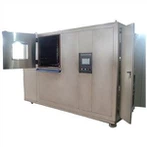
Steel, a versatile and widely used material in numerous industries, undergoes various treatments to enhance its properties. One such treatment is thermal cycling, a process involving repeated heating and cooling cycles. This method, often conducted in a thermal cycling chamber, can significantly affect the properties and performance of steel. In this blog, we will explore what thermal cycling does to steel, how it influences the material's characteristics, and its applications in different industries.
How Does Thermal Cycling Affect the Microstructure of Steel?
Thermal cycling profoundly impacts the microstructure of steel, which in turn affects its mechanical properties. During the thermal cycling process, steel is subjected to alternating high and low temperatures. This repetitive heating and cooling lead to changes in the arrangement of atoms within the material.
One of the primary effects of thermal cycling on steel is the refinement of its grain structure. When steel is heated, the atoms gain energy and move more freely, causing the grains to grow larger. Conversely, during the cooling phase, the grains contract. Repeated cycles of this process can break down large grains into smaller, more uniformly distributed grains, resulting in a finer microstructure.
A finer grain structure generally enhances the strength and toughness of steel. This improvement is due to the fact that smaller grains create more grain boundaries, which act as barriers to dislocation motion (a primary mode of deformation in metals). Consequently, thermally cycled steel often exhibits better mechanical properties compared to non-treated steel.
Additionally, thermal cycling in a controlled thermal cycling chamber can lead to the precipitation of secondary phases, such as carbides or nitrides, depending on the alloying elements present in the steel. These precipitates can further enhance the material's hardness and wear resistance. By subjecting steel to repeated heating and cooling cycles within a thermal cycling chamber, manufacturers can precisely control the formation of these secondary phases, thereby optimizing the steel's performance characteristics for specific industrial applications.
What Is the Mechanical Property Changes Due to Thermal Cycling?
The mechanical properties of steel, such as tensile strength, ductility, and hardness, are significantly influenced by thermal cycling. By altering the microstructure, thermal cycling can optimize these properties to suit specific applications.
Tensile Strength and Ductility
Thermal cycling can increase the tensile strength of steel by refining its microstructure and introducing secondary phases. As mentioned earlier, a finer grain structure can impede dislocation motion, enhancing the material's ability to withstand applied forces without deforming. The precipitation of hard particles, such as carbides, further contributes to this improvement.
However, the effect on ductility can vary. In some cases, thermal cycling can reduce ductility due to the increased presence of brittle phases. Therefore, careful control of the thermal cycling parameters is essential to achieve a balance between strength and ductility.
Hardness and Wear Resistance
Steel's hardness is notably improved through thermal cycling, primarily due to the precipitation of carbides or nitrides. These secondary phases, which form during the controlled heating and cooling cycles within a thermal cycling chamber, increase the material's resistance to wear and abrasion. This enhancement makes thermally cycled steel particularly suitable for applications exposed to high-friction environments. The increased hardness not only prolongs the service life of steel components but also enhances their durability under demanding conditions.
Fatigue Resistance
Thermal cycling also enhances the fatigue resistance of steel, which is crucial in applications where components are subjected to cyclic loading. The refined microstructure resulting from thermal cycling effectively retards the propagation of cracks that lead to fatigue failure. By reducing the rate of crack growth, thermal cycling significantly extends the fatigue life of steel components, thereby improving their reliability and performance over time.
What Are the Industrial Applications of Thermally Cycled Steel?
Thermally cycled steel finds applications across various industries due to its enhanced mechanical properties. The ability to tailor the properties of steel through thermal cycling makes it suitable for demanding environments and applications.
Automotive Industry
In the automotive industry, components such as gears, shafts, and engine parts benefit from the improved strength, hardness, and fatigue resistance provided by thermal cycling chamber. These properties ensure that the components can withstand the high stresses and wear conditions experienced during vehicle operation.
Aerospace Industry
The aerospace industry requires materials that can endure extreme conditions, including high temperatures and cyclic loading. Thermally cycled steel is often used in aerospace applications such as turbine blades, structural components, and landing gear, where high strength and fatigue resistance are crucial.
Tool and Die Manufacturing
Tools and dies used in manufacturing processes must possess high hardness and wear resistance to maintain their performance over extended periods. Thermal cycling enhances these properties, making it an ideal treatment for steel used in cutting tools, molds, and dies.
Construction Industry
In the construction industry, structural steel components benefit from the increased strength and toughness imparted by thermal cycling. These properties ensure the durability and reliability of structures such as bridges, buildings, and infrastructure subjected to dynamic loads.
Conclusion
Thermal cycling is a valuable process that significantly enhances the properties of steel, making it suitable for a wide range of industrial applications. By refining the microstructure, improving mechanical properties, and tailoring the material to specific requirements, thermal cycling ensures that steel components can perform reliably under demanding conditions. This process, often conducted in a thermal cycling chamber, subjects steel to repeated heating and cooling cycles, which optimize its structural integrity and resilience. Whether in the automotive, aerospace, tool manufacturing, or construction industries, the benefits of thermal cycling in a controlled thermal cycling chamber make it an essential treatment for steel.
For more information on Rapid Thermal Cycling Chambers and how they can optimize the properties of steel for your specific applications, please contact us at info@libtestchamber.com.
References
1. Zhang, Z., et al. "Effect of Thermal Cycling on Microstructure and Mechanical Properties of Steel." Materials Science and Engineering: A 201 (1995): 302-310.
2. Wang, Y., et al. "Microstructure Evolution and Mechanical Properties of Thermally Cycled Steel." Journal of Materials Science 42.17 (2007): 7323-7331.
3. Lee, J., et al. "Influence of Thermal Cycling on Grain Refinement and Mechanical Properties of Steel." Metallurgical and Materials Transactions A 36.7 (2005): 1907-1916.
4. Gupta, R. K., et al. "Effect of Rapid Thermal Cycling on Microstructure and Mechanical Properties of Steel Alloys." International Journal of Mechanical Sciences 110 (2016): 137-145.
5. Li, X., et al. "Enhanced Fatigue Performance of Steel by Thermal Cycling." Scripta Materialia 55.9 (2006): 803-806.
6. Cho, S., et al. "Improvement of Wear Resistance in Steel by Precipitation Hardening via Thermal Cycling." Wear 302.1-2 (2013): 1125-1132.
7. Wang, L., et al. "Thermal Cycling Effects on Carbide Precipitation and Hardness of Steel." Materials Characterization 62.5 (2011): 471-476.
8. Ahmed, M., et al. "Mechanical Property Enhancement of Steel Through Controlled Thermal Cycling." Journal of Materials Engineering and Performance 24.10 (2015): 3821-3828.
9. Xu, Y., et al. "Microstructural Evolution and Mechanical Properties of Steel Subjected to Thermal Cycling." Journal of Alloys and Compounds 648 (2015): 560-567.
10. Yan, W., et al. "Thermal Cycling Effects on the Fatigue Behavior of Steel." Materials Science and Engineering: A 387-389 (2004): 686-690.