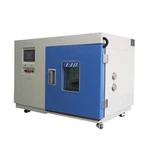
Ensuring that electronic devices, automotive components, and industrial equipment can withstand harsh environments is critical for product reliability. Dust infiltration can lead to electrical failure, corrosion, and reduced lifespan, making dust-resistant testing an essential part of quality assurance.
LIB's IP6X Dust Resistant Test Chamber is designed to simulate high-concentration dust environments in a controlled and repeatable manner. This chamber helps manufacturers verify the sealing and durability of their products, enabling faster R&D cycles and ensuring compliance with international standards.
1. The Importance of IP6X Dust Resistant Testing
IP6X dust testing is crucial because it guarantees complete protection against dust ingress, ensuring that devices remain fully functional in harsh environments. Fine dust particles, often smaller than 50 micrometres, can easily penetrate poorly sealed enclosures, causing electrical short circuits, mechanical wear, or corrosion. For industries such as automotive, electronics, telecommunications, and industrial machinery, even a small amount of dust can lead to major failures, impacting safety, reliability, and product lifespan.
Using a dedicated IP6X dust resistant test chamber allows engineers to evaluate product performance under precisely controlled conditions. Unlike outdoor exposure tests that may take months or even years, the IP6X test delivers consistent and repeatable results in as little as a few hours, thanks to regulated dust concentrations of 2–4 kg/m³ and controlled ambient temperatures up to 50 °C. This rapid testing accelerates product validation, reduces development cycles, and helps companies avoid costly recalls or warranty claims.
Additionally, the controlled environment ensures uniform dust exposure throughout the entire sample area. The chamber's vertical airflow system and 75 μm mesh sieves prevent dust clumping and uneven distribution, enabling precise comparisons between prototypes, production batches, or design iterations. This means engineers can identify weaknesses in sealing or enclosure design early in the development stage, improving overall product quality and market readiness.
Beyond speed and consistency, IP6X testing also supports regulatory compliance. Adhering to international standards such as IEC 60529, ISO 20653, and IEC 60068-2-68 provides manufacturers with credible, audit-ready documentation. This not only facilitates certification but also strengthens customer confidence in the product's durability under real-world dusty conditions.
In short, IP6X dust resistant testing is an indispensable step for ensuring product reliability, protecting sensitive components, shortening development timelines, and maintaining competitive advantage in industries where environmental robustness is critical.

Sand And Dust Test Chamber for Dust Resistant Testing
2. Standards Requirements for IP6X Dust Resistant Testing
IP6X testing follows internationally recognized standards to guarantee accuracy and consistency. The most common standards include IEC 60529, ISO 20653, IEC 60068-2-68, ASTM, and MIL-STD protocols. Among these, IEC 60529 is widely used to determine the ingress protection rating of electrical enclosures.
Under IEC 60529, IP6X is defined as "completely dust-tight," meaning no dust may enter the enclosure. The standard specifies using 50 μm nominal dust particles and a 75 μm wire mesh screen to simulate realistic dust conditions. The chamber maintains a dust concentration of 2–4 kg/m³, while ambient temperature is controlled up to +50 °C, and relative humidity is kept below 30% RH.
During testing, dust is circulated using vertical airflow systems and monitored through a vacuum pressure gauge and flowmeter to ensure consistent distribution. The blowing duration can be programmed from 1 minute up to 99 hours 59 minutes, allowing precise repetition of the test cycle. Heating tubes prevent dust clumping, while the stainless steel chamber ensures the sample area remains sealed and leak-free throughout the test.
3. Advantages of LIB IP6X Dust Resistant Test Chamber
LIB's IP6X Dust Resistant Test Chamber not only meets standard requirements but also provides practical advantages for laboratory and production use.
|
|
|
| Name | IP66 Dust Proof Tester |
|
Workroom dimension (mm) |
800*800*800 D*W*H |
|
External dimension (mm) |
950*3150*1800 D*W*H |
|
Interior Volume (L) |
510 |
|
Diameter of Turntable (mm) |
600 |
|
Turntable loads |
20kgs Max |
|
Turntable Rotation Speed |
0~7r/min (Adjustable) |
|
Internal Diameter of IPX5 Nozzle |
6.3 mm |
|
Internal Diameter of IPX6 Nozzle |
12.5 mm |
|
Water Flow Rate IPX5/ IPX6 |
12.5L/min ±5% / 100L/min ±5% |
|
Controller |
Programmable color LCD touch screen controller |
|
Ethernet connection, PC Link, USB |
|
|
Build-in Water Tank(mm) |
370*375*950 |
|
View Window Size(mm) |
475*475 |


 |
 |
|
| Test Area | LAN and USB | Controller |

Accurate and Uniform Dust Testing: A closed-loop vertical airflow system distributes dust evenly across the work chamber. The combination of circulation fans and sandblasting pipes maintains constant airflow speeds of 0–29 m/s, eliminating uneven deposition and ensuring reproducible test results.
Robust Construction: The inner chamber is made of SUS304 stainless steel, resistant to corrosion and wear. The outer shell uses 4 mm A3 steel with a protective coating, ensuring durability under temperature and humidity variations.
Advanced Control System: A PID-programmable touchscreen supports up to 120 programs with 100 segments each, enabling complex sequences for various products. Data can be exported via Ethernet or USB, while real-time monitoring allows remote control and scheduling.
Safety Features: Electromagnetic door locks prevent accidental opening during testing. Overcurrent, over-temperature, phase loss, and leakage protection safeguard both operators and equipment.
Convenient Maintenance and Observation: Core components like the mesh sieve, heating tube, and circulation pump are easily removable. A large viewing window with a wiper and internal LED lighting allows real-time observation without stopping the test. Lockable castors enable quick repositioning while maintaining stability.
4. FAQs on the IP6X Dust Resistant Test Chamber
Q1: Can I test large equipment in this chamber?
A1: LIB's standard IP6X chambers range from 800–2000 L, with custom walk-in models available for larger machinery.
Q2: What kind of dust is used?
A2: Fine talcum dust with 50 μm particle diameter is standard. LIB provides 3–5 kg of talcum powder for free with the chamber.
Q3: How long does a test cycle last?
A3: Blowing times can be programmed from 1 minute to 99 hours 59 minutes, depending on product size and test requirements.
Q4: Are these chambers compliant with international standards?
A4: Yes. All LIB IP6X chambers strictly adhere to IEC 60529, ISO 20653, IEC 60068-2-68, ASTM, and MIL standards.
Q5: Is remote monitoring possible?
A5: Yes. The chamber supports PCLink, Ethernet, and USB connectivity, allowing real-time monitoring and data logging.
Accurate dust testing is essential for verifying the durability and sealing performance of electronics, automotive parts, and industrial equipment. LIB's IP6X Dust Resistant Test Chamber ensures reliable, standardized, and repeatable results, giving manufacturers the confidence that their products can endure the harshest dusty environments.
Contact LIB Industry to develop a professional and efficient solution tailored to your specific testing standards and rigorous requirements.