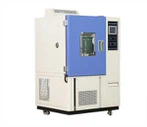
In the world of manufacturing and product development, ensuring durability and longevity is paramount. One crucial method used to evaluate a product's resistance to corrosion is the salt fog test. This blog post will delve into the intricacies of salt fog testing, its purposes, and the essential role of salt fog test chambers in this process.

Understanding Salt Fog Testing
The Basics of Salt Fog Testing
Salt fog testing, also known as salt spray testing, is a standardized method used to assess the corrosion resistance of materials and surface coatings. This test simulates a harsh, salt-laden environment to accelerate the corrosion process, allowing manufacturers to evaluate how their products will perform in real-world conditions.
The Science Behind Salt Fog Tests
The salt fog test relies on the principle of electrochemical corrosion. When exposed to a salt-rich atmosphere, metals undergo accelerated oxidation, leading to visible corrosion. This process mimics the effects of prolonged exposure to marine environments or road salt, providing valuable insights into a product's long-term durability.
Historical Development of Salt Fog Testing
Salt fog testing has its roots in the early 20th century, when the need for corrosion-resistant materials became increasingly apparent. Over the years, the process has been refined and standardized, leading to the development of sophisticated salt fog test chambers that provide consistent and reliable results.
The Purpose and Importance of Salt Fog Tests
Evaluating Corrosion Resistance
The primary purpose of a salt fog test is to evaluate the corrosion resistance of materials, coatings, and finishes. By subjecting samples to an accelerated corrosive environment, manufacturers can identify weaknesses in their products and make necessary improvements before they reach the market.
Quality Control and Assurance
Salt fog tests play a crucial role in quality control processes. They help ensure that products meet industry standards and customer expectations for durability and longevity. Regular testing allows manufacturers to maintain consistent quality across their product lines.
Product Development and Improvement
The insights gained from salt fog tests are invaluable for product development. By understanding how different materials and coatings perform under corrosive conditions, engineers can make informed decisions about material selection and design improvements, leading to more robust and durable products.
Salt Fog Test Chambers: The Heart of the Testing Process
Anatomy of a Salt Fog Test Chamber
A salt fog test chamber is a specialized piece of equipment designed to create and maintain a controlled corrosive environment. These chambers typically consist of a sealed enclosure, a salt solution reservoir, an atomizer to create the salt fog, and systems for controlling temperature and humidity.
Key Features of Modern Salt Fog Test Chambers
Contemporary salt fog test chambers are equipped with advanced features to ensure precise and repeatable testing conditions. These may include:
- Programmable controls for test duration and conditions
- Automatic salt solution replenishment systems
- Real-time monitoring and data logging capabilities
- Corrosion-resistant interior materials
- Multiple sample mounting options
Selecting the Right Salt Fog Test Chamber
Choosing the appropriate salt fog test chamber depends on various factors, including the size and nature of the test samples, the specific standards being followed, and the required testing capacity. It's crucial to select a chamber that meets your specific testing needs while ensuring compliance with relevant industry standards.
The Salt Fog Testing Process
Preparation and Sample Mounting
Before initiating a salt fog test, samples must be carefully prepared and mounted within the chamber. This typically involves cleaning the samples, documenting their initial condition, and securing them in a way that allows for even exposure to the salt fog.
Test Parameters and Conditions
The specific parameters of a salt fog test can vary depending on the standard being followed and the material being tested. Common variables include:
- Salt solution concentration (typically 5% sodium chloride)
- Salt fog test chamber temperature (usually around 35 °C)
- Fog dispersion rate
- Test duration (ranging from hours to months)
Monitoring and Evaluation
Throughout the test, samples are regularly inspected for signs of corrosion. This may involve visual assessments, weight loss measurements, or more advanced analytical techniques. The results are carefully documented and compared against established criteria to determine the material's corrosion resistance.
Interpreting Salt Fog Test Results
Common Evaluation Criteria
When assessing the results of a salt fog test, several factors are typically considered:
- Time to first appearance of corrosion
- Extent and distribution of corrosion
- Changes in mechanical properties
- Performance relative to industry standards
Challenges in Result Interpretation
Interpreting salt fog test results can be complex, as the accelerated nature of the test may not perfectly correlate with real-world performance. Factors such as cyclic exposure, temperature fluctuations, and environmental contaminants can affect corrosion behavior in ways that may not be fully captured by the test.
Translating Results into Product Improvements
The insights gained from salt fog testing should be used to drive continuous improvement in product design and material selection. This might involve exploring alternative coatings, adjusting manufacturing processes, or redesigning components to enhance corrosion resistance.
Conclusion
Salt fog testing plays a vital role in ensuring the quality, durability, and safety of countless products across various industries. By simulating harsh, corrosive environments, these tests provide invaluable insights that drive innovation and improvement in material science and product design. As environmental challenges continue to evolve, the importance of robust corrosion testing, facilitated by advanced salt fog test chambers, will only grow.
Are you looking to enhance your product testing capabilities with state-of-the-art salt fog test chambers? LIB Industry offers comprehensive solutions tailored to your specific needs. From research and design to installation and training, we provide turn-key environmental testing solutions. Contact us today at info@libtestchamber.com to learn how we can support your corrosion testing requirements and help you deliver more durable, high-quality products to the market.
References
1. ASTM International. (2019). "Standard Practice for Operating Salt Spray (Fog) Apparatus." ASTM B117-19.
2. Cramer, S. D., & Covino Jr, B. S. (Eds.). (2005). "Corrosion: Fundamentals, Testing, and Protection." ASM Handbook, Volume 13A.
3. Lyon, S. B., Bingham, R., & Mills, D. J. (2017). "Advances in corrosion protection by organic coatings: What we know and what we would like to know." Progress in Organic Coatings, 102, 2-7.
4. Nace International. (2018). "Salt Spray Testing - Best Practices." NACE SP0716-2018.
5. Papadaki, M., & Mahmood, T. (2017). "Environmental impact assessment of corrosion and corrosion protection of materials." Environmental Progress & Sustainable Energy, 36(5), 1391-1402.
6. Zhang, X., He, X., Xiao, K., Cheng, X., & Li, X. (2019). "Progress in the research of atmospheric corrosion of materials." Corrosion Reviews, 37(4), 343-374.