
LIB UV Weatherometer
The LIB UV Test Chamber is used to perform UV light accelerated weathering tests on the products and materials. It can simulate the damage caused by UV light, temperature, humidity and rain. Model UV-SI-260 is widely used for weathering test.
UV test chamber uses UVA-340, UVB-313 fluorescent UV lamps for a variety of test conditions. All models are upgraded to programmable controller and Ethernet access that provide simple operation and control.
When it comes to testing the durability and longevity of materials, especially those exposed to the elements, UV testing is crucial. This process helps in understanding how materials will hold up under prolonged exposure to ultraviolet (UV) radiation. A key instrument in this testing is the UV weatherometer. In this blog, we will delve into the UV test procedure, focusing on the use of a UV weatherometer, its execution standards, processes, and details.

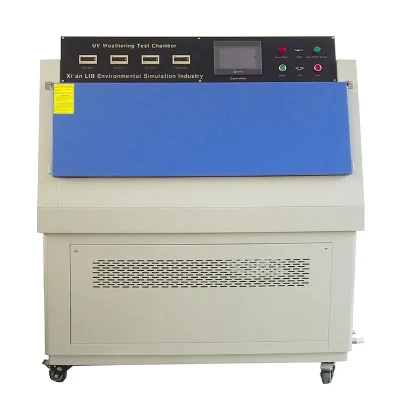
UV test chamber UV-SI-260 UVA lamp and UVB lamp
Setting Up the UV Test Procedure
Setting up the UV test procedure with a UV weatherometer involves several key steps to ensure accurate and reliable results:
Sample Preparation
Preparing the test samples is the first step. In order to eliminate any surface impurities that can skew the test findings, this involves washing and conditioning the materials. Usually, samples are trimmed to suit the testing chamber by following a predetermined size and form.
Selection of Test Parameters
The material being tested and the intended use are taken into consideration while selecting the test parameters. This entails choosing the kind of UV lamps, the UV radiation strength, the length of exposure, and the light and dark cycle. The standards for the particular material are also followed when setting the temperature and humidity conditions.
Loading the Samples
Once the parameters are set, the samples are loaded into the UV weatherometer. The samples are arranged to ensure uniform exposure to the UV light. It is crucial to ensure that the samples do not touch each other or the walls of the chamber to avoid any shading effects.
Running the Test
The UV weatherometer is then started, and the test begins. The equipment continuously monitors and records the conditions inside the chamber to ensure that they remain within the specified limits. The test duration can range from a few hours to several weeks, depending on the desired results.
Monitoring and Maintenance
During the test, regular monitoring is essential to ensure that the equipment is functioning correctly and that the samples are exposed consistently. Maintenance of the UV lamps and other components is also necessary to maintain the accuracy and reliability of the test.
Importance of UV Testing Standards
The reliability and accuracy of UV testing, especially when using a UV weatherometer, depend on adhering to established standards and protocols. Several international standards govern UV testing procedures, including ASTM (American Society for Testing and Materials) and ISO (International Organization for Standardization). These standards provide guidelines for setting up and conducting UV tests with a UV weatherometer, ensuring consistency and reproducibility of results.
ASTM Standards
The ASTM has developed several standards for UV testing, including ASTM G154 and ASTM G155. These standards specify the types of UV lamps to be used, the test parameters, and the methods for evaluating the results. Following these standards helps in achieving reliable and comparable results across different laboratories and industries.
ISO Standards
The ISO also provides standards for UV testing, such as ISO 4892-3, which outlines the methods for exposure to fluorescent UV lamps. These standards ensure that the test conditions are consistent and that the results are reliable and reproducible.
Industry-Specific Standards
In addition to general standards, there are also industry-specific standards that address the unique requirements of different materials and applications. For example, the automotive industry has specific standards for testing the UV resistance of automotive coatings and plastics.
By following these standards, manufacturers can ensure that their products are tested accurately and that they meet the required performance criteria.
The UV test procedure, utilizing a UV weatherometer, is a vital process for evaluating the durability and longevity of materials exposed to UV radiation. By understanding the setup and execution of this procedure, as well as adhering to established standards, manufacturers can ensure that their products are capable of withstanding harsh environmental conditions. This not only enhances product quality but also boosts consumer confidence and satisfaction.
If you want to learn more about this kind of UV Aging Apparatus, welcome to contact us info@libtestchamber.com.


