

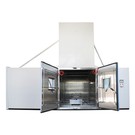

Hey there! As a supplier of rain chambers, I often get asked if a rain chamber can be used for testing solar panels. Well, the short answer is yes, and in this blog, I'll dive into the details of why and how.
Why Test Solar Panels in a Rain Chamber?
Solar panels are constantly exposed to the elements, and rain is one of the most common environmental factors they face. Testing solar panels in a rain chamber allows us to simulate real - world conditions and evaluate how well they hold up.
One of the key reasons is to check the panel's water resistance. A rain chamber can create different levels of rainfall intensity, from a light drizzle to a heavy downpour. This helps us determine if the panel's seals and enclosures are effective in preventing water ingress. Water getting inside the panel can cause short - circuits, corrosion, and ultimately reduce the panel's efficiency and lifespan.
Another important aspect is to assess the panel's performance under wet conditions. Rain can affect the electrical conductivity of the panel's surface. By testing in a rain chamber, we can measure how the panel's power output changes when it's wet. This is crucial because in real life, solar panels will often be operating during or after rainfall.
How Does a Rain Chamber Work for Solar Panel Testing?
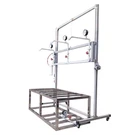
A rain chamber is designed to replicate various rainfall scenarios. It typically consists of a chamber where the solar panel is placed, a water delivery system, and a control unit.
The water delivery system can be adjusted to control the amount of water, the size of the water droplets, and the direction of the spray. For example, we can set it to simulate a vertical rain, which is common in many regions, or a slanted rain that might occur during a storm.
The control unit allows us to set the duration of the test, the intensity of the rainfall, and other parameters. We can run tests for a few minutes to several hours, depending on the specific requirements.
Types of Tests Conducted in a Rain Chamber
IP Rating Testing
The Ingress Protection (IP) rating is a standard that indicates the degree of protection provided by an enclosure against the intrusion of solid objects and water. A rain chamber can be used to conduct IP rating tests on solar panels. You can learn more about IP Rating Testing Machine.
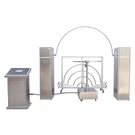
For example, an IPX3 test simulates a spraying water scenario, where water is sprayed at an angle of 60 degrees from the vertical. An IPX4 test is similar but with water sprayed from all directions. These tests help determine if the solar panel meets the required water - resistance standards.
IP 68 Testing
The IP 68 rating is the highest level of protection against dust and water. Solar panels with an IP 68 rating are designed to be completely dust - tight and can be submerged in water for a certain period without damage. You can find more information about IP 68 Tester.
In a rain chamber, we can simulate the conditions required for IP 68 testing. This involves submerging the solar panel in water at a specific depth and for a set duration to ensure it can withstand such harsh conditions.
Water Spray Test
A water spray test is another common test conducted in a rain chamber. This test focuses on the panel's ability to resist water spray. The IP Water Spray Test Chamber is specifically designed for this purpose. It can spray water at different pressures and angles to evaluate the panel's water - repellent properties.
Benefits of Using a Rain Chamber for Solar Panel Testing
Cost - Effective
Testing solar panels in a rain chamber is more cost - effective than waiting for natural rainfall conditions. We can conduct multiple tests in a short period, allowing us to quickly identify any potential issues with the panels. This saves time and money in the long run, as it helps prevent costly repairs and replacements.
Accurate Results
A rain chamber provides a controlled environment, which means we can precisely replicate specific rainfall conditions. This leads to more accurate test results compared to relying on natural weather conditions, which can be unpredictable.
Customizable Testing
We can customize the test parameters in a rain chamber to meet the specific needs of different solar panels. Whether it's a small residential panel or a large commercial one, we can adjust the rainfall intensity, duration, and other factors to ensure a comprehensive test.
Challenges in Using a Rain Chamber for Solar Panel Testing
Reproducibility
While a rain chamber provides a controlled environment, achieving perfect reproducibility can be challenging. Small variations in the water delivery system, such as the size of the water droplets or the pressure of the spray, can affect the test results. However, with proper calibration and maintenance, these issues can be minimized.
Limited Scope
A rain chamber can only simulate certain aspects of real - world conditions. For example, it can't fully replicate the complex interactions between sunlight, temperature, and rainfall that occur in nature. But it still provides valuable insights into the panel's water - resistance and performance under wet conditions.
Conclusion
So, to sum it up, a rain chamber is definitely a valuable tool for testing solar panels. It allows us to evaluate the panel's water resistance, performance under wet conditions, and meet the required IP ratings. With its cost - effectiveness, accurate results, and customizable testing options, it's an essential part of the solar panel manufacturing and quality control process.


If you're in the market for a rain chamber for solar panel testing or have any questions about our products, feel free to reach out. We're here to help you ensure the quality and reliability of your solar panels.
References
- International Electrotechnical Commission (IEC) standards on solar panel testing
- Manufacturer's guidelines for rain chamber operation and solar panel testing procedures