


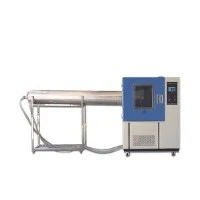
As a supplier of solar testers, one of the most frequently asked questions I encounter is whether a solar tester can be used in different weather conditions. This is a crucial query, especially for those in the solar energy industry, as the ability to accurately measure solar performance under various environmental factors is essential. In this blog post, I will delve into this topic, exploring the capabilities and limitations of solar testers in different weather scenarios.
Understanding Solar Testers
Before we discuss the use of solar testers in different weather conditions, it's important to understand what a solar tester is and how it works. A solar tester is a device used to measure the performance of solar panels. It typically measures parameters such as the power output, efficiency, and spectral response of the solar panels. These measurements are crucial for evaluating the quality and performance of solar panels, as well as for ensuring that they meet the required standards.


Solar testers work by simulating sunlight and measuring the electrical output of the solar panels under the simulated conditions. The simulated sunlight is usually generated by a light source, such as a xenon lamp or a LED, which emits light with a spectrum similar to that of sunlight. The solar panels are then exposed to the simulated sunlight, and the electrical output is measured using a power meter or a multimeter.
Using Solar Testers in Sunny Weather
Sunny weather is the ideal condition for using a solar tester. In sunny weather, the intensity of sunlight is high, and the spectrum is relatively stable. This makes it easier to simulate sunlight accurately and to obtain reliable measurements of the solar panel performance.
When using a solar tester in sunny weather, it's important to ensure that the solar panels are clean and free from any shading. Shading can significantly reduce the power output of the solar panels and can lead to inaccurate measurements. It's also important to ensure that the solar tester is calibrated correctly and that the measurements are taken under the same conditions as the standard test conditions (STC).
In addition to measuring the power output of the solar panels, a solar tester can also be used to measure the temperature coefficient of the solar panels. The temperature coefficient is a measure of how the power output of the solar panels changes with temperature. In sunny weather, the temperature of the solar panels can be quite high, and measuring the temperature coefficient can help to evaluate the performance of the solar panels under high-temperature conditions.
Using Solar Testers in Cloudy Weather
Cloudy weather presents a more challenging environment for using a solar tester. In cloudy weather, the intensity of sunlight is low, and the spectrum is more variable. This makes it more difficult to simulate sunlight accurately and to obtain reliable measurements of the solar panel performance.
One of the main challenges of using a solar tester in cloudy weather is the low intensity of sunlight. To overcome this challenge, some solar testers are equipped with a high-intensity light source that can compensate for the low intensity of sunlight. These solar testers can simulate sunlight with a higher intensity than the actual sunlight, allowing for more accurate measurements of the solar panel performance.
Another challenge of using a solar tester in cloudy weather is the variable spectrum of sunlight. The spectrum of sunlight can vary depending on the type and thickness of the clouds. To address this challenge, some solar testers are equipped with a spectral correction feature that can adjust the simulated sunlight spectrum to match the actual sunlight spectrum. This can help to improve the accuracy of the measurements.
Despite these challenges, it is still possible to use a solar tester in cloudy weather. However, it's important to note that the measurements obtained in cloudy weather may not be as accurate as those obtained in sunny weather. It's also important to take multiple measurements and to average the results to reduce the uncertainty of the measurements.
Using Solar Testers in Rainy Weather
Rainy weather is generally not recommended for using a solar tester. In rainy weather, the solar panels are wet, and the water on the surface of the solar panels can affect the electrical performance of the solar panels. This can lead to inaccurate measurements of the solar panel performance.
In addition, the rain can also affect the operation of the solar tester. The water can damage the electrical components of the solar tester and can cause short circuits. Therefore, it's important to avoid using a solar tester in rainy weather.
If it's necessary to use a solar tester in wet conditions, it's important to ensure that the solar panels are dry before taking the measurements. It's also important to protect the solar tester from the rain and to ensure that the electrical connections are properly insulated.
Using Solar Testers in Extreme Weather Conditions
In addition to sunny, cloudy, and rainy weather, solar testers may also be required to operate in extreme weather conditions, such as high temperatures, low temperatures, and high humidity. These extreme weather conditions can have a significant impact on the performance of the solar panels and the solar tester.
High temperatures can cause the solar panels to overheat, which can reduce the power output of the solar panels and can damage the solar panels. Low temperatures can cause the solar panels to become brittle, which can increase the risk of cracking and damage. High humidity can cause the solar panels to corrode, which can reduce the lifespan of the solar panels.
To ensure the reliable operation of the solar tester in extreme weather conditions, it's important to choose a solar tester that is designed to withstand these conditions. Some solar testers are equipped with a temperature control system that can maintain the temperature of the solar panels within a safe range. Others are equipped with a humidity control system that can prevent the solar panels from corroding.
Conclusion
In conclusion, a solar tester can be used in different weather conditions, but the accuracy and reliability of the measurements may vary depending on the weather conditions. Sunny weather is the ideal condition for using a solar tester, as it provides a high-intensity and stable spectrum of sunlight. Cloudy weather presents a more challenging environment, but with the right equipment and techniques, it is still possible to obtain reliable measurements. Rainy weather is generally not recommended for using a solar tester, as the water can affect the electrical performance of the solar panels and the solar tester. Extreme weather conditions, such as high temperatures, low temperatures, and high humidity, can also have a significant impact on the performance of the solar panels and the solar tester, and it's important to choose a solar tester that is designed to withstand these conditions.
If you are in the market for a solar tester, or if you have any questions about using a solar tester in different weather conditions, please feel free to contact us. We are a leading supplier of solar testers, and we have a wide range of products to meet your needs. We also offer professional technical support and after-sales service to ensure that you get the most out of your solar tester.
References
- ASTM International. (2023). ASTM standards for solar panel testing.
- International Electrotechnical Commission (IEC). (2023). IEC standards for solar panel testing.
- Solar Energy Industries Association (SEIA). (2023). Best practices for solar panel testing.