

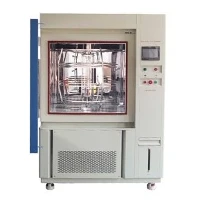
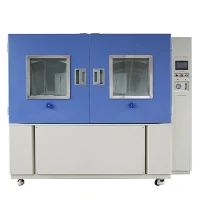
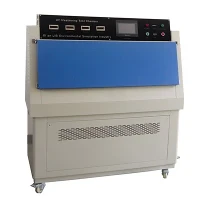
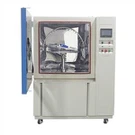

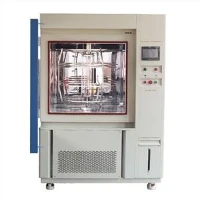
If you've ever worked in manufacturing, consumer electronics, outdoor gear, or even automotive components, you know how critical IP ratings are-they're the gold standard for proving a product is protected against dust and water. I'm in the IP testing equipment game, and one question I get more than any other lately is: "Can an IPx8 tester be customized?" The short answer? Absolutely. But let's break this down, because it's not just a yes/no-it's about what customization actually means, why you might need it, and how it works in real-world scenarios.
First, let's circle back to what IPx8 even is, for anyone who might be new to the space. Unlike lower IP ratings (like IP67 or IPX4, which have specific, more standardized test parameters), IPx8 is the "deep dive" water resistance rating. It's designed to simulate prolonged immersion in water, usually at pressures and depths that mirror real-world use-like a smart watch accidentally left in a pool for 30 minutes, a waterproof phone bag submerged in a lake, or a marine sensor sitting under a boat's deck during a storm. But here's the catch: the IPx8 standard doesn't give a one-size-fits-all test procedure. The IEC 60529 spec just says "sufficiently continuous and effective immersion" and leaves the exact details (immersion depth, water temperature, duration, pressure) up to the manufacturer to define. That's where customization stops being a "nice-to-have" and becomes a necessity.
Let me start with a common example from a client of mine last year. They made a rugged action camera marketed as "100m waterproof" for professional use in diving. Off the shelf, a standard IPx8 tester would run a generic test-say, 2 hours at 2m depth. But their product had to pass a 10-hour immersion at 12m to meet a professional diving certification they needed. A standard tester couldn't handle that depth; its pressure vessel was only rated for up to 5m. So we worked with their engineering team to modify the tester's pressure system, reinforce the vessel walls, and add a data log that tracked pressure consistency every 10 seconds (way more precise than the default 1-minute interval). That's customization in action. It wasn't re-inventing the wheel-it was adjusting the tester to match their specific product's requirements.
Another big area for customization is accessory integration. A lot of products these days aren't just single devices-they're part of a system. Take a wireless earbud case, for example. If a client wants to test the case with the earbuds inside (not just the empty case), a standard tester might not have a way to hold the earbuds securely without blocking air flow or creating gaps that lead to false failures. So we added custom internal fixtures that cradle the earbuds exactly how they sit in the case, plus sealed access ports to connect sensors that monitor if any water seeps into the crevices between the buds and case. That's small, targeted customization that makes the test far more accurate for their actual product.
Wait, but some people might confuse "customization" with "building a totally new tester from scratch." And yeah, that's an option too, but 9 times out of 10, clients don't need that. Let's be real: building new is more expensive and takes longer. Most of the time, it's about modifying existing equipment to fit unique needs. And that's not just for IPx8-we do it for other IPX8 testers too, like when a client needed a dust test tailored to fine silica dust instead of the standard test dust, so we adjusted our Dust IP Test Chamber's airflow filters and particle measurement settings. Or when a medical device maker needed a tester that could run both IP68 water and dust tests in one cycle, so we integrated our IP Test IP68 Water And Dust Tester with a custom dust dispensing module to cut their test time in half.
Let's also talk about a common misconception: "If it's customized, it won't meet IP standards." No, that's not true. The key is that when we customize, we make sure the modified tester still aligns with the IEC 60529 specs. For instance, if a client's product needs to be tested at 20m (for a marine sensor), we don't just crank up the pressure-we calibrate the entire system to make sure the pressure is consistent across the vessel, add a fail-safe that stops the test if pressure drops below the required threshold, and provide a calibration certificate that's accepted by certification bodies like TÜV or UL. That way, the test results are still valid for compliance.
What are some other reasons to customize an IPx8 tester? Let's list a few: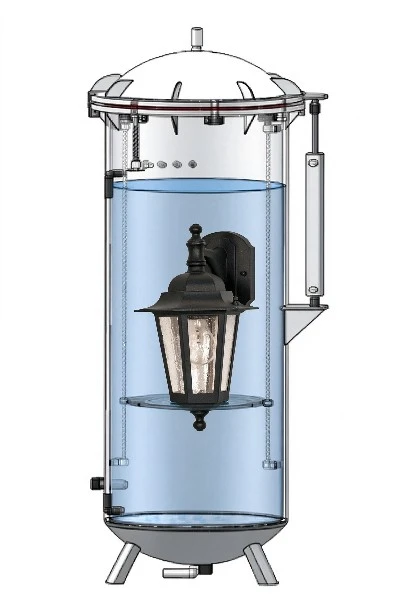
- Product size variations: A lot of standard IPx8 testers are designed for medium-sized products, like phones or cameras. If you're testing a large item, like a waterproof cooler or a marine control panel, you might need a custom pressure vessel that's bigger-sometimes big enough to hold an entire ATV's control module.
- Temperature-specific tests: Some products need to be tested in extreme water temps-like a winter outdoor jacket's waterproofing, which needs to be tested in 0°C water instead of the standard 20-25°C. We can add custom heating and cooling coils to the tester's water reservoir to maintain a consistent temp, no matter what you need.
- Automation needs: If you're running high-volume tests (like a consumer electronics brand with 10,000 units a month), a manual IPx8 tester is a bottleneck. We can integrate custom robotic arms that load and unload products, plus software that auto-generates test reports, so your team doesn't have to sit through 5-hour immersion tests manually.
I've seen clients who thought a standard tester would work, only to run into big issues. One outdoor gear company tried using a standard IPx8 tester for their waterproof hiking boots, but the tester's water flow pattern didn't mimic how water would flow over a boot on a trail-so they were getting false failures that didn't match real-world use. We modified the tester's water circulation system to add directional jets that simulate rain and stream crossing, and suddenly their test results aligned with field testing. That's the value of customization: it's not just about meeting a number, it's about making the test actually reflect how your product is used.
Now, let's address the elephant in the room: is there a limit to how much you can customize? Yeah, but it's not a hard line. Most of the time, the limit is your budget and timeline. For example, you can't turn a standard IPx8 tester into a chamber that tests both IP68 dust and IPx8 water in one go (wait, actually, we did that for a client last year-see our IP68 Sand Dust Chamber and IP Test IP68 Water And Dust Tester for that combo), but you can modify a tester to handle specific depth or duration requirements. If you have a super unique request (like testing a product that has a porous surface that absorbs water differently), we can work with your R&D team to build a custom test profile that's still IEC-compliant.
Another point: customization doesn't have to mean it's more complicated to use. We design all our custom testers with intuitive controls, just like our standard ones. In fact, we often add features that make the tester easier to operate-like touchscreens that let you input your own test parameters (depth, duration, temp) instead of having to call us every time you need a small change. That's a big win for small to medium businesses that don't have a big engineering team on staff.
Wait, let's throw in a real example from our work with a startup. They made a compact underwater drone for recreational use, and they needed to test the drone's IPx8 rating at 30m (way deeper than the standard 5m in most off-the-shelf testers). They also needed to test the drone's propellers under water to make sure they didn't get damaged. A standard IPx8 tester couldn't handle the propellers-they'd get tangled in the tester's internal fixtures. So we built a custom insert that holds the drone's propeller assembly securely, added a pressure system rated for 30m, and integrated a small camera inside the tester to watch the propellers during the test. They were able to get their certification on time, and the tester works for all their future product iterations. That's the kind of thing customization does that off-the-shelf can't.
So, to circle back to the original question: Can an IPx8 tester be customized? Not only can it be-most businesses need it to be. The IPx8 standard is flexible, and your product's use case is unique, so a one-size-fits-all tester is a bad fit for 90% of the projects we see. The key is working with a supplier who understands both the IEC 60529 specs and the real-world needs of your industry.
LIB Industry provides IPX8 water immersion testing solutions for manufacturers of consumer electronics, automotive components, outdoor equipment and marine devices. Our portfolio includes IPX8 tester, IPX7/IPX8 Waterproof Test Equipment, and IP68 Water and Dust Testers. We can customize immersion depth, test duration, water temperature, pressure systems and product fixtures to match your testing requirements.
Whether you need a standard IPX8 tester or a customized solution, LIB Industry can help you select the right equipment and test parameters. Contact LIB Industry today to discuss your application and request a customized quotation.