




When it comes to composite materials, understanding their long - term performance is crucial. As an aging test supplier, we are at the forefront of providing reliable testing solutions to evaluate how composite materials will behave over time under various environmental conditions. In this blog, we will delve into the different aging test methods for composite materials.


1. Thermal Aging
Thermal aging is one of the most fundamental aging test methods for composite materials. Composite materials often encounter temperature variations in their real - world applications, such as in aerospace components exposed to extreme high and low temperatures during flight.
The principle behind thermal aging is to subject the composite samples to elevated or cyclic temperatures for an extended period. By exposing the materials to temperatures higher than their normal operating conditions, we can accelerate the chemical and physical changes that would occur over a much longer time in normal use.
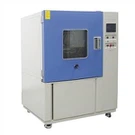
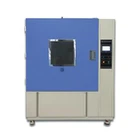
We usually use Temperature Humidity Aging Test Equipment for thermal aging tests. This equipment can accurately control the temperature, allowing us to set different temperature profiles according to the specific requirements of the test. For example, we can conduct isothermal aging, where the sample is kept at a constant high temperature for a certain period. Or we can perform cyclic thermal aging, where the temperature is repeatedly raised and lowered between two set points.
During thermal aging, several changes can occur in composite materials. The resin matrix may undergo thermal degradation, which can lead to a decrease in its mechanical properties such as strength and stiffness. Additionally, thermal expansion and contraction can cause internal stresses in the composite, potentially leading to delamination between the fiber and the matrix. By measuring the mechanical properties of the composite before and after thermal aging, we can assess the extent of the degradation caused by temperature.
2. Humidity Aging
Humidity can have a significant impact on the performance of composite materials. Water molecules can penetrate the composite structure, causing plasticization of the resin matrix, swelling, and even chemical reactions with some components of the composite.
Humidity aging tests are designed to simulate the long - term effects of a humid environment on composite materials. We typically use the aforementioned Temperature Humidity Aging Test Equipment to control both temperature and humidity levels during the test.
The test can be conducted at different relative humidity levels, usually ranging from 50% to 95%. Higher humidity levels can accelerate the aging process. When the composite is exposed to high humidity, water can diffuse into the resin, reducing its glass - transition temperature and increasing its ductility. In the case of fiber - reinforced composites, water can also weaken the interface between the fiber and the matrix, leading to a loss of adhesion and a decrease in the overall mechanical performance of the composite.
We can evaluate the effects of humidity aging by measuring properties such as weight gain (due to water absorption), changes in mechanical strength, and dimensional stability. For example, if a composite part is used in a marine environment, humidity aging tests can help us predict how it will perform over time in the presence of high humidity and saltwater spray.
3. UV Radiation Aging
Exposure to ultraviolet (UV) radiation is another important factor that affects the aging of composite materials, especially those used outdoors. UV radiation can cause photochemical reactions in the composite, leading to surface degradation, color change, and a reduction in mechanical properties.
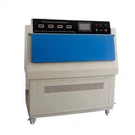
UV aging tests are designed to simulate the long - term effects of sunlight on composite materials. We use special UV chambers that can emit UV radiation with a spectrum similar to that of sunlight. These chambers can also be combined with temperature and humidity control to more accurately mimic real - world outdoor conditions.
When composite materials are exposed to UV radiation, the resin matrix can absorb the UV energy, which can break the chemical bonds in the polymer chains. This can lead to the formation of free radicals, which can further react with oxygen in the air, causing oxidative degradation. The surface of the composite may become brittle, crack, or lose its gloss.
By measuring the changes in appearance, surface hardness, and mechanical properties of the composite after UV radiation aging, we can assess its resistance to UV exposure. This is particularly important for composites used in applications such as automotive exterior parts, solar panels, and outdoor furniture.
4. Mechanical Aging
In addition to environmental factors, mechanical loads can also contribute to the aging of composite materials. Real - world applications often subject composites to various mechanical forces, such as vibrations, fatigue, and impact.
Vibrational aging is a type of mechanical aging that simulates the effects of long - term vibrations on composite materials. We use Vibration Chamber to perform these tests. The chamber can generate vibrations with different frequencies and amplitudes, allowing us to simulate the vibration conditions that the composite may encounter in its actual use.
Vibrations can cause fatigue damage in composite materials. The continuous cyclic loading can lead to the initiation and propagation of cracks in the matrix and at the fiber - matrix interface. Over time, these cracks can grow and eventually lead to the failure of the composite. By measuring the changes in the dynamic properties of the composite, such as stiffness and damping, we can assess the degree of fatigue damage caused by vibrations.
Fatigue testing is another important mechanical aging method. In fatigue tests, the composite sample is subjected to repeated cyclic loading until failure. Different loading modes, such as tension - tension, compression - compression, or tension - compression, can be used depending on the application of the composite. Fatigue testing helps us understand the fatigue life of the composite under different loading conditions and is crucial for designing reliable composite structures.
5. Chemical Aging
Composite materials may also be exposed to various chemicals in their service environment, such as acids, alkalis, solvents, and fuels. Chemical aging tests are designed to evaluate the resistance of composite materials to chemical attack.
We can immerse the composite samples in different chemical solutions for a certain period. The concentration of the chemical solution and the immersion time can be adjusted according to the specific requirements of the test. For example, if a composite is used in a chemical processing plant, it may be necessary to test its resistance to strong acids or alkalis.
When a composite is exposed to chemicals, the resin matrix may dissolve, swell, or degrade chemically. The chemical attack can also affect the fiber - matrix interface, leading to a loss of adhesion and a decrease in the mechanical properties of the composite. By measuring the weight, dimensions, and mechanical properties of the composite before and after chemical exposure, we can assess its chemical resistance.
Why Choose Our Aging Test Services?
As an experienced aging test supplier, we have state - of - the - art testing equipment, including the Vibration Chamber, Air Conditioning Unit, and Temperature Humidity Aging Test Equipment. Our team of experts has in - depth knowledge of composite materials and aging test methods. We can customize aging test programs according to your specific requirements, ensuring that you get accurate and reliable test results.
If you are involved in the research, development, or production of composite materials, and you need to evaluate their long - term performance, we are here to help. Our aging test services can provide you with valuable information to improve the quality and durability of your composite products.
We invite you to contact us for more information about our aging test services. Whether you have a small - scale research project or a large - scale production need, we can discuss the best testing solutions for you and start a productive partnership.
References
- Harris, B. (Ed.). (2003). Engineering composite materials. Elsevier.
- Mallick, P. K. (2007). Fiber - reinforced composites: materials, manufacturing, and design. CRC press.
- ASTM International. (2019). ASTM standards related to composite materials testing.