


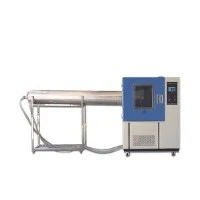
The price range of a solar tester can vary significantly depending on several factors. As a solar tester supplier, I've had the opportunity to work with a wide variety of customers, each with unique requirements and budgets. In this blog, I'll delve into the key elements that influence the cost of solar testers and provide a comprehensive overview of the price ranges you can expect.
Factors Affecting the Price of Solar Testers
1. Testing Capabilities
One of the primary factors that determine the price of a solar tester is its testing capabilities. Basic solar testers are designed to measure fundamental parameters such as open - circuit voltage (Voc), short - circuit current (Isc), maximum power point (Pmax), and fill factor (FF). These testers are relatively affordable and are suitable for small - scale solar panel manufacturers, DIY solar enthusiasts, and basic quality control purposes.
On the other hand, advanced solar testers come with a broader range of testing capabilities. They can perform more complex tests such as spectral response analysis, temperature coefficient measurement, and long - term stability testing. These high - end testers are essential for large - scale solar panel production facilities, research institutions, and laboratories that require in - depth analysis of solar panel performance. The increased functionality and precision of advanced testers result in a higher price tag.
2. Accuracy and Precision
Accuracy and precision are crucial factors in solar testing. A more accurate and precise solar tester can provide more reliable data, which is essential for ensuring the quality and performance of solar panels. Testers with high accuracy levels typically use high - quality sensors, advanced calibration techniques, and sophisticated measurement algorithms. These components and technologies add to the cost of the tester.
For example, a solar tester with an accuracy of ±1% will generally be more expensive than one with an accuracy of ±3%. The higher accuracy is especially important for applications where small variations in solar panel performance can have a significant impact on energy production, such as in large - scale solar power plants.
3. Brand and Reputation
The brand and reputation of the solar tester manufacturer also play a role in determining the price. Well - established brands with a long history of producing high - quality testing equipment often charge a premium for their products. These brands are known for their reliability, after - sales service, and technical support.
Customers are often willing to pay more for a solar tester from a reputable brand because they have confidence in the product's performance and durability. In contrast, lesser - known brands may offer more affordable options, but they may not have the same level of quality assurance or support.
4. Customization and Additional Features
Some customers may require customized solar testers to meet their specific testing needs. Customization can include features such as specialized testing protocols, integration with other testing equipment, or the ability to test non - standard solar panel sizes or configurations. The process of customizing a solar tester involves additional engineering and development work, which increases the cost.
In addition, some solar testers come with additional features such as data logging, wireless connectivity, and software for data analysis. These features can enhance the usability and functionality of the tester but also contribute to a higher price.
Price Ranges of Solar Testers
1. Entry - Level Solar Testers
Entry - level solar testers are suitable for beginners, hobbyists, and small - scale applications. These testers typically offer basic testing capabilities and have a relatively low accuracy level. They are often handheld and portable, making them convenient for on - site testing.


The price range for entry - level solar testers is usually between $100 and $500. These testers are a cost - effective option for those who need to perform simple solar panel tests without investing a large amount of money.
2. Mid - Range Solar Testers
Mid - range solar testers offer a good balance between price and performance. They have more advanced testing capabilities than entry - level testers, including the ability to measure additional parameters and provide more accurate results. Mid - range testers are suitable for small to medium - sized solar panel manufacturers, installers, and quality control departments.
The price of mid - range solar testers typically ranges from $500 to $5,000. These testers often come with features such as data logging, LCD displays, and basic software for data analysis.
3. High - End Solar Testers
High - end solar testers are designed for large - scale solar panel production, research, and development, and high - precision testing applications. They offer the highest level of accuracy, a wide range of testing capabilities, and advanced features such as spectral response analysis and long - term stability testing.
The price of high - end solar testers can range from $5,000 to over $50,000. These testers are often used in professional laboratories, large - scale solar power plants, and research institutions where the highest level of performance and reliability is required.
Related Products and Their Importance
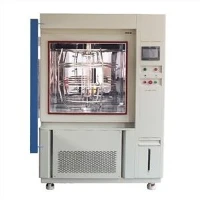
In addition to solar testers, there are other related products that are important in the solar testing and quality control process. For example, the Xenon Accelerated Weathering Apparatus is used to simulate the effects of long - term exposure to sunlight, heat, and moisture on solar panels. This helps to predict the durability and performance of solar panels in real - world conditions.
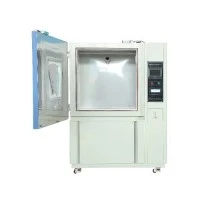
The UV Chamber For Preconditioning Test is used to pre - condition solar panels before testing. It exposes the panels to ultraviolet radiation to simulate the aging process and ensure that the test results are more representative of the panel's long - term performance.
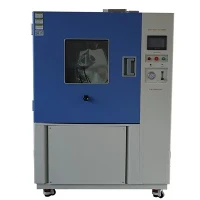
The UV Lamp Test Chamber is another important tool for solar panel testing. It is used to test the resistance of solar panels to ultraviolet radiation, which can cause degradation of the panel's materials over time.
Contact for Purchase and Negotiation
If you are in the market for a solar tester or any of the related products mentioned above, I encourage you to contact us. We have a wide range of solar testers available at different price points to meet your specific needs. Our team of experts can provide you with detailed information about the products, help you choose the right tester for your application, and assist you in the purchasing process. Whether you are a small - scale solar enthusiast or a large - scale solar panel manufacturer, we are here to support you.
References
- ASTM International. (Year). Standard test methods for photovoltaic devices. ASTM Publication.
- IEC. (Year). International Electrotechnical Commission standards for solar panel testing. IEC Publication.
- Solar Energy Industries Association. (Year). Best practices for solar panel testing and quality control. SEIA Report.