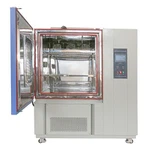
When evaluating metals, coatings, or industrial components, precision and repeatability are critical. Engineers and quality managers rely on high-performance salt spray cabinets to simulate real-world environmental stress, including salt fog, humidity, and temperature cycling, allowing labs to predict long-term durability under controlled conditions.
Our customers consistently praise LIB Salt Spray Cabinets for their reliability and performance. For example, a laboratory in Ukraine reported: "The chamber is working properly, and its performance is stable. " This demonstrates the trust placed in LIB equipment for demanding cyclic corrosion testing.
LIB Salt Spray Cabinets have been designed to meet these exact needs. This article explains how LIB chambers support Neutral Salt Spray (NSS), Copper-Accelerated Acetic Acid Salt Spray (CASS), and cyclic corrosion tests, illustrating the technology behind precise testing, the range of LIB products, and best practices for operation and maintenance.
Salt Spray Cabinet Support-NSS, CASS, and Cyclic Corrosion Tests
1. Neutral Salt Spray (NSS) Testing
A. NSS Requirements:
Neutral Salt Spray testing follows ISO 9227/ASTM B117/DIN 50021/JIS Z 2371, which specifies a 5 % NaCl solution at pH 6.5–7.2, delivered at a deposition rate of 1–2 mL/80 cm² per hour, with an exposure temperature of 35 ± 2 °C. NSS evaluates general corrosion resistance for metals and coatings under neutral saline conditions.
B. LIB Precision:
LIB Salt Spray Cabinets achieve precise NSS conditions through quartz nozzles, corrosion-resistant spray towers, and PID-controlled preheating.
- Quartz nozzles & corrosion-resistant spray towers: Ensure uniform fog distribution across all samples.
- PID-controlled preheating and saturated barrel: Maintains chamber air and solution temperature within ±0.5 °C.
- Solution preparation & monitoring: 5 % NaCl solution with continuous stirring, pH 6.5–7.2, deposition rate 1–2 mL/80 cm²/h.
- Fog collector: Measures real-time deposition, preventing uneven coverage or invalid results.
C. Cabinet Variants:
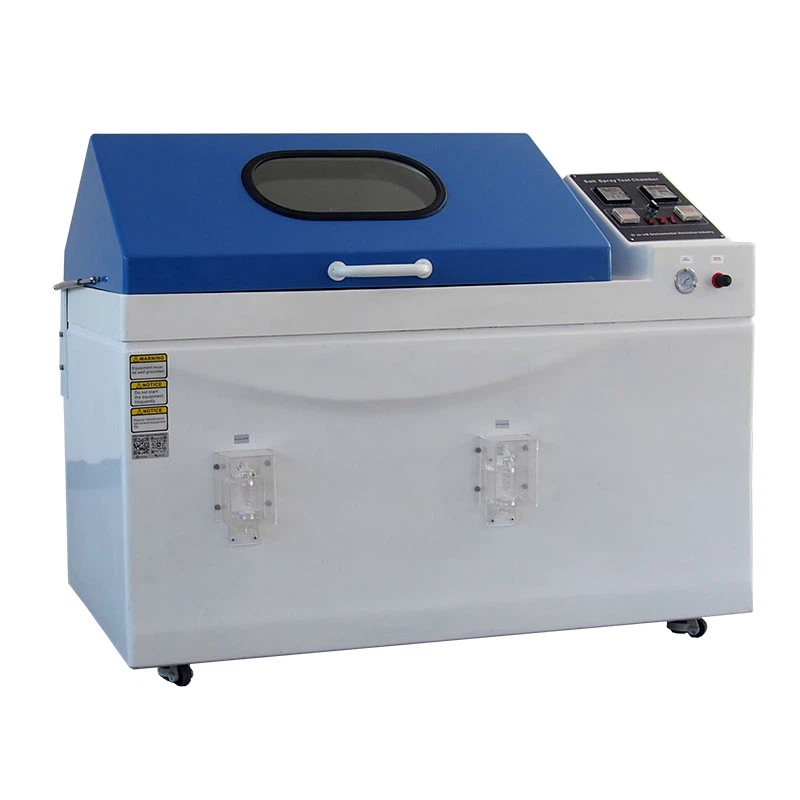
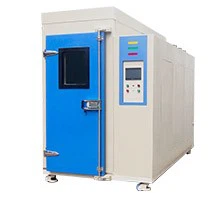
LIB offers Basic Salt Spray Cabinets (S-150, S-250, S-750) capable of NSS tests. Each model includes adjustable sample holders (V-groove and round rods), a transparent lid, and automated water refill systems, allowing continuous, reliable testing for high-throughput laboratories.
2. Copper-Accelerated Acetic Acid Salt Spray (CASS) Testing
A. CASS Requirements:
CASS is a severe corrosion test for decorative and high-performance coatings. According to ISO 9227/ASTM B368, it uses 5 % NaCl + 0.26 g/L CuCl₂, with pH 3.1–3.3 and deposition rates of 1–2 mL/80 cm² per hour at 35 ± 2 °C. This simulates aggressive corrosive environments, such as coastal or industrial atmospheres.
B. LIB Precision:
LIB chambers achieve this through automated acid dosing, precise salt solution control, and PT-100 Class A sensors monitoring temperature with 0.001 °C accuracy. Fog towers and atomizers guarantee uniform copper-salt deposition across all samples. This ensures compliance with CASS requirements for both ASTM B117 and ISO 9227 standards.
C. Cabinet Variants:
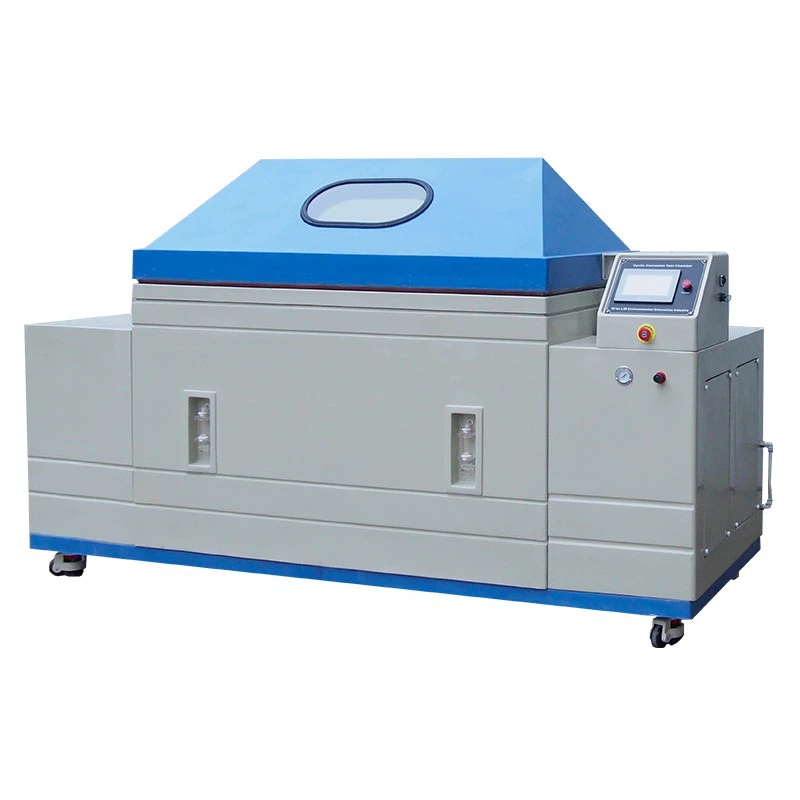
All LIB salt spray cabinets support CASS procedures. For labs requiring multi-phase testing, the Cyclic Salt Spray Chamber (SC series) allows NSS followed by CASS in one automated program, reducing manual intervention while maintaining test validity.
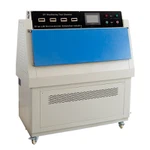
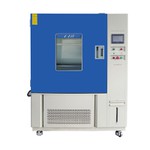
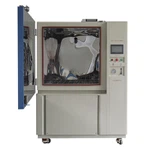
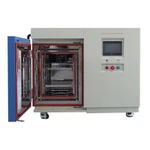
LIB Popular Environmental test Chambers
3. Cyclic Corrosion Testing
A. Cyclic Corrosion Requirements:
Cyclic tests, as defined by ASTM G85, ISO 11997, and JIS Z 2371, simulate real-world conditions by alternating wet/dry, high-humidity, and temperature cycling phases. Common cycles include:
- Salt spray phase: 5 % NaCl solution at 83 kPa, 35 ± 2 °C.
- Humidity phase: 30 %–98 % RH to replicate rainy or foggy climates.
- Temperature phase: 10–90 °C, ±5 °C fluctuation, ±2 °C deviation.
- Drying phase: Warm air to allow salt crystallization, creating stress on coatings.
B. LIB Precision:
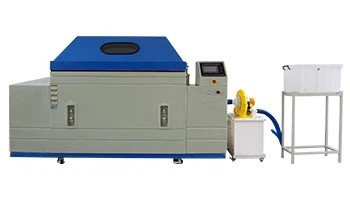
LIB's SC series Cyclic Salt Spray Tester integrates atomizer towers, saturated air preheating, and PID-controlled humidity and temperature systems. Real-time data logging ensures deposition and environmental conditions match ASTM G85, ISO 9227, and SAE J2334 standards.
C. Cabinet Variants:
The SC-010, SC-016, and SC-020 models accommodate varying sample sizes (780–1600 L interior) and multiple test cycles. Advantages include automated multi-phase switching for realistic stress simulation, accurate environmental control with PT100 sensors maintaining ±0.5 °C and ±2 % RH, and durable, corrosion-resistant construction that minimizes downtime.
LIB Cyclic Salt Spray Cabinets's Method for Metal Testing and Maintenance Guide
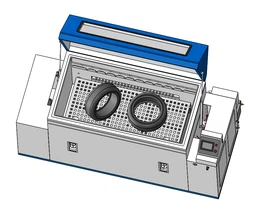
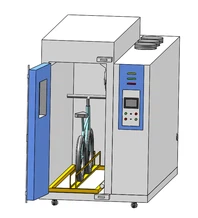
LIB's SC-010 cyclic corrosion tester allows laboratory testing that mirrors the widely used ISO 16701/ASTM B117 Cyclic Corrosion Test standards for metals.
For example, one typical cycle includes alternating salt spray, drying, and humidity phases to simulate real outdoor corrosion conditions.
01
Salt Spray Phase
A 2% NaCl solution is atomized to create a fine salt mist over the metal samples for 2 hours at 35°C, simulating direct salt exposure.
02
Drying Phase
The samples are dried at 60°C for 2 hours, mimicking daytime heat and promoting salt crystallization.
03
Humidity/Condensation Phase
Followed by 4 hours at 50°C and 95% relative humidity, simulating nighttime dew and humidity exposure.
04
Cycle Repeat
These 8-hour cycles are repeated continuously for the duration of the test, equivalent to months of outdoor exposure, to evaluate corrosion resistance of metals and coatings.
2. LIB SC-010 Salt Spray Cabinets Advantages in Cyclic Corrosion Testing
| Name | |||
|
Model |
SC-010 |
SC-016 |
SC-020 |
|
Internal dimensions (mm) |
800*1450*680 |
1000*1600*800 |
1000*2000*900 |
|
Overall dimensions (mm) |
1400*2500*1720 |
1600*2650*1840 |
1600*3050*1940 |
|
Interior Volume (L) |
780 |
1280 |
1800 |
|
Temperature Range |
+10 ℃ ~ +90 ℃ |
||
|
Temperature Fluctuation |
± 0.5 ℃ |
||
|
Temperature Deviation |
± 2.0 ℃ |
||
|
Humidity Range |
30% ~ 98% RH |
||
|
Humidity Deviation |
+ 2%, - 3% |
||
|
Salt Fog Deposition |
1~2ml / 80cm2 · h |
||
|
Air Preheating |
Saturated air barrel (31Liter) |
||
|
Spraying System |
Atomizer tower and Spray nozzles |
||
|
Salt Fog Collected |
Fog collector and fog measure cylinder |
||
|
Sealing |
Pneumatic seal |
||
|
Controller |
Programmable color LCD touch screen controller, Ethernet connection, PC Link, USB |
||
|
View Window Size(mm) |
800*300 |
||
|
Material |
Glass fiber reinforced plastics |
||
|
Standard Configuration |
8 round bars |
||
|
Standard |
IEC60068-2-52, IEC61701-2,ASTM G85,ISO 7253, ASTM B117, ISO9227 |
||
|
Environmental Conditional |
5℃~+35 ℃ ≤85% RH |
||
- Customizable Cycles: Temperature, humidity, and spray duration can be adjusted to meet different ISO/ASTM standards or specific customer requirements.
- High Precision & Uniformity: S-150 ensures uniform salt deposition and stable temperature/humidity control for accurate test results.
- Turnkey Service: LIB provides one-stop service including design, production, transportation, installation, and on-site commissioning, as demonstrated in successful projects with Peru Central Bank testing coins and SERIS testing solar panels.
3. LIB Cyclic Salt Spray Chamber Maintenance Guide
1. Daily Maintenance
- Check water levels, salt concentration, and pH values before starting each test.
- Clean quartz nozzles and fog collectors to prevent deposition buildup.
- Inspect sample holders for alignment and wear.
2. Weekly Maintenance
- Verify calibration of PT100 Class A sensors for temperature and humidity.
- Inspect pneumatic lids and seals for proper operation.
- Test automated alarms and interlocks to ensure safe operation.
3. Monthly Maintenance
- Drain and clean the salt water tank; inspect stirrer and recirculation system.
- Inspect chamber interior for corrosion or residue, especially in high-use cyclic testing.
- Update software and touchscreen firmware for accurate program execution.
FAQs on the LIB Salt Spray Cabinets
Q1: What support does LIB provide for international customers?
A1: Every chamber comes with a 3-year warranty and lifetime technical support. Remote troubleshooting is available 24/7. If needed, replacement parts are shipped within 7–15 days, with English-speaking support staff.
Q2: Can I transport the cabinets safely for installation overseas?
A2: Yes. LIB provides shock-resistant packaging, transport brackets, and casters to protect chambers during shipping and simplify relocation in laboratories.
Q3: Is remote monitoring or data integration possible?
A3: All LIB cabinets include Ethernet and USB ports for exporting temperature, humidity, pH, and deposition data. They can integrate with existing data acquisition systems for real-time monitoring and compliance reporting.
Q4: How do LIB chambers ensure long-term repeatability?
A4: Corrosion-resistant materials, high-precision sensors, automated safety systems, and routine cleaning keep tests consistent over years. The saturated air barrel and PID control maintain uniform salt fog and environmental stability, preventing "false passes" or overstressed failures.
LIB Salt Spray Cabinets and Cyclic Test Chambers combine precision, standards compliance, and operational simplicity. They support NSS, CASS, and cyclic corrosion tests, providing accurate, repeatable data for metals, coatings, and components. With multiple cabinet models and a robust service network, LIB ensures laboratories worldwide can meet ISO 9227, ASTM B117, ASTM G85, JIS Z 2371, SAE J2334, and other major standards with confidence.
Contact LIB Industry today to explore our full range of salt spray and cyclic corrosion testing solutions and ensure your lab meets ISO, ASTM, JIS, and SAE standards with confidence.