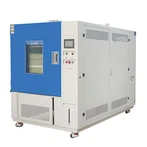
Salt water is one of the most destructive forces a product will ever face - a single humid coastal season can do more damage to unprotected metal than years of dry storage. For engineers designing connectors, automotive parts, or outdoor electronics, the real question isn't whether corrosion will happen, but how fast, and whether the current coating or alloy can survive it long enough in the field.
This article explains how LIB Industry's Climate Salt Spray Chamber recreates that destructive environment under controlled laboratory conditions, what standards it must satisfy to produce trustworthy data, and how it compares with a cyclic version of the same equipment.
Climate Salt Spray Chamber Performs Corrosion Testing
What Is a Climate Salt Spray Chamber
A Climate Salt Spray Chamber is a sealed testing enclosure that combines heated salt fog with controlled temperature and humidity to accelerate the corrosion process on metals, coatings, and plated components. Instead of waiting months or years for natural atmospheric corrosion to appear, the chamber atomizes a saline solution - typically 5% NaCl - into a fine mist that continuously settles onto test samples at 35 ± 2 °C. Within days, engineers can observe rust, pitting, or coating failure that would otherwise take seasons to develop outdoors, making the chamber essential for automotive parts, fasteners, PCB coatings, marine hardware, and household appliances.
Standards Compliance and Working Principle
The chamber's credibility depends entirely on how precisely it reproduces internationally recognized test conditions. LIB Industry's Climate Salt Spray Chamber is built to satisfy ISO 9227 (Neutral Salt Spray, Acetic Acid Salt Spray, and Copper-Accelerated Acetic Acid Salt Spray), ASTM B117, GB/T 10125, JIS Z 2371, and DIN 50021. Internally, a PID controller working with PT100 Class A sensors regulates chamber temperature within ±0.5 °C and salt fog deposition at 1–2 mL per 80 cm² per hour, matching the exact deposition rate ISO 9227 requires. A saturated air preheating barrel raises incoming air to the correct humidity before it enters the spray tower, while a quartz atomizing nozzle operating at roughly 83 kPa breaks the saline solution into a uniform fog, preventing droplets from pooling directly onto samples and skewing results.
Corrosion Testing Methods Performed
Within this single chamber, operators can run several distinct salt spray protocols simply by adjusting solution chemistry and pH. Neutral Salt Spray (NSS) uses 5% NaCl at pH 6.5–7.2 for general corrosion evaluation on untreated metals. Acetic Acid Salt Spray (AASS) lowers pH to 3.1–3.3 with glacial acetic acid, better suited to decorative chrome and electroplated finishes. Copper-Accelerated Acetic Acid Salt Spray (CASS) adds 0.26 g/L of copper chloride and typically runs at 50 ± 2 °C, producing the most aggressive corrosion rate for evaluating high-performance automotive and aerospace coatings. Test durations commonly range from 24 hours for quick screening to 1,000+ hours for full qualification testing, with samples inspected at fixed intervals for red rust, blistering, or coating adhesion loss.
Canadian Customer's Experience with a Walk-In Climate Salt Spray Chamber
A Canadian manufacturer recently purchased a walk-in Climate Salt Spray Chamber from LIB Industry to qualify large automotive assemblies before export certification. After several months of continuous operation, the customer reported strong satisfaction with both performance and support, citing several specific advantages:
1. Certified safety compliance: the chamber meets CE, IEC 61010, and CSA safety requirements, allowing immediate deployment without additional local certification delays.
2. Consistent test precision: temperature held within ±0.5 °C and salt deposition steady at 1–2 mL/80 cm²·h across thousands of testing hours, with no drift between test batches.
3. Free custom engineering: LIB Industry adjusted the walk-in door size and interior racking layout at no extra cost to fit the customer's oversized automotive parts.
4. 3-year warranty with lifetime support: giving the customer confidence that any future issue would be resolved quickly rather than becoming a long-term liability.
5. On-site training: LIB Industry's technicians trained the customer's staff directly at the facility, reducing onboarding time and operator error.
6. Stable humidity control: maintained within ±2% RH even during long-duration cyclic programs, which the customer noted was critical for reproducible pass/fail decisions.
| Model | S-150 | S-250 | S-750 | S-010 | S-016 | S-020 |
| Internal dimensions (mm) | 590*470*400 | 1000*640*500 | 1100*750*500 | 1000*1300*600 | 900*1600*720 | 1000*2000*800 |
| Overall dimensions (mm) | 1460*760*1140 | 1850*960*1350 | 1950*1030*1350 | 2000×1300×1600 | 2300×1300×1700 | 2700×1300×1900 |
| Interior Volume (L) | 110 | 320 | 410 | 780 | 1030 | 1600 |
| Temperature Range | Ambient ~ +60 ℃ | |||||
| Temperature Fluctuation | ± 0.5 ℃ | |||||
| Temperature Deviation | ± 2.0 ℃ | |||||
| Humidity Range | 95% ~ 98% RH | |||||
| Salt Fog Deposition | 1~2ml / 80cm2 · h | |||||
| Spray Type | Continuous / Periodic | |||||
| Salt Fog Collected | Fog collector and fog measure cylinder | |||||
| Air Preheating | Saturated air barrel | |||||
| Spraying System | Atomizer tower and Spray nozzles | |||||
| Controller | PID controller | |||||
| Safety Device | Humidifier Dry-combustion Protection; Over-temperature Protection; Over-current Protection; Water Shortage Protection; Earth leakage Protection | |||||
| Material | Glass fiber reinforced plastics | |||||
| Standard Configuration | 6 round bars and 5 V-shaped grooves | |||||
The combination of certified safety, tight tolerances, and hands-on support gave the customer a level of confidence they hadn't found with previous suppliers.
Climate Salt Spray Chamber vs. Cyclic Climate Salt Spray Chamber: How to Choose
While both chamber types generate salt fog, they serve different testing philosophies. A standard Climate Salt Spray Chamber runs a single continuous condition, while a Cyclic Salt Spray Chamber (CCT) automatically alternates between salt fog, drying, and humidity phases to simulate real outdoor weathering more closely.
| Feature |
|
|
|---|---|---|
| Test Mode | Continuous salt fog exposure | Alternating fog, dry, and humidity cycles |
| Key Standards | ISO 9227, ASTM B117, JIS Z 2371 | ASTM G85, SAE J2334, ISO 11997, GM9540P |
| Temperature Range | 35 ± 2 °C (constant) | +10 °C to +90 °C (cycling) |
| Real-World Correlation | Moderate - accelerated but simplified | High - mimics actual field exposure patterns |
| Typical Applications | Coating screening, plating QC | OEM automotive validation, long-term durability |
| Test Duration | 24–1000+ hours | Multi-week cyclic programs |


For quick coating or plating quality checks, a standard chamber offers faster, simpler results. For automotive OEM approval or products that must withstand seasonal wet-dry cycles in the field, a cyclic chamber provides data that correlates far more closely with real-world corrosion behavior.
LIB Popular Salt Spray and Climate Test Chambers

Controlled Temperature, Humidity & Salt Spray for Realistic Simulation, Highly Popular.

Temperature & Salt Spray Control Only, Precision Salt Spray Measurement, Standard Compliant.
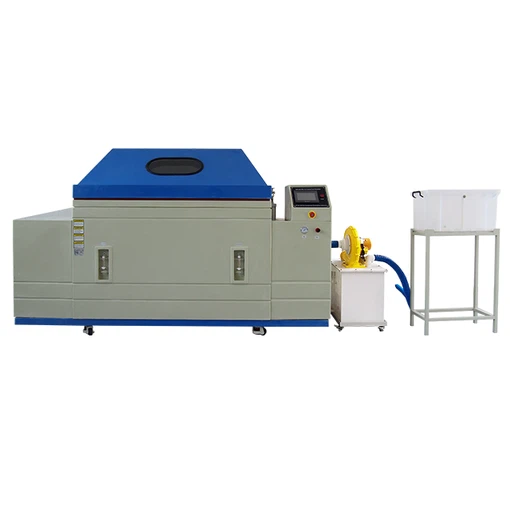
Controlled SO₂, Temperature, Humidity & Salt Spray for Industrial Environment Simulation.

Realistic Sunlight Simulation, Water-Cooled Lamp for Stability & Durability, Top Choice for Coating Companies.

UV Light Simulation Test, Stable Light Source, High Uniformity of Light Exposure.

Large Test Pieces, High-Volume Testing; Flexible Customization of Size & Function.
FAQs on the Climate Salt Spray Chamber
Q1: What certification and safety standards does the chamber meet?
The chamber is built to CE, IEC 61010, and CSA safety requirements, alongside ISO 9227 and ASTM B117 testing standards, ensuring both operator safety and internationally recognized test validity.
Q2: Can the chamber size and configuration be customized?
Yes. LIB Industry offers free customization for chamber dimensions, walk-in door placement, and internal racking to accommodate oversized or irregular samples at no additional engineering cost.
Q3: What support is available after installation, including shipping?
Every chamber includes a 3-year warranty and lifetime technical support, with spare parts delivered internationally within 7–15 days. LIB Industry also provides on-site or remote training and coordinates safe transportation and installation guidance for overseas customers.
Q4: How long does a typical test run, and can duration be customized?
Tests typically run from 24 hours for quick screening up to 1,000+ hours for full qualification. With 120 programmable profiles, operators can freely set custom durations or chain multiple test phases together.
Q5: What is the delivery lead time, and does LIB Industry help with international shipping?
Standard units ship within 4–6 weeks; custom walk-in chambers may take longer. LIB Industry handles export documentation, freight coordination, and installation guidance for overseas customers.
Contact LIB Industry today to learn how our Climate Salt Spray Chamber can strengthen your product's corrosion resistance validation and accelerate your certification timeline.