Test standard for condensation water testing
Condensate test is an important means to evaluate the durability, reliability, and performance of materials or systems, which involves many aspects of test standards and methods:
- Condensing water: Test the amount of condensate produced by the cooling system under different working conditions to evaluate the cooling effect and drainage performance of the system.
- Condensate cleanliness: Test the content of impurities and contaminants in the condensate to evaluate the filtration and purification effectiveness of the system.
- Condensate pH: Tests the pH of the condensate to assess the cohesiveness of the system and its impact on the environment.
- Condensate temperature: Test the temperature of the condensate to evaluate the heat dissipation effect and cooling performance of the system.
- Condensate discharge: Test the amount and manner of condensate discharge during the operation of the vehicle to assess the environmental performance of the system and the degree of compliance with emission regulations.
- Static condensation test: Test the condensation resistance of the material under specific temperature and humidity conditions.
Other relevant standards, such as ISO 4628-2 and ISO 4828-3, respectively, specify the degree of coating foaming and rust ratings, and ASTM D 714 and ASTM D610 and other standards provide specific methods and procedures for condensate testing.
Condensation water testing mainly detects the following items:
- Corrosion resistance of the coating system: the degree and time of corrosion of the coating surface by the condensate generated by the refrigerant is detected
- Adhesion of the coating: Observe whether the coating cracks and spalling due to thermal expansion and cold shrinkage caused by condensation
- Water resistance: The seal between layers and between coating and substrate is tested to prevent moisture penetration leading to corrosion and coating failure
The above projects are safeguards to ensure that the surface coating system can be used for a long time in extremely corrosive environments.
ISO12944 anticorrosion class C5 requires test conditions for condensation water testing
ISO12944 is one of the corrosion protection standards that specifies the requirements for surface coating systems for corrosion protection of external structures. Among them, the corrosion protection grade C5 is the highest grade, which is suitable for extreme corrosive environments such as Marine and coastal areas. In order to ensure the quality of the surface coating system, it is necessary to carry out inspection and certification, including an important test: condensation water testing.
According to ISO12944, surface coating systems with anticorrosive grade C5 must have the following characteristics:
| Characteristic | Requirement |
| Environment | Extreme corrosive environment |
| Minimum service life | 15 years |
| Surface pretreatment | Meets ISO8501-1 Sa3 level |
| Primer layer thickness | at least 100μm |
| The total thickness of the coating system | at least 500μm |
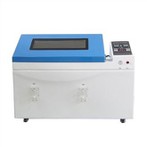
LIB condensation water test chamber
|
|
|
|
Model |
ATH-100A |
|
Internal dimension (mm) |
400*500*500 D*W*H |
|
Overall dimension (mm) |
900*1050*1620 D*W*H |
|
Temperature range |
10℃ ~ +60 ℃ |
|
Humidity range |
95%RH ~ 100% |
|
Cooling Rate |
1°C / min |
|
Heating Rate |
3°C/ min |