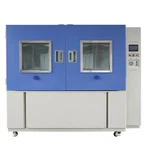
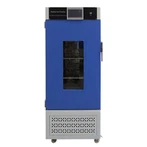
Chip resistors are small, but their reliability determines the stability of entire electronic systems-from automotive ECUs to telecom base stations. A slight drift in resistance under temperature or humidity stress can lead to signal errors, overheating, or even system failure. That
's why environmental validation is not optional-it's essential.
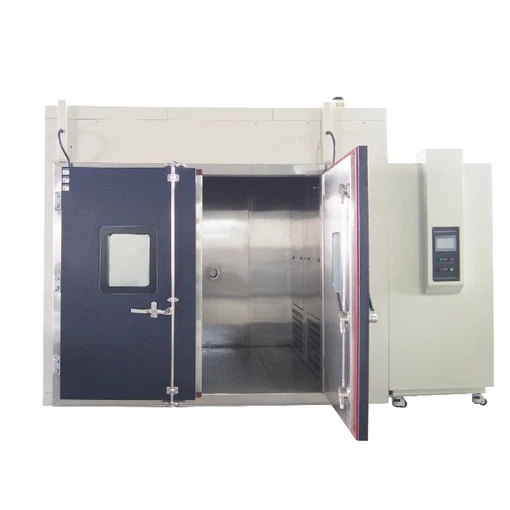
A recent update from a Canadian laboratory highlights this in real use. After installing a LIB Climatic chamber, their engineer shared: "We have been using the chamber since last week. It is overall good so far. I will keep you updated." The system was quickly integrated into their workflow, running smoothly from the start. With proper maintenance support and guidance provided by LIB, the customer was able to ensure stable, long-term operation without interruption-demonstrating both reliability and ease of use in daily testing.
This article explains what a climatic chamber for testing chip resistors is, the temperature and humidity ranges it must achieve, how LIB's system works, and how it executes real test standards with precise, repeatable results.
Temperature and Humidity Ranges of a Climatic Chamber
Low Temperature Range: Down to –70 °C
A climatic chamber designed for chip resistors typically reaches –40 °C to –70 °C. This range simulates extreme cold environments such as outdoor telecom equipment or automotive cold starts.
Applications & Standards:
IEC 60068-2-1 (Cold Test): –40 °C for 2–96 hours
AEC-Q200 : Cold storage and operational tests
MIL-STD-202 Method 107: Low-temperature exposure for electronic components
At these temperatures, resistor materials contract, and solder joints are stressed, revealing cracks or resistance drift.
High Temperature Range: Up to +150 °C
High-temperature capability ensures accelerated aging and thermal endurance testing. Most climatic chambers for chip resistors operate from +85 °C to +150 °C.
Applications & Standards:
IEC 60068-2-2 (Dry Heat): +125 °C for 16 hours
AEC-Q200: High-temperature storage at +125 °C to +150 °C
JEDEC JESD22-A103: High-temperature operating life (HTOL)
Higher temperatures accelerate chemical reactions, helping engineers predict long-term reliability within days instead of years.
Humidity Range: 20% to 98% RH
Humidity control is critical for chip resistors because moisture can cause insulation failure and corrosion.
Applications & Standards:
IEC 60068-2-78 (Damp Heat, Steady State): 40 °C, 93% RH
IEC 60068-2-30 (Cyclic Damp Heat): Alternating humidity cycles
JEDEC JESD22-A101: Moisture resistance testing
A stable humidity range (±2.5% RH) ensures repeatable results when evaluating coating integrity and moisture resistance.
How LIB Climatic Chamber Works for Chip Resistor Testing
LIB's climatic chamber combines precise temperature and humidity control into a single system using coordinated subsystems:
Cooling System:
A cascade refrigeration system enables temperatures as low as –70 °C. Dual compressors work in stages to ensure stable and efficient cooling
.
Heating System:
Nickel-chromium heaters provide rapid heating up to +150 °C with a ramp rate of 3 °C/min, ensuring quick transitions between test stages.
Humidity Control:
A steam generator injects moisture, while the evaporator removes excess humidity. This allows stable control between 20% and 98% RH.
Airflow System:
Dual centrifugal fans distribute air evenly, maintaining temperature uniformity within ±1.5 °C across all samples.
Control System:
A PID controller with PT100 Class A sensors (±0.001 °C resolution) continuously adjusts conditions, ensuring ±0.5 °C stability and accurate humidity control.
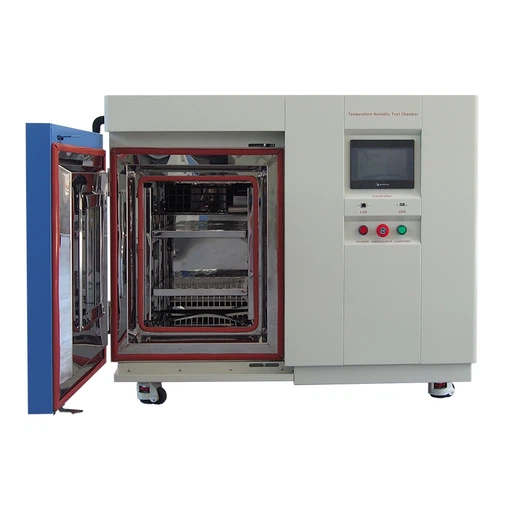
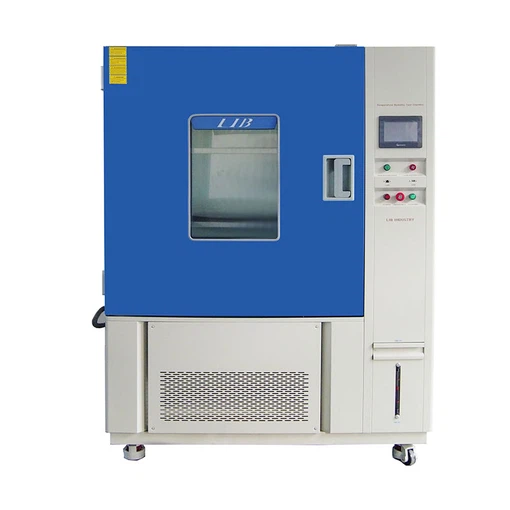


Chip Resistor Testing Using LIB Climatic Chambe
Standard Test: AEC-Q200 Temperature Cycling Test
Test Cycle Requirements:
Temperature range: –55 °C to +125 °C
Dwell time: 15 minutes at each extreme
انتقال time: ≤5 minutes
Total cycles: 1000 cycles
This test evaluates resistance change, mechanical integrity, and solder joint reliability under repeated thermal stress.
LIB Chamber Model for This Test
|
|
Name | Temperature Humidity Chamber for Composites | ||||
|
Model |
TH-100 |
|||||
|
Internal dimension (mm) |
400*500*500 |
|||||
|
Overall dimension (mm) |
860*1050*1620 |
|||||
|
Capacity |
100L |
|||||
|
Temperature range |
-20℃ ~+150 ℃ |
|||||
|
Low type |
A: -40℃ B:-70℃ C -86℃ |
|||||
|
Humidity Range |
20%-98%RH |
|||||
|
Temperature deviation |
± 2.0 ℃ |
|||||
|
Heating rate |
3 ℃ / min |
|||||
|
Cooling rate |
1 ℃ / min |
|||||
|
Controller |
Programmable color LCD touch screen controller, Multi-language interface, Ethernet , USB |
|||||
|
Refrigerant |
R404A, R23 |
|||||
|
Exterior material |
Steel Plate with protective coating |
|||||
|
Interior material |
SUS304 stainless steel |
|||||
|
Standard configuration |
1 Cable hole (Φ 50) with plug; 2 shelves |
|||||
|
Timing Function |
0.1~999.9 (S,M,H) settable |
|||||

|
|
|
|
|
|
| Robust Workroom | Cable Hole | Temperature and Humidity Sensor | PID controller |


LIB Advantages for Chip Resistor Testing
1. High Precision Control
Maintains ±0.5 °C stability, ensuring reliable resistance measurement results.
Fast Cycling Performance
Shortens total test time, improving lab efficiency.
Programmable Test Profiles
Stores 120 programs with 100 steps each for different resistor specifications.
Reliable Operation
Stable performance during long-term cycling tests without interruption.
FAQs on LIB Climatic Chamber for Chip Resistors
Q1: How long does delivery take?
Standard models are delivered within 15–20 working days. Customized configurations may require an additional 7–10 days.
Q2: What support does LIB provide after purchase?
LIB offers a 3-year warranty, lifetime technical support, and 24/7 remote assistance. Spare parts are shipped globally within 7–15 days.
Q3: How is the chamber transported safely?
All chambers are packed in reinforced wooden crates with shock protection, ensuring safe international shipping.
Q4: Is installation complicated?
No. The chamber is delivered fully assembled. With standard power and water connections, installation can be completed within 2 hours.
A climatic chamber for chip resistor testing is more than a temperature box-it is a precision tool for validating performance under real-world stress. With wide temperature ranges, strict compliance with IEC, JEDEC, and AEC standards, and automated control systems, LIB's chambers help engineers generate accurate, repeatable data.
Whether you are validating automotive electronics, telecom devices, or consumer circuits, LIB provides the stability, speed, and confidence your testing demands.
Contact LIB Industry today to explore detailed specifications, request a quotation, or customize your climatic chamber solution.