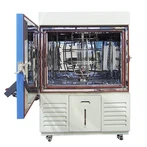
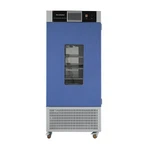
You might need to freeze a battery pack to –40 °C before a cold crank test. Or you might want to run a humidity cycle at +85 °C with 95 % RH to check if a circuit board corrodes. Full‑size chambers can do this, but they take up half a room, sound like a refrigerator truck, and force you to walk back and forth three times per test. Wouldn't it be better if a small, quiet box on your bench could hit those same extreme temperatures-and do it faster?
One Ukrainian lab customer recently wrote to our project manager Alice: "Hello Alice, thanks for your email. Yes, installation has been completed. It works well." That short message came after they received their LIB TH-80 Mini Sub‑Zero Chamber. No troubleshooting calls. No lengthy training. Just a working unit that passed their first batch of cold‑soak tests without drama. That is the kind of quiet confidence our chambers build-because when a device runs at –60 °C for four hours straight and holds temperature within ±0.5 °C, there is simply nothing to complain about.
This article walks you through exactly what temperature range a mini sub‑zero chamber can deliver, which real‑world standards it meets, how LIB's system works, a complete test routine based on a common Russian standard, and answers to frequent questions about delivery and support.
What Temperature Range Can a Mini Sub‑Zero Chamber Achieve?
A mini sub‑zero chamber is not a toy. It is a laboratory‑grade environmental tester that fits on a benchtop but still reaches temperatures low enough to freeze electronic components and high enough to bake adhesives.
1. Low‑Temperature Capability: Down to –86 °C
LIB's benchtop models reach as low as –86 °C (low‑type D configuration). That is far below standard residential freezers (–18 °C) or even industrial cold storage (–40 °C). At –86 °C, most lithium‑ion batteries lose more than 80 % of their cranking power, LCD screens turn black, and rubber seals become brittle as glass.
2. High‑Temperature Capability: Up to +150 °C
The same chamber heats up to +150 °C without needing a separate oven. This covers solder melt tests (typically +138 °C to +150 °C for low‑temperature solders) and accelerated aging studies where every +10 °C roughly doubles the reaction rate.
3. Humidity Range: 20 % to 98 % RH
Many mini sub‑zero chambers also control humidity. LIB's units maintain 20 % to 98 % relative humidity with a deviation under ±2.5 % RH. That means you can simulate a dry desert morning (20 % RH) at +40 °C, then shift to a tropical monsoon (98 % RH) at +60 °C-all inside a box that sits next to your keyboard.
4. Precision That Matters
The chamber uses PT100 Class A sensors with 0.001 °C resolution. Temperature fluctuations stay within ±0.5 °C, and humidity stays within ±2.5 % RH. These numbers are not marketing claims; they are verifiable under IEC 60068‑3‑5 calibration methods.
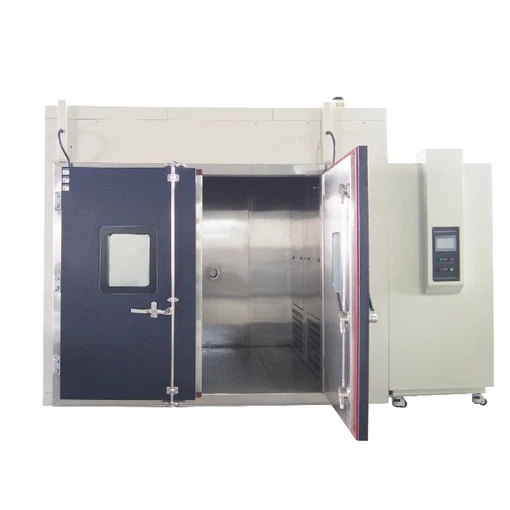
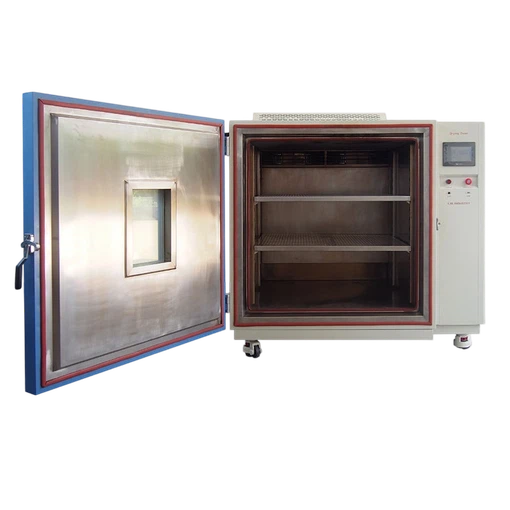


Which Applications and Test Standards Use These Temperatures?
A wide temperature range is useless without matching real test requirements. LIB's mini sub‑zero chamber directly supports three families of standards.
1. Electronics: IEC 60068‑2‑1 and IEC 60068‑2‑2
Cold test (IEC 60068‑2‑1, Ab): Hold at –40 °C for 2 to 96 hours. Used for outdoor sensors, automotive ECUs, and base station equipment.
Dry heat (IEC 60068‑2‑2, Bb): Hold at +125 °C for 16 hours. Validates solder joints, plastic housings, and LCD polarizers.
LIB's T‑50 model cycles from –40 °C to +125 °C with a heat‑up rate of 3 °C/min and cool‑down rate of 1 °C/min, so you are not waiting all day for transitions.
2. Automotive: ISO 16750‑4 and LV 124
Temperature steps: –40 °C to +85 °C, 5 °C steps, 1 hour per step.
Thermal shock (non‑operating): –40 °C to +85 °C, 30‑minute dwells, 10 cycles.
Automotive labs often run these tests for battery management systems, ADAS cameras, and door lock actuators. LIB's chamber holds ±0.5 °C stability even during rapid ramps, so the test results are repeatable.
3. Pharmaceutical: ICH Q1A Stability Testing
Long‑term storage: 25 °C ± 2 °C, 60 % RH ± 5 % RH for 12 months.
Intermediate: 30 °C ± 2 °C, 65 % RH ± 5 % RH.
Accelerated: 40 °C ± 2 °C, 75 % RH ± 5 % RH for 6 months.
Because LIB's chamber controls humidity to ±2.5 % RH, it comfortably fits inside the ICH tolerance window without needing a dedicated walk‑in room.
How LIB's Mini Sub‑Zero Chamber Works
Most small chambers use a single‑stage refrigeration system that struggles below –40 °C. LIB's design is different.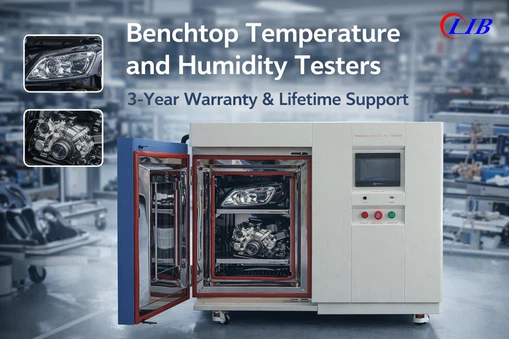
1. The Cooling System
A fully hermetic compressor pushes refrigerant through a finned evaporator. A high‑speed centrifugal fan blows internal air across the evaporator fins, then circulates it back through the working space. To reach –86 °C, LIB uses a cascade refrigeration system: two compressors in series, with a heat exchanger between stages. The first stage pre‑cools the second stage's refrigerant, so the second stage can pull the chamber down to cryogenic temperatures.
2. The Heating system
Nickel‑chromium electric heaters (rapid‑response type) sit directly in the airflow path. With 3 °C/min heating capability, the system reacts quickly when the PID controller calls for heat. No thermal lag.
3. Humidity Control
A steam‑generation humidifier boils a small amount of deionized water and injects the vapor into the air stream. For dehumidification, the evaporator surface condenses excess moisture, which drains into a closed‑loop water‑recovery system that recycles up to 50 % of condensate.
4. Control Logic
A 7‑inch color touchscreen runs a PID algorithm with feed‑forward compensation. The controller samples the PT100 sensors 10 times per second and adjusts heater power, compressor duty, and humidifier output every 2 seconds. That is why temperature fluctuations stay within ±0.5 °C even with door openings or sample heat loads.
Running a Russian Standard (GOST 16962‑1) on LIB's Mini Sub‑Zero Chamber
One of the most demanding cold‑temperature protocols comes from GOST 16962‑1, specifically the cold exposure test for electronic equipment rated for sub‑Arctic operation.
The Required Cycle (Test Method)
The standard calls for:
1. Stabilization at –60 °C ± 2 °C for 4 hours, with the test specimen non‑operating.
2. Ramp to –10 °C at 0.5 °C to 1 °C per minute.
3. Stabilization at –10 °C for 1 hour.
4. Ramp to +25 °C at 1 °C/min maximum.
5. Functional test at ambient temperature, checking for cracks, seal failure, or parameter drift.
LIB Model That Executes This Test
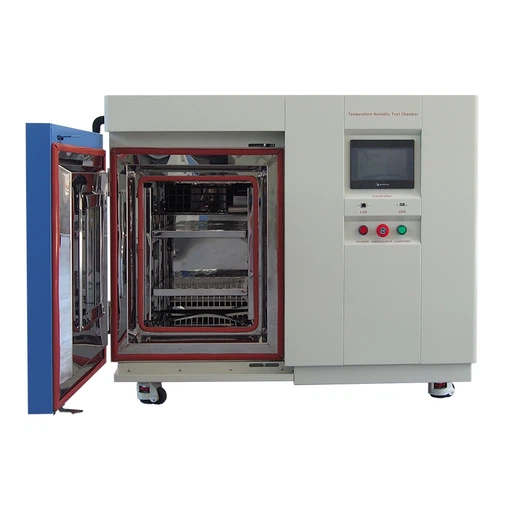
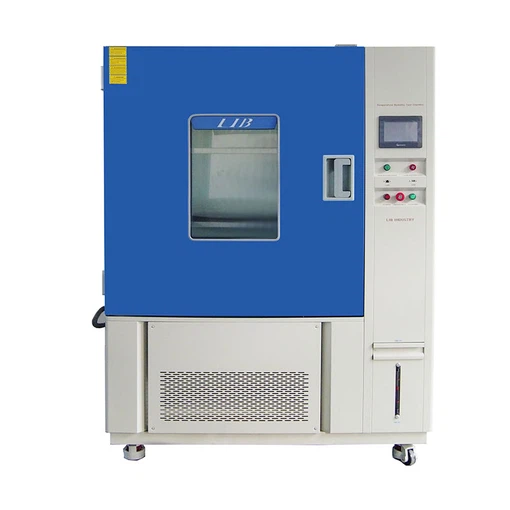
LIB's TH-80 (80 liter capacit) reaches –86 °C minimum temperature, so it can easily hold –60 °C with margin. Dimensions: 900 mm × 1100 mm (width × depth), occupying just 0.99 m² of bench space.
|
|
|
|||||||
| Model | TH-50 | TH-80 | ||||||
| Internal dimension (mm) |
320x350x450 |
400x400x500 | ||||||
| Overall dimension (mm) | 800x1050x950 | 900×1100×1000 | ||||||
| Temperature range | -86 ℃ ~+150 ℃ | |||||||
| Temperature fluctuations | ± 0.5 ℃ | |||||||
| Humidity Range | 10%/20%~95 % | |||||||
| Temperature deviation | ± 2.0 ℃ | |||||||
| Temperature Sensor | PTR Platinum Resistance PT100Ω/MV A-class | |||||||
| Temperature Resolution | ± 0.001 ℃ | |||||||
| Exterior Material | Steel Plate with A protective coating | |||||||
| Interior Material | SUS 304 stainless steel | |||||||


How the TH-80 Meets the GOST Cycle
1. Stabilization at –60 °C: The PID controller maintains ±0.5 °C, well inside the ±2 °C tolerance.
2. Controlled ramp: The operator programs a 0.7 °C/min ramp to –10 °C; the system follows it without overshoot.
3. Hold at –10 °C: Compressor cycling and heater modulation keep temperature within 0.3 °C of setpoint.
4. Final ramp to +25 °C: 3 °C/min heating capability completes the ramp in roughly 12 minutes.
LIB's Specific Advantages for This Test
1. Ultra‑quiet operation (≤65 dBA): The chamber runs at 63 dBA during the –60 °C hold, quieter than a standard office printer. No need to isolate the test in a separate room.
2. Custom program storage: The controller holds 120 programs × 100 steps each. You can store the full GOST 16962‑1 sequence, plus five variations for different product families.
3. Remote data logging: Ethernet output sends real‑time temperature, humidity, and event logs to your LIMS. The exported CSV file includes timestamps and ramp‑rate verification, which makes audit trails easy.
4. Three‑year full warranty, 7‑day spare parts shipping: If a compressor or sensor fails on day 800, LIB ships a replacement within 7–15 days with 24/7 English‑speaking technical support. No long downtime.
No specific customer case is quoted here, but labs in Siberia and northern Canada have validated LIB's T‑80‑D for exactly this GOST profile.
FAQs on the LIB Mini Sub‑Zero Chamber
Q1: How long does delivery take?
Standard models (T‑50 and T‑80) ship within 15–20 working days after order confirmation. Custom fixture designs add 7–10 days.
Q2: What is the warranty and service coverage?
LIB offers a full three‑year warranty covering parts and labor. Spare parts (compressors, controllers, sensors, humidifiers) are stocked in regional warehouses in Europe, North America, and Southeast Asia. Emergency parts arrive within 7- 15 days for non‑critical components.
Q3: Do I need special water for humidity testing?
Yes, the humidifier requires deionized or distilled water. Tap water will scale the evaporator and reduce humidity accuracy. The closed‑loop recovery system cuts water usage by up to 50 %.
Q5: How often should I calibrate the PT100 sensors?
LIB recommends calibration every 12 months against a reference sensor traceable to NIST or equivalent. The controller has a built‑in offset adjustment so you can correct minor drift without sending the unit back to the factory.
Q6: Is the chamber CE and UL certified?
Yes. All LIB benchtop chambers carry CE marking for the European market and are built to UL 61010‑1 safety standards. RoHS compliance is standard.
Contact LIB Industry today – request a quote for TH-80 and get a free 1‑year extended calibration plan with your first order.