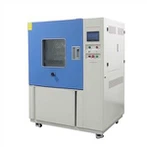
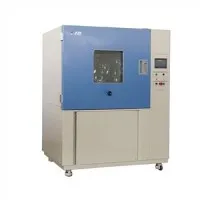
Engineers in modern laboratories often expose products to extreme temperatures and high humidity to identify potential weaknesses before those products face real-world environments.
LIB Compact Environmental Test Chambers offer a compact yet highly capable solution for labs that require accurate environmental control. A customer from Israel, Igor, who purchased four units, shared his experience: "The chambers are operating very well. Your technical support and guidance have been very helpful. If anything changes or we need assistance, I'll contact you. Thank you again." His feedback reflects the reliability and stable performance that laboratories expect from a benchtop environmental testing system.
Original feedback email:

This article explains how LIB Benchtop Climate Test Chambers, featuring temperature ranges from –86 °C to +150 °C and humidity control from 20 % to 98 % RH, deliver stable, repeatable environmental simulation for applications such as electronics reliability testing, pharmaceutical stability studies, and aerospace component validation, all within a compact laboratory footprint.
Understanding Compact Environmental Test Chambers
1. Compact Environmental Simulation
Compact Environmental Test Chambers are laboratory devices designed to reproduce controlled environmental conditions such as temperature and humidity within a small footprint. These chambers are widely used in product validation, reliability testing, and accelerated aging experiments.
The importance of compact chambers lies in their ability to deliver laboratory-grade environmental control without occupying large floor space. Typical compact chambers occupy less than 1 m², making them ideal for benchtop installation in research labs, electronics workshops, and QA laboratories.
They operate using compressor-based refrigeration systems combined with electric heaters and humidity generators. A closed-loop control system continuously monitors environmental conditions through PT100 Class A temperature sensors with 0.001 °C resolution, allowing the chamber to maintain fluctuations within ±0.5 °C and humidity deviation within ±2.5 % RH.
2. Precision Environmental Control
Environmental testing requires extremely stable and repeatable conditions to ensure accurate results. Compact environmental chambers provide high-precision control through advanced PID regulation systems.
Temperature ranges in modern compact chambers typically extend from –40 °C to +150 °C, while advanced models can reach –86 °C for deep-cold testing. Humidity ranges usually cover 20 % to 98 % RH, allowing laboratories to simulate both dry desert climates and high-humidity tropical environments.
The chamber works by circulating conditioned air through centrifugal fans and optimized airflow baffles, ensuring uniform environmental distribution throughout the test space. This prevents temperature gradients and humidity stratification that could affect test reliability.
Such precision is critical for repeatable scientific experiments, certification testing, and compliance verification.
3. Accelerated Reliability Testing
Another key purpose of compact environmental chambers is to accelerate product aging and reliability testing. Instead of waiting months or years for environmental damage to appear naturally, laboratories simulate extreme conditions to shorten testing cycles.
For example, repeated temperature cycling between –40 °C and +85 °C can reveal solder fatigue in electronic components, while 85 °C / 85 % RH humidity exposure can test insulation durability or moisture resistance.
By combining controlled temperature ramps (1 °C/min cooling, 3 °C/min heating) with programmable test sequences, compact chambers enable engineers to run complex multi-stage reliability programs automatically. Many controllers allow up to 120 programs with 100 steps each, supporting sophisticated environmental profiles.
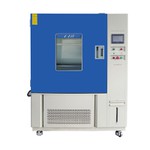
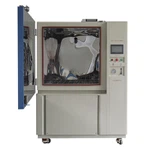
Popular Environmental test Chambers


Industries Using Compact Environmental Test Chambers
1. Electronics and Semiconductor Testing
Electronics manufacturers rely heavily on environmental chambers to validate circuit boards, connectors, and semiconductor devices. Moisture and temperature fluctuations can cause corrosion, electrical short circuits, and component drift.
Testing commonly follows international standards such as:
IEC 60068-2-1 – Cold Test
IEC 60068-2-2 – Dry Heat Test
IEC 60068-2-78 – Damp Heat Steady State
JEDEC JESD22-A101 – Moisture Resistance Test
Typical tests include 85 °C / 85 % RH humidity exposure for 1000 hours, thermal cycling between –40 °C and +125 °C, and storage tests under high humidity conditions.
These procedures verify the durability of PCBs, sensors, power modules, and communication electronics before product certification.
2. Automotive and Aerospace Validation
Automotive electronics and aerospace components must withstand extremely harsh environmental conditions. Under-hood modules, battery systems, and avionics electronics experience rapid temperature changes, vibration, and humidity stress.
Testing is often conducted according to standards such as:
ISO 16750-4 – Environmental Conditions for Electrical Equipment in Vehicles
MIL-STD-810H – Environmental Engineering Considerations
RTCA DO-160 – Environmental Conditions for Airborne Equipment
Typical test programs include thermal shock cycles from –40 °C to +85 °C, high-temperature storage at 125 °C, and humidity cycling at 95 % RH.
Compact chambers allow engineers to perform these tests directly inside development labs without needing large environmental facilities.
Real Case-LIB Compact Environmental Test Chambers for Electronic Product Testing under IEC 60068
Electronic products such as PCBs, sensors, power modules, and control units must operate reliably in environments that include heat, humidity, and long-term environmental stress. Moisture ingress and temperature cycling can cause corrosion, insulation breakdown, solder fatigue, and circuit instability. To verify reliability before market release, manufacturers perform environmental testing according to the IEC 60068 environmental testing standards.
|
|
|
|||||
| Model | TH-50 | TH-80 | ||||
| Internal dimension (mm) |
320x350x450 |
400x400x500 | ||||
| Overall dimension (mm) | 800x1050x950 | 900×1100×1000 | ||||
| Temperature range | -86 ℃ ~+150 ℃ | |||||
| Temperature fluctuations | ± 0.5 ℃ | |||||
| Humidity Range | 10%/20%~95 % | |||||
| Temperature deviation | ± 2.0 ℃ | |||||
| Temperature Sensor | PTR Platinum Resistance PT100Ω/MV A-class | |||||
| Temperature Resolution | ± 0.001 ℃ | |||||
| Exterior Material | Steel Plate with A protective coating | |||||
| Interior Material | SUS 304 stainless steel | |||||


One commonly used procedure is the IEC 60068-2-30 Damp Heat Cyclic Test, which evaluates how electronic assemblies perform under repeated high-humidity and temperature cycles.
A typical IEC 60068-2-30 testing cycle includes:
1. Start at 25 °C / 95 % RH
Electronic samples are placed inside the chamber to stabilize under high humidity conditions.
2. Increase temperature to 55 °C within 3 hours
The gradual temperature rise simulates natural environmental heating while maintaining high humidity.
3. Maintain 55 °C / 95 % RH for 9 hours
Prolonged exposure accelerates moisture penetration and corrosion processes inside electronic components.
4. Reduce temperature back to 25 °C within 3 hours
The cooling phase simulates nighttime environmental conditions while maintaining high humidity.
5. Repeat the cycle for 6–12 cycles
Multiple cycles reproduce long-term environmental stress that electronic products may encounter during storage, transportation, or field operation.
During the test, engineers monitor electronic samples for potential failures such as:
Insulation degradation in circuit boards
Corrosion of connectors and metal terminals
Seal failure in sensor housings
Electrical malfunction or signal instability
LIB Compact Environmental Test Chambers perform these environmental cycles automatically through programmable controllers. Engineers simply configure the temperature and humidity profile, and the chamber executes the full test sequence continuously while maintaining stable environmental conditions.
LIB Advantages in Electronic Environmental Testing
1. High-Precision Environmental Control
LIB chambers maintain ±0.5 °C temperature stability and ±2.5 % RH humidity accuracy, ensuring reliable compliance with IEC environmental testing requirements.
2. Compact Laboratory Installation
With a footprint of less than 1 m², the compact chamber can be installed directly inside electronics development labs, PCB testing areas, or reliability laboratories.
3. Fully Programmable Test Automation
The 7-inch color touchscreen controller supports up to 120 programmable profiles with 100 steps each, allowing engineers to run complex IEC 60068 environmental test sequences automatically without manual adjustments.
FAQs on Compact Environmental Test Chambers
1. What Size Is a Compact Environmental Chamber?
Compact environmental chambers typically have an internal volume of 50 L to 150 L, making them suitable for benchtop installation. Despite their compact size, they provide enough space to test electronic devices, sensors, PCBs, and small components in laboratory environments.
2. What Temperature and Humidity Ranges Are Typical?
Most compact chambers support temperature ranges from –40 °C to +150 °C, while advanced models can reach –86 °C for deep-cold testing. Humidity control usually ranges from 20 % to 98 % RH, covering the environmental conditions required by most testing standards.
3. How Accurate Are Compact Environmental Chambers?
High-quality chambers use PT100 Class A sensors and PID control systems to maintain ±0.5 °C temperature stability and ±2.5 % RH humidity accuracy, ensuring reliable and repeatable test results.
4. What Standards Can Compact Environmental Chambers Support?
Compact environmental chambers support testing according to major international standards, including IEC 60068 for electronics testing, ISO 16750 for automotive environmental tests, MIL-STD-810 for military equipment validation, JEDEC semiconductor reliability standards, and ICH stability guidelines for pharmaceuticals.
If your laboratory needs reliable environmental simulation without occupying large floor space, LIB Compact Environmental Test Chambers provide precise control, programmable testing, and global standard compliance.
Any customization can be made. LIB offers a 3-year warranty and lifetime service. Any issues that cannot be resolved during the warranty period will be replaced free of charge. 24/7 English-speaking after-sales team. Fast shipping within 7-15 days.
Contact LIB Industry to learn more about compact environmental testing solutions and discover how our chambers can enhance your product reliability testing.