




Hey there! As a supplier of solar testers, I often get asked about how our nifty devices measure the concentration ratio of a solar concentrator. It's a pretty cool topic, and I'm stoked to break it down for you.


First things first, let's talk about what a solar concentrator is. Picture it like a super - efficient sunlight magnifier. A solar concentrator takes a large area of sunlight and focuses it onto a smaller area. This concentrated sunlight can then be used to generate more power more efficiently. But how do we know just how well it's concentrating that sunlight? That's where our solar testers come in.
One of the ways we measure the concentration ratio is by using the principle of irradiance. Irradiance is basically the amount of solar power per unit area received on a surface. We use two key irradiance measurements to figure out the concentration ratio.
We start by measuring the incident irradiance. This is the amount of sunlight hitting the large collecting area of the solar concentrator before it gets concentrated. Our solar tester has specialized sensors that can accurately gauge the power of the incoming sunlight. These sensors are calibrated to be super precise, so we get a really good idea of how much solar power is out there in the first place.
Once we've got that measurement, we move on to the concentrated irradiance. This is the amount of sunlight that lands on the smaller, concentrated area. The solar tester is carefully positioned at the focal point of the concentrator to measure this value. The difference between the concentrated irradiance and the incident irradiance tells us a lot about how well the concentrator is working.
The formula for calculating the concentration ratio (CR) is actually pretty straightforward: CR = Concentrated Irradiance / Incident Irradiance. So, if our solar tester measures an incident irradiance of 1000 W/m² and a concentrated irradiance of 5000 W/m², the concentration ratio would be 5. This means the solar concentrator is taking the sunlight and making it five times more intense at the focal point.
But it's not always that simple. There are a bunch of factors that can mess with these measurements. For example, the weather can be a real pain. Clouds can block the sunlight, reducing the incident irradiance. And even on a sunny day, things like the angle of the sun can affect how much sunlight hits the concentrator. That's why our solar testers are designed to be as accurate as possible in different environmental conditions.
Another factor is the alignment of the solar tester and the concentrator. If the tester isn't positioned exactly at the focal point of the concentrator, the measured concentrated irradiance will be off. Our testers have features that help with precise positioning. They've got built - in guides and indicators to make sure we're getting the most accurate measurement.
Now, let's talk about the technology behind our solar testers. We use high - quality photovoltaic cells in our sensors. These cells convert sunlight into an electrical current. The strength of the current is directly related to the amount of sunlight hitting the cell. By measuring this current, we can calculate the irradiance.
The solar testers also come with advanced data - logging capabilities. They can record the irradiance measurements over time, which is really useful. It allows us to see how the concentration ratio changes throughout the day or over different seasons. We can then analyze this data to optimize the performance of the solar concentrator.
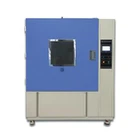
If you're in the business of solar concentrators, you'll know that durability is key. That's where our other test chambers come in handy. For example, we offer a Weathering Resistance Test Chamber. This chamber can simulate different weather conditions like rain, heat, and cold. You can use it to test how well your solar concentrator holds up over time.
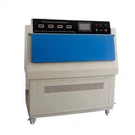
We also have a UV Light Test Chamber. Ultraviolet light can cause damage to materials over time, and solar concentrators are no exception. This chamber exposes your concentrator to high - intensity UV light to see how it will degrade in real - world conditions.
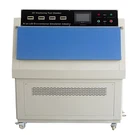
And then there's our Accelerated UV Testing Chamber. This one takes things a step further by speeding up the UV degradation process. It allows you to see the long - term effects of UV exposure in a shorter amount of time.
So, whether you're a researcher looking to develop the next - generation solar concentrator or a manufacturer trying to ensure the quality of your products, our solar testers and test chambers are the way to go. They're reliable, accurate, and easy to use.
If you're interested in learning more about our solar testers or our test chambers, don't hesitate to reach out. We'd love to have a chat about how our products can meet your needs and help you take your solar projects to the next level. Let's work together to make the most of solar energy!
References
- "Solar Energy Engineering: Processes and Systems" by Soteris Kalogirou.
- "Photovoltaic Systems Engineering" by William T. Beckman et al.