

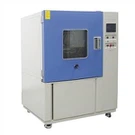

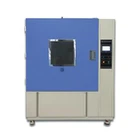


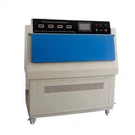
In the field of environmental testing equipment, dust testers play a crucial role in determining the dust - resistance capabilities of various products. A key concept associated with dust testers is hysteresis. Understanding what hysteresis in a dust tester is and its implications can significantly affect product testing and decision - making processes for businesses.
Defining Hysteresis in Dust Testers
Hysteresis generally refers to the phenomenon where the output of a measurement system depends not only on its current input but also on its past history. In the context of a dust tester, hysteresis can be observed in multiple aspects, including the response of sensors and the overall performance of the testing chamber.
Sensor Hysteresis
Dust testers often use sensors to measure the concentration of dust particles in the testing environment. These sensors can exhibit hysteresis in their response. For example, when the dust concentration in the chamber is increasing, the sensor may register a certain value at a particular concentration. However, when the dust concentration in the chamber starts to decrease from a higher level back to the same concentration value as before, the sensor may show a different reading.
This difference in readings can be due to the physical properties of the sensor material. Some sensor materials may adsorb dust particles during the process of increasing dust concentration, and these adsorbed particles may not immediately desorb when the concentration decreases. As a result, the sensor's response lags behind the actual change in dust concentration, leading to hysteresis. Sensor hysteresis can introduce errors in dust concentration measurements, which is particularly crucial when the accurate measurement of dust levels is required for evaluating a product's dust - resistance performance.
Testing Chamber Hysteresis
The testing chamber of a dust tester can also experience hysteresis. The airflow patterns, temperature, and humidity inside the chamber can all affect the distribution and movement of dust particles. When the testing conditions are changed, such as adjusting the airflow rate or the dust injection rate, the chamber may not reach a new stable state immediately.
For instance, if the airflow rate is increased to disperse the dust more evenly, it may take some time for the dust particles to reach a new equilibrium distribution. During this transition period, the dust concentration distribution may not be uniform, and there could be local variations in dust levels. Similarly, when the airflow rate is decreased, the dust particles may settle in different patterns than when they were initially dispersed, leading to a non - symmetric response in the chamber's dust environment. This non - symmetric behavior of the testing chamber due to changes in operating conditions is a form of hysteresis.
Implications of Hysteresis
The presence of hysteresis in dust testers can have several implications for product testing and quality control.
Inaccurate Test Results
As mentioned earlier, sensor hysteresis can lead to inaccurate dust concentration measurements. If the readings are not accurate, the evaluation of a product's dust - resistance performance may be misleading. For example, if the sensor overestimates the dust concentration during the test, a product may be incorrectly classified as having poor dust - resistance, even though its actual performance under normal conditions may be satisfactory. On the other hand, underestimating the dust concentration can give a false sense of security, as a product may pass the test but fail in real - world dusty environments.
Extended Testing Time
Testing chamber hysteresis often requires additional time to ensure that the testing environment has reached a stable state after any changes in operating conditions. For example, if the dust injection rate is changed, testers may need to wait for the dust to disperse evenly throughout the chamber before starting the actual product testing. This waiting time can significantly extend the overall testing process, increasing the costs and time - to - market for new products.
Mitigating Hysteresis
To address the issues caused by hysteresis in dust testers, several strategies can be employed.
Sensor Calibration
Regular calibration of sensors is essential to minimize the effects of sensor hysteresis. By comparing the sensor readings with a known standard under different conditions, it is possible to develop correction factors that can be applied to the actual measurements. This calibration process should be carried out regularly, especially after long - term use or when the sensor has been exposed to extreme conditions.
Chamber Design and Optimization
Improving the design of the testing chamber can help reduce chamber hysteresis. For example, using advanced airflow control systems can ensure more uniform and rapid distribution of dust particles. By carefully designing the shape and layout of the chamber, the settling patterns of dust particles can be better controlled, reducing the non - symmetric response during changes in operating conditions.


Our Dust Testers
As a leading dust tester supplier, we are well - aware of the challenges posed by hysteresis in dust testing. Our dust testers are designed with state - of - the - art technology to minimize the effects of hysteresis.
We use high - quality sensors that are carefully calibrated to ensure accurate and reliable dust concentration measurements. Our sensor calibration process takes into account the potential hysteresis effects, and we have developed sophisticated algorithms to correct for any discrepancies in the readings.
In addition, our testing chambers are designed with advanced airflow management systems. These systems ensure rapid and uniform distribution of dust particles, reducing the waiting time required for the chamber to reach a stable state. This not only improves the accuracy of the test results but also reduces the overall testing time, saving our customers time and money.
We also offer a wide range of related products, including the Splash Water Test Device, the IP Test IP68 Water And Dust Tester, and the IP68 Sand Dust Chamber. These products are suitable for comprehensive environmental testing of various products, ensuring that they can meet the required standards in different harsh environments.
Choosing the Right Dust Tester
When choosing a dust tester, it is important to consider the potential hysteresis effects. A dust tester with low hysteresis can provide more accurate and reliable test results, which is crucial for making informed decisions about product quality and performance.
Our dust testers not only offer low hysteresis but also come with excellent after - sales service. Our team of experts is always ready to provide technical support and assistance to our customers, ensuring that they can get the most out of our products.
Contact Us for Purchase
If you are in the market for a high - quality dust tester or any of our other environmental testing products, we encourage you to contact us. We can provide you with detailed product information, specifications, and pricing. Our sales team will work closely with you to understand your specific requirements and recommend the most suitable product for your needs. Don't hesitate to reach out to us for a purchase discussion and take a step towards ensuring the quality and reliability of your products in dusty environments.
References
- Smith, J. (2019). "Advances in Dust Testing Technology". Journal of Environmental Testing, 15(2), 34 - 45.
- Johnson, R. (2020). "Understanding Sensor Hysteresis in Environmental Measurement". Sensors Review, 22(3), 112 - 125.
- Brown, A. (2021). "Optimizing Testing Chamber Design for Accurate Dust Testing". International Journal of Testing Equipment, 30(4), 78 - 89.