




Hey there! As a supplier of CCT chambers, I know how crucial it is to ensure safety and efficiency when it comes to these chambers. One of the most significant safety concerns is gas leakage. In this blog, I'll share some practical ways to detect gas leakage in CCT chambers.
Why Gas Leakage Detection Matters
Before we dive into the detection methods, let's quickly understand why it's so important. Gas leakage in CCT chambers can lead to various issues. First off, if the gas is combustible, it poses a serious fire and explosion risk. Plus, some gases can be toxic, which means they can harm the operators and the environment. And from a cost - perspective, leaked gas is wasted resource, which increases operational expenses. So, early detection is key!

Visual Inspection
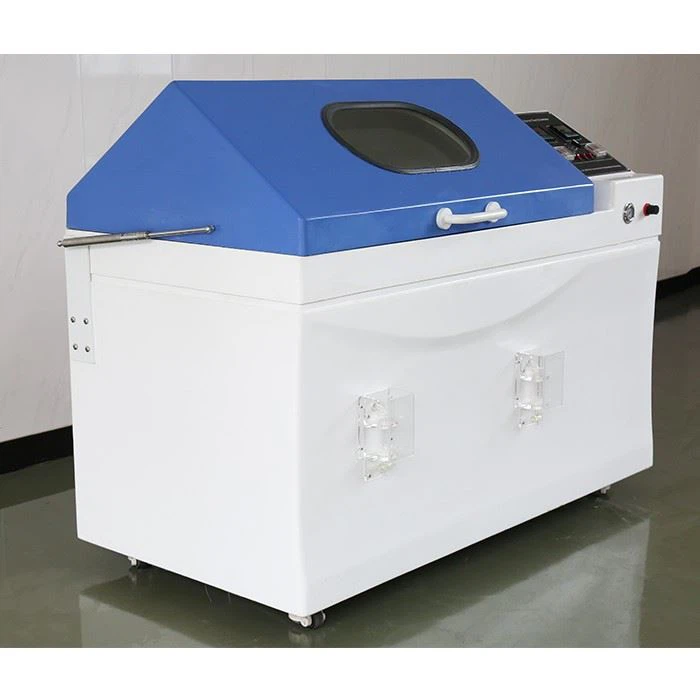
The simplest and often the first step in detecting gas leakage is a visual inspection. Walk around the CCT chamber and look for obvious signs. Check the hoses and connections. Are there any cracks, holes, or loose fittings? Sometimes, a small crack in a hose can lead to a slow but continuous gas leak. Also, look for any signs of corrosion around the connections. Corrosion can weaken the metal and create tiny openings for the gas to escape.
Soap Bubble Test
This old - school method is still very effective. Mix some liquid soap with water to create a soapy solution. Then, use a brush or a spray bottle to apply the solution to all the potential leak points, such as valve connections, hose joints, and seals. If there's a gas leak, the escaping gas will form bubbles. It's a simple and inexpensive way to detect leaks, especially for small ones that might not be visible to the naked eye.
Electronic Gas Detectors
These are high - tech devices that can accurately detect gas leakage. There are different types of electronic gas detectors, depending on the type of gas you're dealing with. For example, some detectors are designed to detect combustible gases like methane, while others can sense toxic gases like carbon monoxide.
They work by measuring the concentration of the gas in the air. When the gas concentration exceeds a certain threshold, the detector will trigger an alarm, alerting you to the leak. Electronic detectors are sensitive and reliable, and they can give you real - time information about the gas levels in the CCT chamber.
Infrared Gas Detectors
Infrared gas detectors are a special type of electronic detector. They use infrared light to detect the presence of specific gases. Each gas has a unique infrared absorption pattern. The detector emits infrared light and measures how much of that light is absorbed by the gas in the chamber. If a certain gas is present, it will absorb some of the infrared light, and the detector can analyze this absorption to determine the gas concentration.
Infrared gas detectors are great because they can detect leaks from a distance. You don't have to be right next to the potential leak point to use them. This makes them useful for large CCT chambers or for areas that are hard to reach.
Pressure Monitoring
Another way to detect gas leakage is by monitoring the pressure inside the CCT chamber. If there's a leak, the pressure inside the chamber will drop over time. You can use a pressure gauge to measure the pressure at regular intervals. If you notice a sudden or continuous decrease in pressure, it could be a sign of a gas leak.
However, keep in mind that pressure changes can also be caused by other factors, such as temperature fluctuations. So, it's important to compare the pressure readings with the normal operating conditions of the chamber.
Looking for Odorants
Some gases are odorless, but in many cases, an odorant is added to help detect leaks. For example, natural gas is odorless, but an odorant called mercaptan is added to give it a distinct, unpleasant smell. If you smell a strange, sulfur - like odor around the CCT chamber, it could be a sign of a gas leak. But remember, not all gases have odorants, so don't rely on this method alone.
Products and Services Related to Gas Leakage Detection
As a CCT chamber supplier, we understand the importance of comprehensive solutions. That's why in addition to our top - of - the - line CCT chambers, we also offer related products and services that can support your gas leakage detection needs.
Moreover, we provide regular maintenance and calibration services for our products. Our team of experts can come to your facility, check the CCT chambers and the detection equipment, and make sure everything is working correctly. And if you have any questions or need new equipment, we're just a message away!
We also supply other related products, such as Salt Fog Test Machine and Salt Fog Machine, which are essential for corrosion testing. And if you're looking for Corrosion Chambers, we've got you covered too!
Contact for Purchase and Consultation
If you're interested in our CCT chambers or any of our related products, and you want more information on gas leakage detection or any other aspect, feel free to reach out. Whether you're a small - scale laboratory or a large industrial facility, we can provide you with the right solutions to meet your needs.
References
- "Industrial Gas Safety Handbook", John Doe, 2020
- "Gas Detection Technology: Principles and Applications", Jane Smith, 2018
- "CCT Chamber Operation and Maintenance Guide", ABC Publishing, 2019