


The spectral response of a solar panel is a critical characteristic that significantly influences its performance. As a leading supplier of solar testers, I am well - acquainted with the importance of understanding this concept for both solar panel manufacturers and end - users.
Understanding the Spectral Response
The spectral response of a solar panel refers to its ability to convert photons of different wavelengths of light into electricity. The sun emits a broad spectrum of electromagnetic radiation, ranging from ultraviolet (UV) to infrared (IR), with the visible light spectrum in between. Each type of solar cell material has a unique spectral response curve, which shows how efficiently it can generate electricity at different wavelengths.
For instance, silicon - based solar cells, which are the most common type in the market, have a spectral response that peaks in the visible and near - infrared regions. They are less efficient at converting UV light, as much of the UV energy is either absorbed by the cell's protective layers or causes degradation over time. On the other hand, thin - film solar cells, such as those made from cadmium telluride (CdTe) or copper indium gallium selenide (CIGS), may have different spectral responses. CdTe cells typically have a good response in the green - to - red part of the visible spectrum, while CIGS cells can respond well to a wider range of wavelengths, including some in the infrared.
Measuring the Spectral Response
Accurately measuring the spectral response is crucial for evaluating the performance of a solar panel. This is where our solar testers come in. We offer a range of advanced testers that can precisely measure the spectral response of solar panels. These testers work by illuminating the solar panel with monochromatic light of different wavelengths and measuring the corresponding photocurrent.

The data collected from these measurements are then used to generate a spectral response curve. By analyzing this curve, manufacturers can optimize the design of their solar panels. For example, they can adjust the thickness of the semiconductor layers or change the doping levels to improve the response at specific wavelengths.
Impact on Performance
Efficiency
The spectral response has a direct impact on the efficiency of a solar panel. A panel with a spectral response that closely matches the solar spectrum will be able to convert a larger proportion of the incident sunlight into electricity. In regions where the sunlight has a different spectral distribution, such as at high altitudes or in different latitudes, a solar panel's efficiency can vary depending on its spectral response. For example, in areas with a high proportion of UV light, a panel that is more efficient at converting UV photons will have a higher overall efficiency.
Power Output
The power output of a solar panel is also affected by its spectral response. If the sunlight contains a significant amount of light at wavelengths where the panel has a low response, the power output will be reduced. This is especially important in real - world applications, where the solar spectrum can vary throughout the day and across different seasons. Our solar testers can help predict how a panel's power output will change under different spectral conditions, allowing for more accurate system sizing and performance forecasting.
Durability
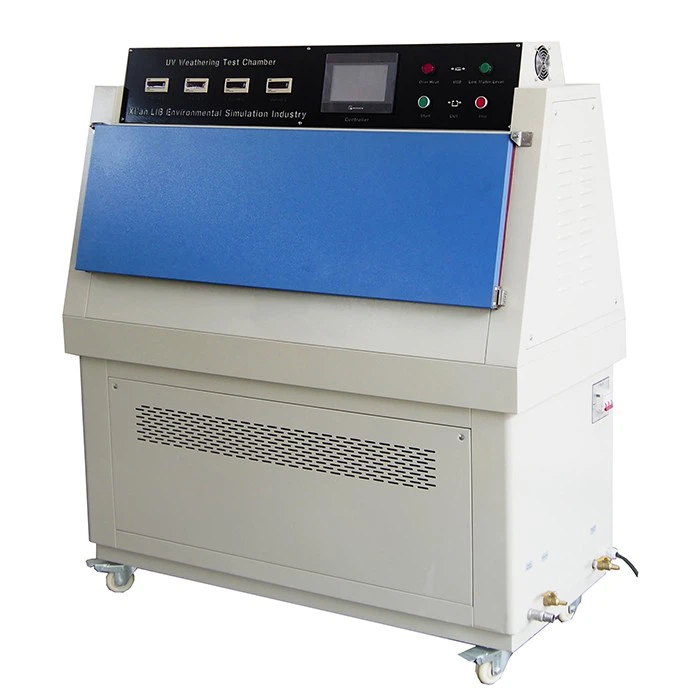
The spectral response can also influence the durability of a solar panel. UV light, in particular, can cause degradation of the panel's encapsulation materials and semiconductor layers over time. A panel with a poor response to UV light may be more susceptible to this type of degradation. Our Astm G151 Test Chamber can simulate the effects of long - term exposure to sunlight, including the impact of different spectral components, to test the durability of solar panels.
Importance in Different Applications
Rooftop Solar Systems
In rooftop solar systems, the spectral response of the panels can affect the overall energy production. Homeowners and businesses want to maximize the power output of their solar installations. By choosing panels with a spectral response that is well - suited to the local solar spectrum, they can increase the return on their investment. Our solar testers can provide valuable information to help installers select the most appropriate panels for a given location.
Utility - Scale Solar Farms
For utility - scale solar farms, the spectral response becomes even more critical. These large - scale installations require high - efficiency and reliable solar panels to generate significant amounts of electricity. The ability to accurately measure and optimize the spectral response can lead to substantial improvements in the overall performance and profitability of the solar farm. Our ASTM QUV Test Chamber can be used to test the long - term performance of panels under different spectral conditions, ensuring that they meet the strict requirements of utility - scale projects.
Space - Based Solar Power
In space - based solar power applications, the spectral response is also a key factor. The solar spectrum in space is different from that on Earth, with a higher proportion of UV and X - ray radiation. Solar panels used in space need to have a spectral response that can efficiently convert this unique spectrum into electricity. Our Cable Xenon Arc Lamp Test Chamber can simulate the space - like solar spectrum to test the performance of these specialized solar panels.
Conclusion
In conclusion, the spectral response of a solar panel is a fundamental characteristic that has a profound impact on its performance, efficiency, power output, and durability. As a solar tester supplier, we are committed to providing the most advanced testing solutions to help manufacturers and users better understand and optimize the spectral response of solar panels.
Whether you are a solar panel manufacturer looking to improve your product design, an installer seeking the best panels for a specific location, or an operator of a large - scale solar project, our solar testers can provide you with the accurate data and insights you need. If you are interested in learning more about our products or have any questions regarding the spectral response of solar panels, please feel free to contact us for a detailed discussion and potential procurement. We are here to support you in achieving the highest performance and efficiency in your solar applications.
References
- Green, M. A., Emery, K., Hishikawa, Y., Warta, W., & Dunlop, E. D. (2014). Solar cell efficiency tables (version 42). Progress in Photovoltaics: Research and Applications, 22(1), 1 - 9.
- Sze, S. M., & Ng, K. K. (2007). Physics of semiconductor devices. John Wiley & Sons.
- Goetzberger, A., Hebling, C., & Conibeer, G. (2005). PV materials, basics and prospects. Solar Energy Materials and Solar Cells, 86(3), 561 - 598.