Rubber components may look durable, but ozone in the atmosphere can slowly attack their molecular structure. Even ozone concentrations as low as a few parts per hundred million can cause surface cracks, loss of elasticity, and premature failure. For products used outdoors, in vehicles, electrical systems, and industrial equipment, ozone resistance is often a critical quality requirement.
LIB ozone chamber allows manufacturers to reproduce years of natural ozone exposure within a controlled laboratory environment. This article explains what an Ozone Chamber is used for, which industries and standards require ozone testing, a successful Russian customer project, and how to choose between an Ozone Chamber and an SO₂ Noxious Gas Corrosion Test Chamber.
What Is an Ozone Chamber Used For?
1. Why Was the Ozone Chamber Developed?
The ozone chamber was developed to accelerate the aging process of rubber and elastomer materials. Under natural conditions, ozone damage may take months or years to appear. In laboratory testing, manufacturers need reliable results within days.
An ozone chamber generates controlled ozone concentrations ranging from 1 to 1000 PPHM while maintaining stable temperature and humidity conditions. According to ISO 1431-1 and ASTM D1149, stretched rubber specimens are exposed to ozone under controlled conditions to evaluate cracking resistance. This accelerated method helps engineers predict long-term product durability before products are released to the market.
2. Industries That Use Ozone Chambers
LIB Ozone chambers are widely used wherever rubber materials are exposed to outdoor air, electrical discharge, or industrial environments.
① Automotive Industry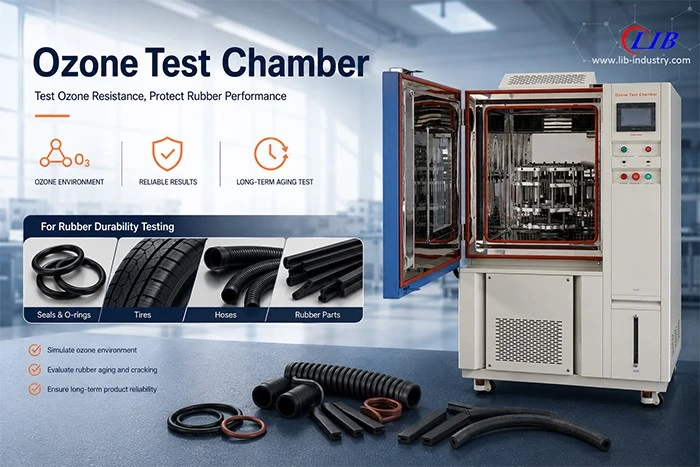
Automotive manufacturers test door seals, window seals, hoses, O-rings, suspension bushings, cable jackets, and weather strips. Standards such as Volkswagen PV3305 require ozone resistance evaluation to ensure long-term vehicle reliability.
② Electrical and Power Industry
Insulating gloves, cable insulation, power transmission components, and elastomeric protective covers are tested according to IEC 60903 and related standards. Ozone resistance is essential for products operating near high-voltage equipment where ozone generation occurs naturally.
③ Industrial Manufacturing
Gaskets, conveyor belts, flexible connectors, sealing rings, and industrial rubber parts require ozone aging evaluation to prevent unexpected cracking during service life. Manufacturers use ozone testing during material development, supplier qualification, and quality control processes.
3. Standards and Tests Supported by Ozone Chambers
LIB Ozone Chambers are designed to perform multiple international ozone aging tests:
| Standard | Test Purpose |
|---|---|
| ISO 1431-1 | Rubber resistance to ozone cracking under static and dynamic strain |
| ASTM D1149 | Ozone cracking resistance of rubber materials |
| DIN 53509 | Ozone aging evaluation of elastomers |
| Volkswagen PV3305 | Automotive rubber weathering and ozone resistance testing |
| IEC 60903 | Ozone resistance testing of electrical insulating gloves |
Typical testing parameters of LIB Ozone Chamber include:
|
|
Model |
OC-250 |
|
|
Internal Dimension (mm) |
600*600*700 |
||
|
Overall Dimension (mm) |
960*1150*1860 |
||
|
Interior Volume (L) |
250 |
||
|
Temperature Range |
0℃ ~ +100 ℃ |
||
|
Temperature Fluctuation |
± 0.5 ℃ |
||
|
Temperature Deviation |
± 2.0 ℃ |
||
|
Humidity Range |
30% ~ 98% RH |
||
|
Humidity Deviation |
± 2.5% RH |
||
|
Cooling Rate |
Ambient ~ 0℃ within 20 min |
||
|
Ozone Concentration |
1~1000PPHM |
||
|
Sample Holder Rotate Speed |
0~10 r/min |
||
|
Airflow Rate |
0 ~ 60L/min |
||
|
Clamps Tensile Stretch |
5%~35% |
||
|
Controller |
Programmable color LCD touchscreen controller, Ethernet connection, PC Link |
||
|
Standard |
ISO1431;ASTM 1149;IEC 60903 |
||
Russian Customer Customized Ozone Chamber Received Excellent Feedback
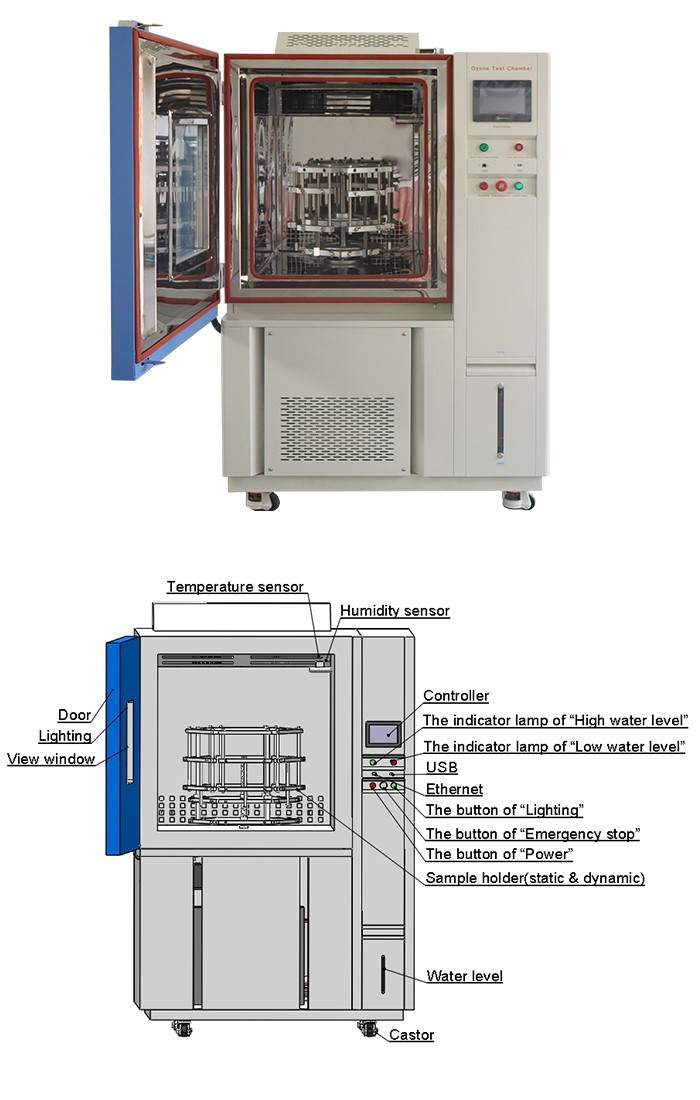
A Russian industrial manufacturer recently customized a LIB Ozone Chamber for performance testing of rubber products and elastomer

components. To improve testing efficiency, the customer requested a special sliding rail sample rack combined with a lifting-ring holder design.
The customized solution allows operators to load and unload heavy specimens quickly without entering the chamber workspace. Compared with conventional fixed racks, the sliding rail structure significantly improves accessibility and reduces testing preparation time.
After installation, the customer reported excellent operating performance and testing stability.
Key Advantages Recognized by the Customer
1. Convenient Sample Handling
The sliding rail system enables smooth movement of large specimens, reducing operator workload and improving testing efficiency.
2. High Testing Accuracy
Temperature uniformity, humidity control, and ozone concentration stability meet the requirements of ISO 1431-1, ASTM D1149, and

PV3305. Continuous monitoring ensures reliable and repeatable results.
3. Enhanced Safety Protection
The chamber incorporates: over-temperature protection, ozone leakage protection, door safety interlock, over-current protection, emergency stop function, compressor protection system.
4. International Safety Compliance
The equipment is designed in accordance with CE requirements and incorporates electrical safety concepts commonly accepted under IEC and CSA standards.
5. Cost-Effective Operation
Low maintenance requirements, durable SUS304 stainless steel construction, and stable ozone generation provide long-term operational savings.
The customer specifically praised the chamber's stable environmental control, convenient specimen loading system, and overall value for money.
LIB Ozone Chamber vs. SO₂ Noxious Gas Corrosion Test Chamber
Although both systems are environmental test chambers, they evaluate completely different material degradation mechanisms.
| Item |
|
|
|---|---|---|
| Test Medium | Ozone (O₃) | Sulfur Dioxide (SO₂) |
| Main Purpose | Rubber aging evaluation | Metal corrosion evaluation |
| Test Objects | Rubber, elastomers, cable jackets, seals | Connectors, coatings, metal parts |
| Main Standards | ISO 1431-1, ASTM D1149, DIN 53509, PV3305 | IEC 60068-2-42, DIN 50018 |
| Concentration Range | 1–1000 PPHM | Programmable gas concentration |
| Temperature Control | 0°C to +100°C | Typically ambient to +50°C |
| Humidity Control | 30–98% RH | High humidity corrosion environment |
| Sample Stretching | Static and dynamic tensile testing | Not required |
| Typical Failure Mode | Surface cracking | Corrosion, oxidation, rust |


How to Choose?
|
Choose an Ozone Chamber if you need to evaluate: Rubber seals O-rings Automotive weather strips Cable insulation Elastomer materials Electrical protective gloves |
Choose an SO₂ Noxious Gas Corrosion Test Chamber if you need to evaluate: Metal connectors Electrical terminals Plated components Protective coatings Electronic assemblies Some manufacturers use both chambers because products often contain both rubber and metal components that require separate environmental durability evaluations. |
LIB popular ozone and Environmental Chambers


Accelerated Sulfur Dioxide Corrosion Testing, Precise Material Durability Assessment

Multi-Gas Environmental Corrosion Simulation, Comprehensive Reliability Testing for Electronics and Metals

Test Large Products with Ease, Walk-In Space for Maximum Capacity
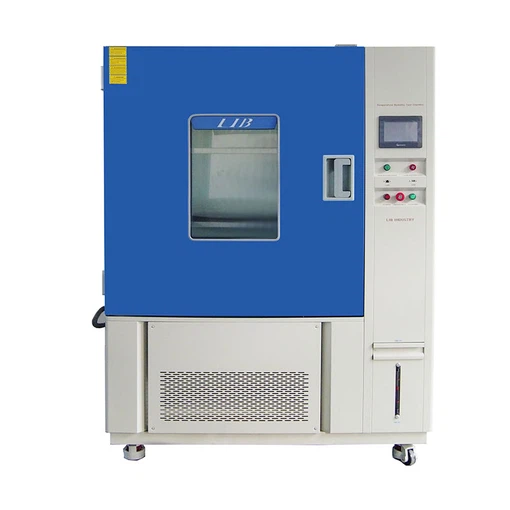
Reliable Temperature & Humidity Testing, Versatile Solution for Daily Laboratory Use
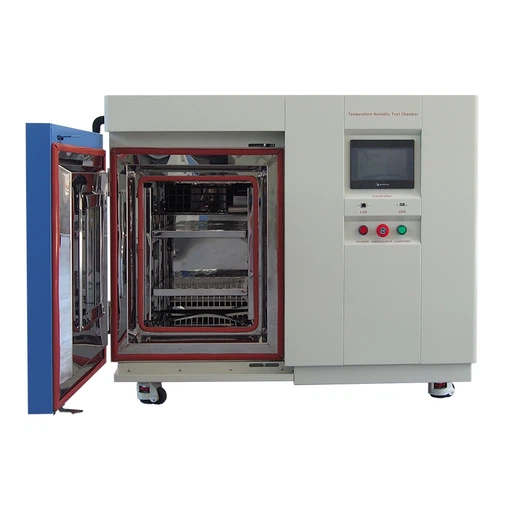
Compact Size with Big Performance, Precise Testing Right on Your Workbench
FAQs on the Ozone Chamber
Q1: How long does it take to manufacture an Ozone Chamber?
Standard models typically require 15–25 working days. Customized chambers may require additional engineering and validation time depending on project requirements.
Q2: Is international installation support available?
Yes. LIB provides remote technical guidance, operation training, installation documentation, and online commissioning support for global customers.
Q3: How is the chamber transported?
Equipment is packed in export-grade wooden crates with shock protection and moisture-resistant packaging. Sea freight, air freight, railway transportation, and door-to-door logistics services are available.
Q4: What after-sales service does LIB provide?
LIB offers technical support, spare parts supply, maintenance guidance, calibration assistance, and troubleshooting services throughout the equipment lifecycle.
Q5: How often should ozone sensors and activated carbon be replaced?
For normal operation, ozone sensors are typically replaced every 3 years. Activated carbon used in the exhaust treatment system should be replaced every 3 months under frequent usage conditions.
Q6: Can the chamber perform both static and dynamic ozone testing?
Yes. LIB Ozone Chambers support static tensile testing and dynamic rotational testing with sample holder speeds adjustable from 0 to 10 r/min.
Contact LIB Industry today to receive professional guidance, detailed technical documentation, and a customized Ozone Chamber solution tailored to your testing standards and applications.
Your Premium trial has ended